Personal Info
Known For
Gender
Birthday
Place of Birth
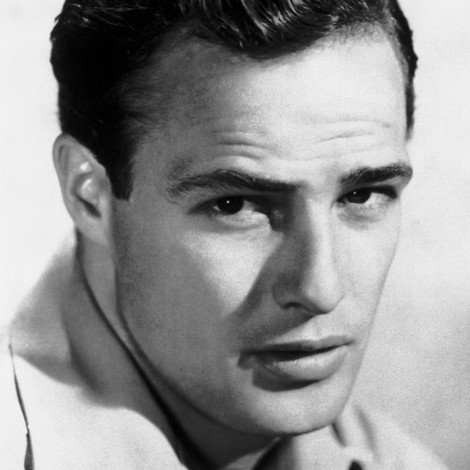
Marlon Brando
Biography
Known for

The Mike Douglas Show
The Mike Douglas Show is an American daytime television talk show hosted by Mike Douglas that originally aired only in the Cleveland area during much of its first two years on the air. It then went into syndication in 1963 and remained on television until 1982. It was distributed by Westinghouse Broadcasting and for much of its run, originated from studios of two of the company's TV stations in Cleveland and Philadelphia.

The Godfather
Spanning the years 1945 to 1955, a chronicle of the fictional Italian-American Corleone crime family. When organized crime family patriarch, Vito Corleone barely survives an attempt on his life, his youngest son, Michael steps in to take care of the would-be killers, launching a campaign of bloody revenge.

The Dick Cavett Show
The Dick Cavett Show has been the title of several talk shows hosted by Dick Cavett on various television networks.

Midi trente

The Ed Sullivan Show
The Ed Sullivan Show is an American TV variety show that originally ran on CBS from Sunday June 20, 1948 to Sunday June 6, 1971, and was hosted by New York entertainment columnist Ed Sullivan. It was replaced in September 1971 by the CBS Sunday Night Movie, which ran only one season and was eventually replaced by other shows. In 2002, The Ed Sullivan Show was ranked #15 on TV Guide's 50 Greatest TV Shows of All Time.

The Oscars
An annual American awards ceremony honoring cinematic achievements in the film industry. The various category winners are awarded a copy of a statuette, officially the Academy Award of Merit, that is better known by its nickname Oscar.

Apocalypse Now
At the height of the Vietnam war, Captain Benjamin Willard is sent on a dangerous mission that, officially, "does not exist, nor will it ever exist." His goal is to locate - and eliminate - a mysterious Green Beret Colonel named Walter Kurtz, who has been leading his personal army on illegal guerrilla missions into enemy territory.

Cinépanorama

MGM Parade
The original concept of the show was to allow the viewer to see the inner workings of a movie studio and featured interviews with MGM stars and explanations of how movies were made. Later, the format changed to show edited versions of MGM films.

The Score
An aging thief hopes to retire and live off his ill-gotten wealth when a young kid convinces him into doing one last heist.

Last Tango in Paris
A recently widowed American begins an anonymous sexual relationship with a young Parisian woman.

Superman
Mild-mannered Clark Kent works as a reporter at the Daily Planet alongside his crush, Lois Lane. Clark must summon his superhero alter-ego when the nefarious Lex Luthor launches a plan to take over the world.

Superman Returns
Superman returns to discover his 5-year absence has allowed Lex Luthor to walk free, and that those he was closest to felt abandoned and have moved on. Luthor plots his ultimate revenge that could see millions killed and change the face of the planet forever, as well as ridding himself of the Man of Steel.

Roots: The Next Generations
Roots: The Next Generations is a television miniseries, introduced in 1979, continuing, from 1882 to the 1960s, the fictionalized story of the family of Alex Haley and their life in Henning, Lauderdale County, Tennessee, USA. This sequel to the 1977 miniseries is based on the last seven chapters of Haley's novel entitled Roots: The Saga of an American Family plus additional material by Haley. Roots: The Next Generations was produced with a budget of $16.6 million, nearly three times as large as that of the original.

The Sixties
The space race, the cold war, "free love," civil rights and more: The decade of the 1960s shaped our history -- and changed the world. In collaboration with Tom Hanks, Gary Goetzman and Mark Herzog, CNN explores perhaps the most transformative decade of the modern era in a 10-part documentary series and brings new insights into how those events shaped today.