Personal Info
Known For
Gender
Birthday
Place of Birth
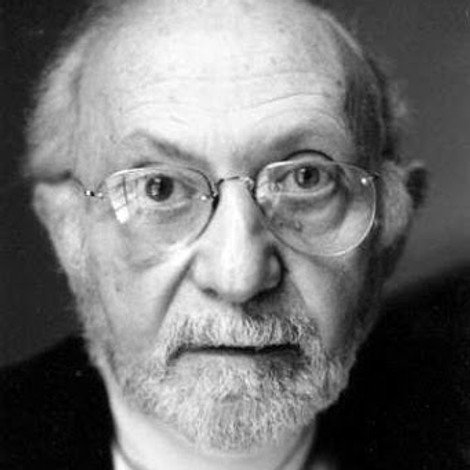
Lee Strasberg
Biography
Known for

The Merv Griffin Show

Film '72
The BBC's flagship cinema review TV program featuring reviews of new releases, news items and interviews. The title of the program changes each year to incorporate the year of broadcast.
The Godfather Part II
In the continuing saga of the Corleone crime family, a young Vito Corleone grows up in Sicily and in 1910s New York. In the 1950s, Michael Corleone attempts to expand the family business into Las Vegas, Hollywood and Cuba.

Mario Puzo's The Godfather: The Complete Novel for Television
A seven-hour chronological edit of The Godfather and The Godfather Part II, expanded with over an hour of restored scenes to trace the Corleone family’s rise from Vito’s youth in Sicily to Michael’s reign in 1950s America.
...And Justice for All
An ethical Baltimore defense lawyer disgusted with rampant legal corruption is forced to defend a judge he despises in a rape trial under the threat of being disbarred.

The Cassandra Crossing
Passengers on a European train have been exposed to a deadly disease, and nobody will let them off the train.

Boardwalk
In this drama, David Rosen and his wife Becky have lived in the same Coney Island neighborhood for nearly all their married life. But the area is not what it used to be, and a gang leader named Strut has decided to make Coney Island his new turf. Strut begins shaking down the merchants in the area, demanding payment for "protection" and using violence to deal with anyone who gets in his way. David refuses to give Strut protection money for the restaurant he owns, and as a result his diner is soon firebombed, while many of his neighbors are attacked and his synagogue is desecrated.

100 Years of Marilyn Monroe
An exploration of Marilyn Monroe's life, legacy, and lasting impact a century after her birth, revealing the complex woman behind the iconic image.
The Godfather Trilogy: 1901-1980
Following the release of Part III in 1990, Coppola, Barry Malkin, and Walter Murch edited the three films into chronological order to create this nearly ten-hour epic, incorporating scenes not part of the theatrical releases.

Parnell
Irish politician Charles Stewart Parnell struggles to free his country from English rule, but his relationship with married Katie O'Shea threatens to ruin all his dreams of freedom.

The Myth of Marilyn Monroe
Marilyn Monroe is the defining icon of the American 1950s. A seemingly fairytale transformation of rags to riches, a shining example of the mythical American dream. However, as the decade continued, the myth of Marilyn Monroe and the American Dream seemed to crumble.

Going in Style
Three kindly old men decide to light up the dimming twilight of their lives with a last blaze of glory – by sticking up a Manhattan bank in broad daylight.
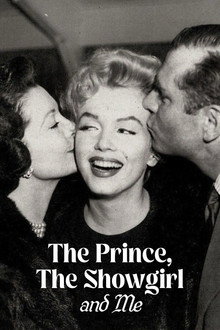
The Prince, The Showgirl and Me
A dramatized retelling of Colin Clark's experience on the 1957 film The Prince and the Showgirl, based on the diary he kept throughout production as third assistant director.

Night of 100 Stars
The most glittering, expensive, and exhausting videotaping session in television history took place Friday February 19, 1982 at New York's Radio City Music Hall. The event, for which ticket-buyers paid up to $1,000 a seat (tax-deductible as a contribution to the Actors' Fund) was billed as "The Night of 100 Stars" but, actually, around 230 stars took part. And most of the audience of 5,800 had no idea in advance that they were paying to see a TV taping, complete with long waits for set and costume changes, tape rewinding, and the like. Executive producer Alexander Cohen estimated that the 5,800 Radio City Music Hall seats sold out at prices ranging from $25 to $1,000. The show itself cost about $4 million to produce and was expected to yield around $2 million for the new addition to the Actors Fund retirement home in Englewood, N. J. ABC is reputed to have paid more than $5 million for the television rights.

Fatal Addiction: Marilyn Monroe
Marilyn Monroe. The queen of Hollywood's Golden Era. From hot pink gowns to an iconic white dress flying towards the sky over a subway grate, Marilyn Monroe is easily the most iconic woman of 20th Century Hollywood.