
Personal Info
Known For
Gender
Birthday
Place of Birth
Miljenko Brlečić
Known for


Journey to Vucjak
With WWI finally ending in 1918, Croatian journalist Kresimir Horvat travels from Zagreb to his village of Vucjak in Zagorje and becomes a witness of history as Austria-Hungarian Empire dissolves.

The Rabbit
Written in 1932 between the two world wars, this TV drama brings a critique of militarism and speaks of the meaninglessness of warfare and the tragedy of human lives and the tragedy of human lives in such an environment.

Unconquered City
In April 1941 Germans occupied Zagreb, the capital of Croatia, and installed a Quisling government. This series, partly based on true events and persons and partly on fiction, covers the activities of the Resistance movement, led by Communists.


On Sale
A 1988 Serbo-Croatian language drama film written and directed by Eduard Galić, starring Miljenko Brlecic, Željko Duvnjak and Špiro Guberina.

Nikola Tesla
This series follows Tesla's life from his childhood in Simljan (near Gospic) in nowadays Croatia (then Kingdom of Croatia-Slavonia, part of Austria-Hungary) to his death in New York, USA.

Timon
A theater premiere of Timon of Athens ends with a rapturous applause from the audience, and Boris, the lead actor (Boris Buzančić), is congratulated for having played the role of his lifetime. Encouraged by the sense of his own worth, he starts a romantic affair with a prompter, spurring gossip in the theater. The ensemble embarks on a tour, but as their performances achieve more success, Boris is becoming less liked among his colleagues, and he begins to experience the fate of the character he is playing...

Grunts of Intellectual Sows of Europe Today
Based on Krleza’s essay written in 1935 which warned about the rise of fascism and Nazism in pre-WWII Europe.
Nightfall, Full of Skepticism
Actors play out scenes and conversations based on Cengic’s biographical book Dance over Volcanoes (Ples na vulkanima) about Krleza as well as Krleza’s own poetry about his struggles, work, national myths and ethics.
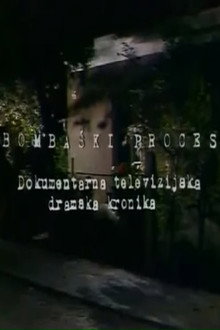
Bombing Process
In 1928 young Communist activist was arrested and put on trial for anti-state activity. Years later he became known as Tito, Communist president of Yugoslavia, and this miniseries was made for the 50th anniversary of those events.

Svetozar Markovic
A biopic of an influential Serbian political activist, literary critic and philosopher. Svetozar Markovic developed an activist anthropological philosophy with a definite program of social change, which set foundations for socialist ideals in his homeland.

A Confession You Didn't Deserve
The usual atmosphere of a standard literary evening turns into a harsh drama of the conscience of the protagonist who took part in the betrayal and liquidation of his father in the World War II, which ended not so long ago.

Just Between Us
Nikola is a man who knows how to really enjoy life; he's even able to rouse sympathy for his sinful ways. His brother turns a blind eye to his philandering although, with a broken marriage behind him, he doesn't have a clear conscience, either. Is there anything positive to be said about infidelity, or does it simply deserve the utmost contempt, particularly when it's more premeditated than spontaneous?
Blessed Augustin Kazotic
Biopic of Augustin Kazotic (1260-1323), a Croatian humanist, a medieval Dominican friar, an orator and bishop of Zagreb. He was one of the first humanist figures to appear in southern Croatia.