Personal Info
Known For
Gender
Birthday
Place of Birth
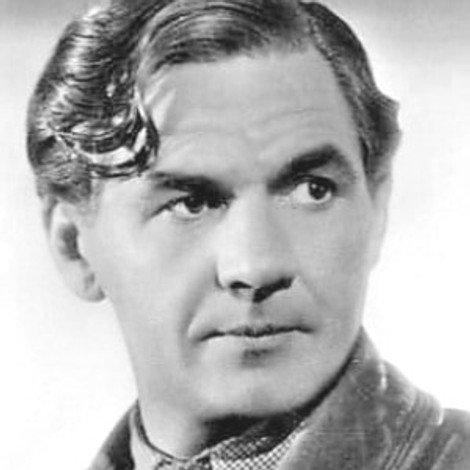
Attila Hörbiger
Biography
Known for

It's Called Love
Story of heavy drinking poet Dichter Albert, who being worn out by much younger Fanny. At the same time Elise, the writer's wife, tries to capture the young Beau Fabrizio, who shows no interest in her.

Späte Liebe
A drama about marriage in a small town, which takes place at the turn of the 19th into the 20th Century.

Girl's Dormitory
Princess Dagmar's life is boring, so depressed - so depressed that the doctor has to come. And the doctor advises: The girl must get out of the regulated aristocratic everyday life. Princess Dagmar is sent to a girls' boarding school, located on a farm, where everyone studies hard and gets stuck in and eats simple, healthy food. In keeping with the surroundings, Princess Dagmar also falls in love with a tough country boy. He is determined to found a school where individual boys are welded together in camaraderie - so that they can find the values that will enable them to fulfill their leadership roles in the world of tomorrow. Of course, Princess Dagmar will entrust her son to him one day.

Lumpazivagabundus
Three upright apprentices - tailor Zwirn, carpenter Leim, and shoemaker Knieriem - win a lottery and get rich overnight. Leim marries his master’s daughter, Zwirn squanders his fortune on the glamorous Signora Palpiti, and Knieriem drinks away his wealth. Horrified, Leim strives to rescue his friends and restore their middle‐class lives.

Premiere
As Fraulein Leander prepares for opening night, her life is thrown into turmoil by a variety of romantic misadventures. But she manages to show up on stage at the appointed time, scoring a huge success.

Karl May
This ethereal, three-hour biopic starring Helmut Käutner as the writer Karl May interprets «a German hero's life» and thereby paints a picture of an entire era.
Blood Brothers
An enhanced and sentimentalized story of love, honor, rivalry, and retreat. The traditional laws of the patriarchal environment and severe conflicts of the heart. The action takes place in Herzegovina and Stolac, Bosnia. The film depicts the Bosnjak from a German point of view.

Der Verschwender

The Volga Girl
A love story between a simple peasant girl (Holt) and a dashing young officer (Sym), who however doesn't see more in her than a temporary affair.

Karl May
The last ten years in Karl May’s life. A man fighting for his work, which lets him become an iconic figure of his time.

The Flute Concert of Sans-souci
In 1756, a masked ball was officially celebrated in the Dresden Palais of the Saxon Minister Heinrich von Brühl. Unofficially, however, talks are taking place with the envoys of Austria, Russia and France with the aim of conspiring against the Prussian King Frederick II. The Prussian envoy, Major von Lindeneck, succeeded in bringing a copy of the concluded secret treaty to the Prussian king. Friedrich consults with his generals, who urge caution. Friedrich is stunned by the reaction and now develops a counter-plan. To do this, he sends von Lindeneck back to Dresden. However, the latter is not very enthusiastic about this, as he thinks he has reason to doubt his wife Blanche's marital fidelity, and he now has to leave her alone.
Der Alpenkönig und der Menschenfeind
Ever since Rappelkopf was once deceived by a con man, he has become the epitome of a suspicious, stubborn misanthrope and a family nuisance. His wife and daughter, as well as his servants, suffer from his bad moods, accusations, and insinuations. The kind, alpine mountain spirit Astragalus, the King of the Alps, wants to rescue the grumpy man from his constant discontent and misanthropy. He promises to remedy his situation and makes Rappelkopf an offer he cannot refuse: he is to become his alter ego, to slip into another, better form. In the guise of his brother-in-law, the tyrant is to visit his family to convince himself of their loyalty and love. The King of the Alps, in turn, wants to appear as Rappelkopf, the living mirror of the true family despot, in order to morally purify him through self-knowledge.

The Immortal Vagabond
Prevented from wedding a postman's daughter (her father prefers she marry a farmer) a Tyrol schoolteacher succeeds instead in having an opera of his acceptance in Vienna. But this isn't the happiness he wanted, he becomes a hobo.
Homecoming
A Nazi propaganda film which aims to justify the invasion of Poland by portraying the plight of ethnic Germans in Poland who were discriminated against and oppressed by the Poles, and how they were saved by the intervention of the German army.
