Personal Info
Known For
Gender
Birthday
Place of Birth
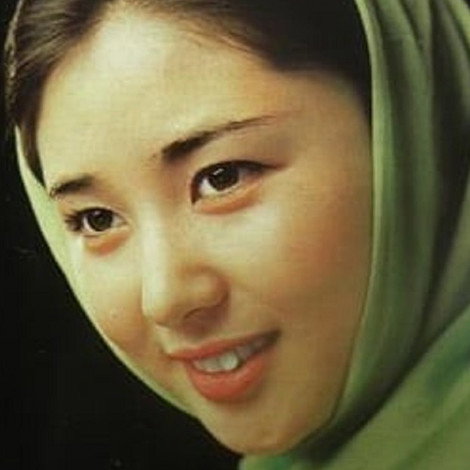
Naoko Ohtani
Known for

Doctor-X: Surgeon Michiko Daimon
Daimon Michiko is a 37-year-old freelance surgeon who is part of a questionable “doctor placement service” that has her wander from hospital to hospital. The harsh environment at the hospitals led many doctors to retire from their positions, forcing hospitals to make use of said program to fill the empty spots at least temporary. However, Michiko doesn’t look like a doctor at all with her flashy clothes and eccentric attitude. In the first episode she raises objections to a certain operation which is planned to be done by the head of a hospital who hasn’t performed an operation for a very long time. This causes Michiko to incur odium at the hospital, however, everyone becomes frozen when Michiko points out the outdated skills of the director. She also holds a scrupulous compliance when it comes to her working hours, never does any unnecessary chores that don’t require a medical license, and couldn’t care less about the power struggles within the hospitals. Nobody knows how she acquired such a top-level skill that allows her to claim exorbitant sums as reward, but her private life is an even greater mystery to everyone around her. Tanaka plays a rookie surgeon, Uchida an anesthetist, Kishibe the head of the placement service, and Ito the head of the surgical department of this institution.

Nobuko to Obachan
The 9th NHK Asadora. Starring Naoko Otani as a young woman living with her grandmother.

Furuya Ikkou's Great Detective Kindaichi Kousuke Series

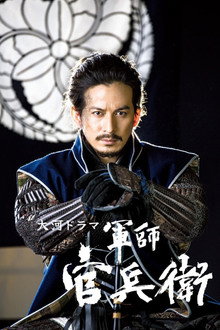
Strategist KANBE
July 1590, Odawara. Toyotomi Hideyoshi's army had surrounded the Odawara Castle for over 3 months, hoping to conquer this last obstacle to his dream of the country's unification. Standing at the gate of the castle, a lone man facing the menacing guards shouted out: "Do not throw your lives away. Treasure living!". Not long after, the castle gates opened and the reigning lord surrendered. The name of that man is Kuroda Kanbee. An excellent military strategist, he worked hand-in-hand with Hideyoshi to unify the country.

Katsu Kaishu
Katsu Kaishū deals with end of the Edo period. Based on Kan Shimozawa's novels "Katsu Kaishū "

Love That Makes You Cry
Follows the story of love, friendship and growth of six young men and women who move from countryside to the big city of Tokyo, each with their own dreams and aspirations. Among them is Sugihara Oto and Soda Ren. After her mother died, Oto was raised by adoptive parents in Hokkaido. Although she has given up on having any high hopes or big dreams for her future, she still remains positive and faces life with optimistic attitude. One day, she finds out the fact that her adoptive parents are planning to marry her to the wealthy man in town in order to solve their financial debt. Soda Ren was raised by his grandfather in Fukushima. Ren works hard on one job after another in order to earn the money to buy back his grandfather's land so that they can start farming again. By chance, Oto and Ren meet in Hokkaido and they decide to move to Tokyo to find new life to change their fate and future. However, as soon as they arrive Tokyo, they get separated in the crowds...

Psycho Doctor

Fateful Mountain Pass
Akizuki Rokurōta was born as a child of Tokugawa Ieyasu, but since he is a twin with Tokugawa Iemitsu he is not allowed an official place within the Tokugawa family. Sent away as an adopted son, he continues his wandering journey. One day, he accidentally encounters Toyotomi Hideyori's son Toyotomi Hideya, his mother Katsura-no-miya Renko and their maidservant Sasaka, survivors of the Shogunate attack on Osaka Castle years before who are now fleeing from their refuge in Kyoto. The Tokugawa Shogunate and Yagyū clan are trying to capture or kill them, while on the other hand villains want to use them. Akizuki Rokurōta decides to protect them from both sides.

Mishima: A Life in Four Chapters
A fictional account of the life of Japanese author Yukio Mishima, combining dramatizations of three of his novels and a depiction of the events of November 25th, 1970.

Only You: Aisarete
A romantic drama about a mentally handicapped man in love with a supermodel.

Searchin' for My Polestar

Story of Yakuza in Naniwa
A dramatization of Ryotaro Shiba's novel of the same title about the life of Kobayashi Sahē, a chivalrous man who actually existed at the end of the Edo period.

The Battle of Okinawa
The Americans are swiftly closing on Okinawa, an island just south of the Japanese mainland. The Imperial command sends top generals and several army divisions to defend it at all costs. The mission quickly degenerates as vital resources and troops are diverted to other islands. After a civilian evacuation ends in tragedy most of non-combatants are forced to remain on the island. Many convert to soldier status. Tokyo sends mixed messages that squander time and resources, as when they order the defenders to build an airstrip for aircraft that never come. The truth soon becomes obvious: the high command decides that the island cannot be held and effectively abandons the Okinawan defenders. When the Americans land many troops are deployed in the wrong places. As the slaughter mounts, a suicidal attitude takes hold. Okinawa becomes a death trap, for civilian volunteers and non-combatants as well.
