Personal Info
Known For
Gender
Birthday
Place of Birth
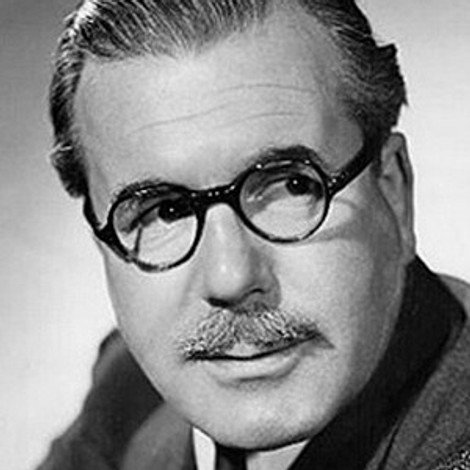
Edward Chapman
Biography
Known for

No Hiding Place
No Hiding Place is a British television series that was produced at Wembley Studios by Associated-Rediffusion for the ITV network between 16 September 1959 and 22 June 1967. It was the sequel to the series Murder Bag and Crime Sheet, all starring Raymond Francis as Detective Superintendent, later Detective Chief Superintendent Tom Lockhart.

Maigret
BBC series based on the novels by Georges Simenon which starred Rupert Davies as Inspector Maigret, a French police detective who preferred to watch and listen in order to solve crimes. The series ran from 1960-63 on British television.

The Onedin Line
The Onedin Line is a BBC television drama series which ran from 1971 to 1980. The series was created by Cyril Abraham. The series is set in Liverpool from 1860 to 1886 and deals with the rise of a shipping line, the Onedin Line, named after its owner James Onedin. Around this central theme are the lives of his family, most notably his brother and partner, shop owner Robert, and his sister Elizabeth, giving insight into the lifestyle and customs at the time, not only at sea, but also ashore. The series also illustrates some of the changes in business and shipping, such as from wooden to steel ships and from sailing ships to steam ships. It shows the role that ships played in affairs like international politics, uprisings and the slave trade.

The World of Hammer
The World of Hammer is a thirteen-part British documentary series created and written by Robert and Ashley Sidaway for Channel 4. Initially broadcast from 12 August to 4 November 1994, the series is narrated by English actor and frequent Hammer collaborator Oliver Reed.

The Man in Room 17
The Man in Room 17 is a British television series which ran for two seasons in the mid-1960s, produced by the Northern ITV franchise, Granada Television. Key to the series' success was the involvement of writer/producer Robin Chapman. The show was set in Room 17 of the Department of Social Research, where former wartime agent-turned-criminologist Edwin Oldenshaw solved difficult police cases through theory and discussions with his assistants. The novelty of the series was that Oldenshaw and his colleagues never needed to leave their office in order to resolve cases, preferring to spend their time playing the Japanese board game of Go. They simply provided their prognosis and left the police to do the cleaning up. Different directors were often appointed to film the Room 17 and outside-world scenes independently, to maintain a sense of distance between the two worlds.

Joey Boy
While posters urge austerity and vigilance in wartime Britain, 'Joey Boy' Thompson has never had it better. In a cellar beneath his East London fish shop, a gambling club thrives – and austerity provides a nice black-market sideline. But the dolce vita crumbles when police arrive in a lightning raid, and offer Joey and his fellow reprobates a stark choice: sign up for active service, or face another stint inside. Thus the lads find themselves heading off to Italy, determined to make the best of it...

The Men From Room 13

Night and the City
Londoner Harry Fabian is a second-rate con man looking for an angle. After years of putting up with Harry's schemes, his girlfriend, Mary, becomes fed up when he taps her for yet another loan.

Caste
The daughter of a Cockney drunkard marries a young aristocrat who is presumed killed in action in WWI. When she gets the news she goes to stay with her aristocratic in-laws.

Innocent Sinners
A neglected girl in post-World War II London befriends street urchins who help her build a tiny garden in a bombed-out church.

The Citadel
Young, idealistic, newly qualified Scottish doctor Andrew Manson arrives in Wales and takes his first job in a mining town, and begins to wonder at the persistent cough many of the miners have. When his attempts to prove its cause are thwarted, he moves to London. His new practice does poorly, but when a friend shows him how to make a lucrative practice from rich hypochondriacs, it will take a great shock to show him what the truth of being a doctor really is.

Marigold
Marigold is a 1938 British drama film set in Scotland in the Victorian era. It was filmed in Edinburgh. It was based on a 1914 play of the same title by Lizzie Allen Harker and Francis R. Pryor.

Poison Pen
The inhabitants of a peaceful village begin receiving mysterious hate mail penned by someone with malicious thoughts.
Champion House
The Yorkshire-based Champion family and the dramas surrounding the family textiles firm, Champion Mills.

Armchair Theatre
Armchair Theatre is a British television drama anthology series of single plays that ran on the ITV network from 1956 to 1974. It was originally produced by Associated British Corporation, and later by Thames Television from mid-1968.