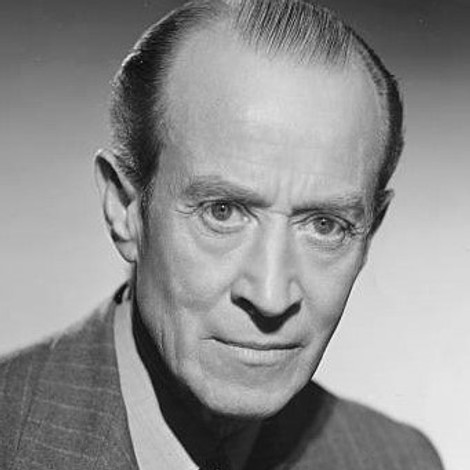
Personal Info
Known For
Gender
Birthday
Place of Birth
H.B. Warner
Biography
Known for

It's a Wonderful Life
George Bailey has spent his entire life giving to the people of Bedford Falls. All that prevents rich skinflint Mr. Potter from taking over the entire town is George's modest building and loan company. But on Christmas Eve the business's $8,000 is lost and George's troubles begin.

The Ten Commandments
Escaping death, a Hebrew infant is raised in a royal household to become a prince. Upon discovery of his true heritage, Moses embarks on a personal quest to reclaim his destiny as the leader and liberator of the Hebrew people.

Sunset Boulevard
A hack screenwriter writes a screenplay for a former silent film star who has faded into Hollywood obscurity.

Driftwood
An orphan helps a doctor fight an epidemic in a small western town, in one of Allan Dwan’s closely observed studies in Americana.

Mr. Smith Goes to Washington
After the death of a United States Senator, the idealistic Jefferson Smith is appointed as his replacement in Washington. The naive and earnest new senator soon finds himself battling political corruption.

You Can't Take It with You
Alice, the only relatively normal member of the eccentric Sycamore family, falls in love with Tony Kirby, but his wealthy banker father and snobbish mother strongly disapprove of the match. When the Kirbys are invited to dinner to become better acquainted with their future in-laws, things don't turn out the way Alice had hoped.

Mr. Deeds Goes to Town
Longfellow Deeds lives in a small town, leading a small town kind of life. When a relative dies and leaves Deeds a fortune, Longfellow moves to the big city where he becomes an instant target for everyone. Deeds outwits them all until Babe Bennett comes along. When small-town boy meets big-city girl anything can, and does, happen.

Haunting Shadows
Young John Glenarm's wealthy grandfather leaves him his estate, but the will stipulates that John live in the estate, rumored to be haunted, for one year or it will be forfeited to schoolteacher Marian Deveraux. John moves in and strange and unexplained events begin to occur. He really doesn't want to stay there anymore, but finds that he is falling in love with pretty young Marian, and decides to stick it out. However, there's more to his grandfather's will than John realizes, and it's not long before he finds out just what that is.

The Resurrection of Christ
The story of Jesus Christ has been portrayed countless times throughout the history of cinema, from the chaste and embryonic staging of the silent film era to the frenetic dynamism of the digital age at the beginning of the 21st century. Death and rebirth are present in a perpetual cycle in which the sacred myth is transformed into the product of a spiritual franchise.

Army Girl
A young captain hoping to replace the U.S. Army's horses with mechanized vehicles faces court-martial after his commanding officer, who's opposed to modern changes, is killed.

French Dressing
Philip and Cynthia Grey are a pair of recently-wed Bostonians, and Cynthia is properly back-bay no-action quiet and dowdy, and Philip resigns himself to the quietness (no action) regularity of their home. But then along comes a blonde, Peggy Nash, who adds some action and outside-regularity to Philip's life. Cynthia is somewhat upset at this turn of events, and decides to go to Paris - the Wickedest City in the World - and get a quiet divorce. Cynthia soon finds out that Paris is a really gay city, especially after Henri de Briac, shows up and offers to be her guide to the delights of Paris (primarily him). Cynthia quickly sheds some of her dowdy ways and dowdy clothes, and is having herself what was once quaintly described as a gay old time. Philip then shows up in Paris, deciding he wants Cynthia back as his wife, and Peggy shows up right behind him and, soon, it is up to Henri to make the pairing-arrangements for the foursome.


Lost Horizon
British diplomat Robert Conway and a small group of civilians crash-land in the Himalayas, where they are rescued by the inhabitants of the hidden, idyllic valley of Shangri-La. Protected by the mountains from the world outside, where the clouds of World War II are gathering, Shangri-La provides a seductive escape for the world-weary Conway.

The Gamblers
A father-and-son team of cons gamble their firm’s assets. The son is caught investing money that doesn't belong to him and is indicted on a swindling charge. The plot gets spicy when the District Attorney handling the case is his former sweetheart's husband. This situation gives the DA an opportunity to prosecute his romantic rival.

Zaza
Zaza is an actress and the favorite at an open-air theater in a small French town. When diplomat Bernard Dufresne comes to the village, he stays away for fear he will fall for her. But during one performance, while Zaza is singing on a swing, her rival cuts the rope and she falls. Zaza is badly injured and she makes Dufresne's acquaintance. A romance quickly springs up and he installs her in a villa. Their happiness is marred, however, when his wife appears.