Personal Info
Known For
Gender
Birthday
Place of Birth
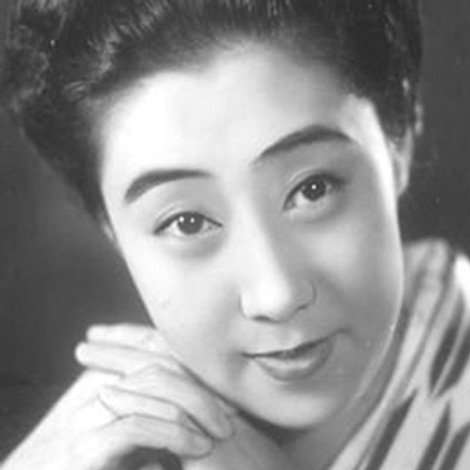
Isuzu Yamada
Biography
Known for

Hissatsu Shigotonin
Nakamura Mondo was relegated to a post in Hachioji from the Minamimachi Bugyōsho and he has retired from professional assassin. But one day he was ordered to return to the Minamimachi Bugyōsho. Shikazō worked behind the scenes to get Mondo back to the Minamimachi Bugyōsho. Shikazō asks Nakamura Mondo to kill a man, once Mondo refuses but he is blinded by big money and eventually take the offer. Mondo restarts killing villains again with Kazarishokunin no Hide and Nawate Samon.

Akō Rōshi
"Ako Roshi" is a group of 47 former retainers of Lord Asano. Lord Asano was forced to commit suicide after attempting to kill Lord Kira. Once the retainers hear about their Lord's death, they sacrifice their lives to regain the honor of their former master.

Minamoto no Yoshitsune
The chronicles of the life of Minamoto no Yoshitsune (1159 - May 17th, 1189). He was a late Heian and early Kamakura general of the Minamoto clan of Japan. Yoshitsune was the ninth son of Minamoto no Yoshitomo. His older brother Minamoto no Yoritomo founded the Kamakura shogunate.

Yojimbo
A nameless ronin, or samurai with no master, enters a small village in feudal Japan where two rival businessmen are struggling for control of the local gambling trade. Taking the name Sanjuro Kuwabatake, the ronin convinces both silk merchant Tazaemon and sake merchant Tokuemon to hire him as a personal bodyguard, then artfully sets in motion a full-scale gang war between the two ambitious and unscrupulous men.

Throne of Blood
Returning to their lord's castle, samurai warriors Washizu and Miki are waylaid by a spirit who predicts their futures. When the first part of the spirit's prophecy comes true, Washizu's scheming wife, Asaji, presses him to speed up the rest of the spirit's prophecy by murdering his lord and usurping his place. Director Akira Kurosawa's resetting of William Shakespeare's "Macbeth" in feudal Japan is one of his most acclaimed films.


Oyuki the Virgin
When a civil war threatens to break out, two geishas flee from their village with aristocrats. During the long journey, the socially inferior women prove to be morally superior to their betters.

Hebi hime dōchū
Driven by a murderous intent, he pursues the palanquin carrying the renowned onnagata Kikunosuke, who has taken the place of the princess destined to marry the lord of the Okazaki domain.

Sisters of the Gion
A geisha in the Gion district of Kyoto feels obliged to help her lover when he asks to stay with her after going bankrupt and leaving his wife. However, her younger sister opposes this, thinking that they should both find wealthy patrons to support them.

Suspicion
A car going at 25 mph plunges into the sea at Shinko Harbour, Toyama prefecture. Inside is the local business magnate Fukutaro Shirakawa, who perishes. Riding alongside him and surviving unhurt is his second wife, Kumako. It soon comes to light that Kumako’s husband was insured for 300 million yen and she is arrested on suspicion of murdering her husband for the insurance money. The newspapers denounce her as an evil woman, while the public is in no doubt about Kumako’s crime. Ritsuko Sahara is chosen as her defence attorney but the pair clash over almost everything...

Actress
During the late Meiji period, at the beginning of the twentieth century, Sumako, a country girl, becomes a great actress with the help of Hogetsu, a scholar who brought European realism to the Japanese stage. The relationship leads to the end of his marriage and the breakup of his Arts Society.

Tokyo Twilight
Two sisters learn about the existence of their long-lost biological mother, but the younger is unable to accept the fact that she was abandoned as a child.

Kenji Mizoguchi: The Life of a Film Director
In 39 interviews with actors and actresses, writers, producers and staff members, interspersed with film excerpts and stills, Shindō recounts the life and career of his friend and mentor Mizoguchi.

Zoku hebi hime dōchū
The Snake Princess in hot pursuit… The stand-in bride enters the castle… But her true identity has been exposed… Life or death hinges on obtaining the mirror. A lavish period drama full of twists and turns.

Tsukigata Hanpeita
During the ultra-violent era of the downfall of the Tokugawa Shogunate one man rose above the rest with his ideas of how to overthrow the corrupt government and end the bloodshed between the Choshu and Satsuma clans which would ultimately lead to the alliance of these 2 clans and restoration of the emperor to full power. Based on the play that made Sawada Shojiro famous, this is the story of Tsukigata Hanpeita, a forward looking samurai from Choshu, who along with Katsura Kogoro and Sakamoto Ryoma of Tosa worked to bring their dream of a new era in Japan.