
Personal Info
Known For
Gender
Birthday
Place of Birth
Sacha Pitoëff
Biography
Known for

Samedi soir
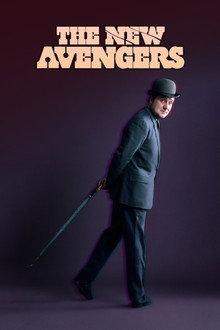
The New Avengers
The New Avengers is a British secret agent fantasy adventure television series broadcast during 1976 and 1977. It is a sequel to the 1960s series The Avengers and was developed by Albert Fennell and Brian Clemens. A joint United Kingdom-France-Canada production, the show picks up the adventures of John Steed and his team of Avengers fighting evil plots and world domination. Whereas in the original series Steed had almost always been partnered with a woman, in the new series he had two partners: Mike Gambit, a top agent, crack marksman and trained martial artist, and Purdey, a former trainee with The Royal Ballet who was an amalgam of many of the best talents from Steed's previous female partners.
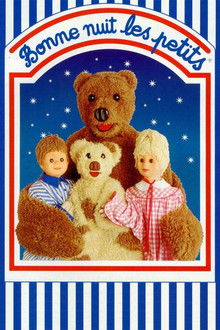
Bonne nuit les petits

Graf Yoster gibt sich die Ehre
Graf Yoster gibt sich die Ehre [French title: Le comte Yoster a bien l'honneur] is a TV series which followed the adventures of the title’s amateur gentleman detective. It was a success in particular in Germany and in France. Originally the show was a German production in black-and-white but it evolved into a European co-production in colour.
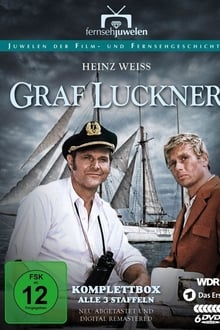
Graf Luckner
Between the first and second World Wars, we portray glorified and renown naval sea officer Felix Graf von Lucker and his fictitious ship Niobe, which is the 1887 built Amphitrite from Southampton. Von Luckner is famous for his tactical genius in the first World War, especially sinking 14 enemy ships and only losing one crewman, whilst always seeking a peaceful outcome - making him the ideal seaman.
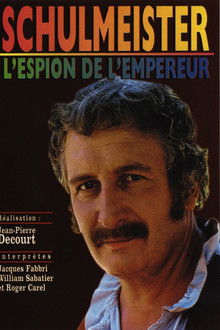
Schulmeister, l'espion de l'Empereur
Schulmeister, l’espion de l’empereur (Schulmeister, the Emperor's Spy) is a French historical adventure television series consisting of 13 episodes (1971–1974), inspired by the real life of Charles Louis Schulmeister, a famous spy in the service of Napoleon I. It alternates between historical facts and fiction, offering a fictionalized portrait of a cunning spy, loyal to Napoleon, and always ready to turn a situation to his advantage.
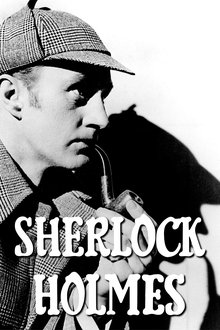
Sherlock Holmes
The first American television series of Sherlock Holmes adventures aired in syndication in the fall of 1954. The 39 half-hour mostly original stories were produced by Sheldon Reynolds and filmed in France by Guild Films, starring Ronald Howard as Holmes and Howard Marion Crawford as Watson. Archie Duncan appeared in many episodes as Inspector Lestrade. Richard Larke, billed as Kenneth Richards, played Sgt. Wilkins in about fifteen episodes. The series' associate producer, Nicole Milinaire, was one of the first women to attain a senior production role in a television series.
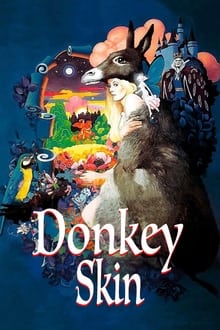
Donkey Skin
A fairy godmother helps a princess disguise herself so she won't have to marry her father.
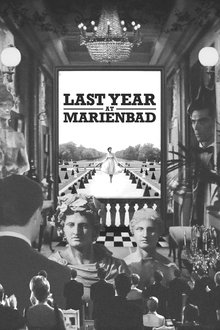
Last Year at Marienbad
At a weekend gathering, a man tells a woman that they had spent time there together a year prior. But, the woman has no recollection whatsoever and is convinced that he is simply fabricating the encounter. The more he speaks about their activities the previous year however, the more compelling he becomes. The question remains however – did they meet previously or not?
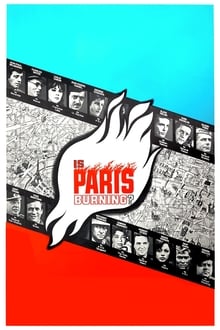
Is Paris Burning?
Near the end of World War II, General Dietrich von Choltitz receives orders to burn down Paris if it becomes clear the Allies are going to invade, or if he's unable to maintain control of the city. After much contemplation, Choltitz ignores orders, enraging the Germans and giving hope to various resistance factions that the city will be liberated. Choltitz, alongside Swedish diplomat Raoul Nordling, helps a leader organise his forces.
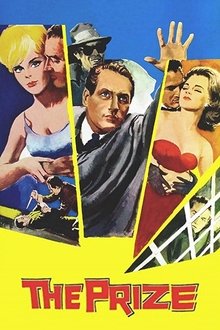
The Prize
A group of Nobel laureates descends on Stockholm to accept their awards. Among them is American novelist Andrew Craig, a former literary luminary now writing pulp detective stories to earn a living. Craig, who is infamous for his drinking and womanizing, formulates a wild theory that physics prize winner Dr. Max Stratman has been replaced by an impostor, embroiling Craig and his chaperone in a Cold War kidnapping plot.
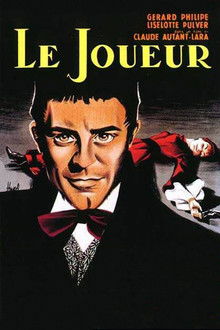
The Gambler
In 1866, a young Muscovite named Alexei Ivanovitch arrives in Baden Baden, then the gambling capital of Austria, and is soon engaged by General Zagorianski to look after his children. Alexei discovers that his employer is a compulsive gambler who has been almost ruined by his addiction. The only money the General has is provided by the Marquis de Grieux, an adventurer who intends to marry Zagorianski’s sister, Pauline. In doing so, de Grieux hopes to profit from the vast inheritance that will come the General’s way from his Aunt Antonina, who is presently very ill. Alexei is appalled by this society which lives only for money. He loves Pauline and wants to take her to a healthier place, but when she refuses to marry him, he begins to gamble at the casino…
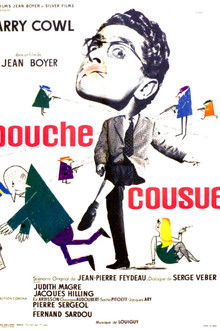
Mum's the Word
Martin is a nurse in a private clinic in Paris. The victim of a serious concussion, an unidentified casualty, arrives in the emergency room one night. He is operated on immediately. When he wakes up, half-unconscious, he tells Martin a confused story about stealing jewels from a maharajah visiting Marseille... before falling into total amnesia. Real and fake policemen interrogate Martin, gangsters kidnap him to get him to reveal precious information, but... the nurse keeps his mouth shut!
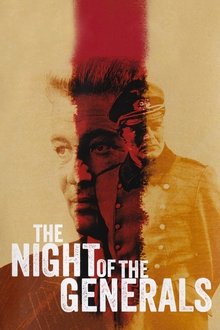
The Night of the Generals
A German intelligence officer investigates a prostitute's killing in Warsaw during World War II. He lands on three major Nazi generals as suspects, two of whom are also involved in a plot to kill Adolf Hitler.
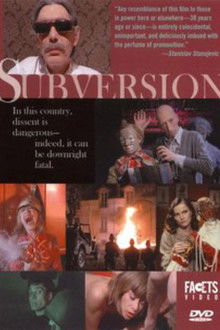
Subversion
A blind, paralyzed president uses his remarkable hearing and his corrupt daughter to keep his country in line. His beautiful, clever daughter works her own agenda while striving to be the equal of men. She appoints herself Chief of Firefighters and then commits arson to ensure that her job is needed.