Personal Info
Known For
Gender
Birthday
Place of Birth
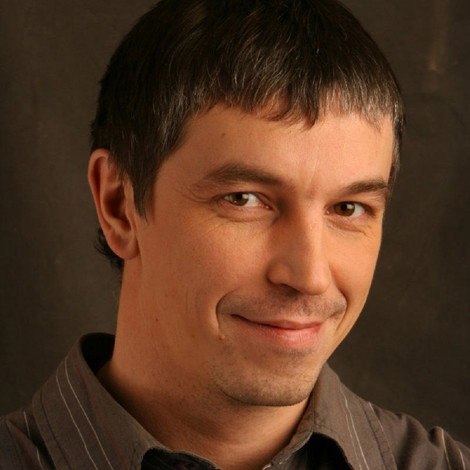
Vladimir Kapustin
Known for

Пять копеек

Isayev
The series is set in the 1920s. It tells about the first tasks of Isaev. First, he goes to Reval to stop the smuggling of valuables stolen from Gokhran. Upon his return, he is sent to Vladivostok to collect information about the actions of the whites. Then he has to go abroad to monitor counterrevolutionary emigration.

Empire is Under Attack
In this TV-series the events of the beginning of the 20th century in Russia are highlighted. Revolutioners, terrorists, spies - and investigator Putilovskii and his team fight them as best they can.

Ultimate Measure
Yaroslavl, 1974. Two high-profile and violent crimes are taking place in the city. The investigation is being handled by the uncompromising investigator for particularly important cases of the prosecutor's office, Egor Tabolin. The threads of these crimes lead to one person — the head physician of the psychiatric hospital, Mikhail Nagornykh, and his deputy Vaganov, in whose hospital several mysterious deaths have occurred in recent years.

Mediator
Andrey is a professional negotiator. When people can't agree, he helps them to — for a lot of money. For each dispute, he changes himself beyond recognition. Andrey can convince anyone of anything, anytime and anywhere, but he seems to have a hard time accepting his own self. This twisted psychological thriller tests the limits of how far people can go to get what they want. Cruel, dark, and shockingly manipulative, Andrey proves to be extremely efficient. But is it all worth it in the end? And what is the real cost of his abilities?

Chernobyl
The action takes place from April to December 1986. The KGB department of the USSR becomes aware of the interest shown by foreign intelligence services in the Chornobyl nuclear power plant. To establish the whereabouts of an experienced CIA officer, Albert Lenz, who is suspected of espionage, on the territory of Pripyat, Lieutenant Colonel of military counterintelligence Andrey Nikolaev arrives in the city.
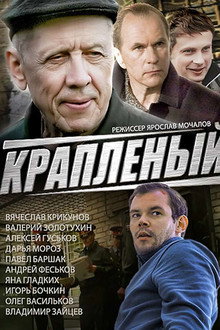
Краплёный

Lighthouse
A college boxer juggling studies and caring for his brother with cerebral palsy falls in love with a new teacher, but family pressure leads to a heartbreaking clash. As tragedy strikes, the family must search for a way back to hope.

Cordon
Former border guard Sasha Dymov returns to his native village of Kordona after serving time in prison on false charges. There is nothing left of his previous life — his wife left for her best friend, it is impossible to return to law enforcement agencies. A faithful comrade Trofimych comes to the rescue — he takes Dymov under his wing and arranges an auto mechanic in his workshop. It would seem that there is no more peaceful occupation. But there is a border nearby, secret paths of smugglers, big money, weapons and criminals who dream of hiding from persecution behind the cordon… Only Sasha Dymov can stop this lawlessness. In addition to criminal showdowns, Sasha will have to find a way out of the love triangle. And it won't do without mysticism.

Territory
The series of shocking murders are forcing two absolutely opposite detectives to unite. Working as a team helping them to solve the crime but they understand that winning the war never means that war is over.

The Dragon Syndrome
Germany, 1953. Corrupt gang of Soviet officers appropriated jewelry seized from repressed citizens. The officers take the young scout Terekhov and collector Avdeev, who recently left not so distant places, to guard the myriad wealth.

Angels of the District
The Shatalov family plays an important role in the life of their neighborhood. The head of the family, Alyona, runs a management company that serves the whole quarter. Her husband Mikhail is a doctor at the district polyclinic, and their 20—year-old son Artyom serves as a district police officer. Every day, this magnificent family solves the everyday and everyday problems of the residents of their area, constantly getting into funny and curious situations. But one day the Shatalovs' personal problems grow to the scale of a domestic disaster.

Fortune-Teller

Lenin's Testament
The author of The Kolyma Stories and many other works spent 17 years in the terrible GULAG camps on Kolyma. The term that Varlam Tikhonovich received in 1929 was for distributing Lenin's letter to the congress, in which he criticized Stalin. Nowadays, this letter is called the "testament of Lenin"…
