Personal Info
Known For
Gender
Birthday
Place of Birth
Guillermo Montesinos
Known for

Cuéntame cómo pasó
Recounts the experiences of a middle-class family, the Alcántaras, during the last years of the rule of Francisco Franco and the beginning of the Spanish Transition to democracy.
Cuéntame cómo pasó
Recounts the experiences of a middle-class family, the Alcántaras, during the last years of the rule of Francisco Franco and the beginning of the Spanish Transition to democracy.

La que se avecina
La que se avecina is a Spanish television comedy created by Alberto Caballero, Laura Caballero and Daniel Deorador. The TV-series focusing around the inhabitants of Mirador de Montepinar, a fictional building located on the outskirts of a big city. Both its storylines and cast are heavily based on Aquí no hay quien viva, which ended when Telecinco bought Miramón Mendi, the series production company. The episodes debuted on the Telecinco network, and were later rerun by the same network as well as cable/satellite channels FactoríaDeFicción and Paramount Comedy. The series debuted in 22 April 2007 and became popular thanks to its funny characters, witty script, use of catchphrases and capacity to integrate and poke fun at contemporary issues; the program presents a caustic satire of many of the 'types' found in Spanish society. The name of the show involves wordplay, as "vecina" is the Spanish word for neighbour.

The White Village
'L'Alqueria Blanca’ ('The White Village') proposes a journey through time, up to the 1960s, which reflects the life of an inland village, in the Alcoià county. The atmosphere is eminently rural and is marked by the great differences between the two most representative families of the place, the Falcó and the Pedreguer, who star in a series of stories with love above the class difference, envy, jealousy and scandal. It all comes down to some unstoppable advances in society.

Alpha Males
Pedro, Luis, Raúl and Santi are four friends who feel a bit lost in the new world of empowered women, each trying to adjust in their own haphazard way.

La Comedia Musical Española

Women on the Verge of a Nervous Breakdown
After being dumped by her lover, Pepa finds her life and the lives of those around her spiraling out of control in a deliciously chaotic series of events.

Rateta, Rateta
She wanted to be rich, to have lovers, to go to Barcelona: but Montserrateta had to make do with living in a village in the Pyrenees, with her boyfriend, and milking cows on her parents' farm, until one day, she finds a lottery ticket.
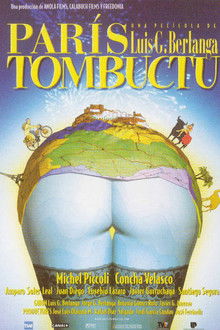
París-Tombuctú
The frustration and vital weariness of Michel des Assantes, a prestigious plastic surgeon in Paris, is unbearable: he has a wife whom he does not love, a son who is foreign to him and friends whom he despises but, at the same time, he is incapable of taking his own life. One day, he buys a bike from a bizarre cyclist who was to make the Paris-Timbuktu route and sets out to make the journey: then, Timbuktu becomes for him the Promised Land.

The Court of the Pharaoh
Spain, in the late 1940s. An amateur theater company dares to stage a controversial musical without the permits required by dictator Franco’s censorship authorities.
Pagina de Sucesos
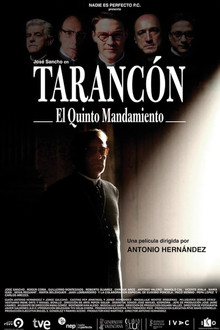
Tarancón, el quinto mandamiento
Biography of Cardinal Tarancón, a key figure during the Transition period due to his efforts to reconcile the "two Spains." The assassination of Luis Carrero Blanco by ETA on December 20, 1973, prompted the cardinal to leave Madrid after receiving death threats. Once far from the city, Tarancón recalls what his life was like as a young priest on the run during the Civil War (1936-1939).
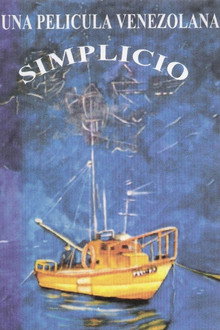
Simplicio
Simplicio is an eight years old boy who lives in an old boat abandoned and stranded on a coast.