Personal Info
Known For
Gender
Birthday
Place of Birth
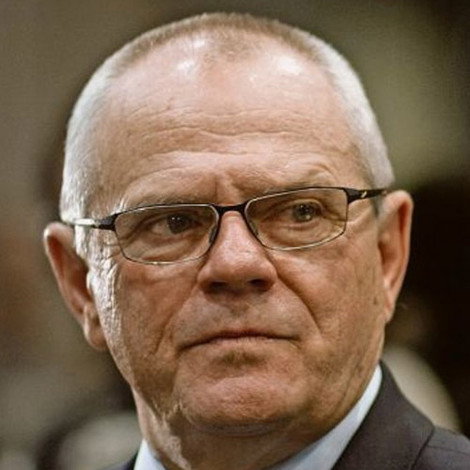
Milan Kňažko
Known for

Bakaláři

Hostel: Part II
Three American college students studying abroad are lured to a Slovakian hostel, and discover the grim reality behind it.

Slnko v sieti

Pumpa

Stopy života

The Physician of a Dying Time
Series about the life of Renaissance anatomist, scholar and politic Johannes Jessenius. Already legendary series today, was produced by Czechoslovak Television Bratislava, directed by Slovak director Miroslav Luther in the first half of 80's in Barrandov Studios in Prague. The story and screenplay of the series wrote Czech writer Vladimír Körner. Five-episodes epic historical narration is a biographical story of distinguished Renaissance scholar, anatomist and politic of Slovak origin, Johannes Jessenius (Ján Jesenský, 1566–1621). It displays his life from the first studies and successes. In 1594 he became professor of surgery and anatomy on Wittenberg University, which he had attended years before. From that moment, his life went through social and personal wins and losses, to the sad end on the Prague Old Town Square gallows, among 27 noblemen, knights and burgenses, after lose Bohemian Revolt in 1621. His destiny was coupled with key events of Czech history in the break of 16th and 17th century, when Renaissance and European humanism slowly fade out.

Nesmrteľní

Za sklom

Neuer

Mečiar: The Lust For Power
The film Mečiar is the confession of the young director Tereza Nvotová about Vladimír Mečiar and the influence that this politician had on Slovak society, but also on the life of Tereza herself. When the totalitarian communist regime fell in Czechoslovakia in 1989, Tereza was one year old. The leaders of the Gentle Revolution then decided to hold an audition for the Minister of the Interior, to which Vladimír Mečiar, an unknown business lawyer from the Slovak countryside at the time, applied. After success in bankruptcy, Vladimír Mečiar reaches the political top, from where he rules the country with a series of questionable practices. Against the background of events such as the division of Czechoslovakia or the kidnapping of the son of the president of the Slovak Republic, Tereza and her peers relive their childhood.

Bratislavské pondelky

Bel ami
In Belle Epoque Paris, Georges Duroy, a handsome, ambitious but penniless young man, reunites with his friend Forestier, editor-in-chief of a major financial newspaper. Forestier manages to find him a position at the newspaper. With his friend's support, Georges does everything he can to climb the social ladder. He relies mainly on his undeniable charm to win the favor of influential women who can introduce him to the wealthy circles he covets. Georges benefits in particular from the support of Madeleine, the wife of the newspaper's editor-in-chief. His numerous conquests in high society soon earn him the nickname "Bel Ami."

The Last Butterfly
Stage mime Antoine Moreau is compelled by the Gestapo to put on a performance for the children of Terezin, a "model" concentration camp, to convince the Red Cross observers that the camp is truly what it seems. Reluctant at first, Moreau slowly learns the true nature of the camp, including the meaning of the "transports" on which people leave. With a world-class orchestra (made up of people interned in the camp) and a cast of children, Moreau stages a show to end all shows.