
Personal Info
Known For
Gender
Birthday
Place of Birth
Harry Riebauer
Biography
Known for
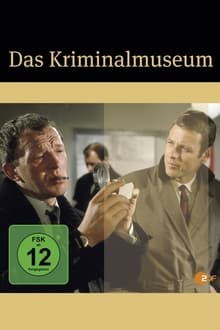
Das Kriminalmuseum
Das Kriminalmuseum was a German television series. It ran from 1963 to 1970 on ZDF and was one of its first programs. Each episode began with a tracking shot through an unspecified crime museum, stopping at one of the displays, whose story was then told. Each episode was between 60 and 75 minutes long and featured different actors as the criminal commissioner. The best known was Erik Ode, who in 1969 moved to Der Kommissar, appearing in 97 episodes. The theme music of the series was written by German composer Martin Böttcher, who also composed the complete scores for five episodes.
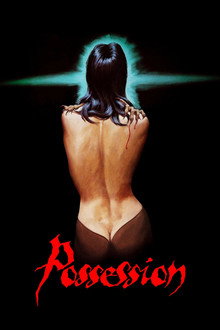
Possession
A young woman left her family for an unspecified reason. The husband determines to find out the truth and starts following his wife. At first, he suspects that a man is involved. But gradually, he finds out more and more strange behaviors and bizarre incidents that indicate something more than a possessed love affair.
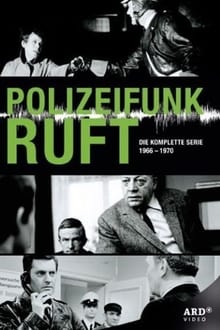
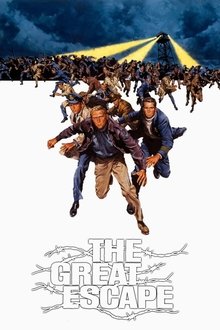
The Great Escape
The Nazis, exasperated at the number of escapes from their prison camps by a relatively small number of Allied prisoners, relocate them to a high-security 'escape-proof' camp to sit out the remainder of the war. Undaunted, the prisoners plan one of the most ambitious escape attempts of World War II. Based on a true story.

Kommissariat 9

Kintopp-Kintopp
Dreht euch nicht um – der Golem geht rum
In the 23rd century, it is no longer necessary to work thanks to the latest technology. Convicts do the work that still needs to be done. The World Leisure Center uses a computer system to decide how people spend their free time. World citizen number DARK 7035 7201 is called Prun. Although an examination shows that his IQ is too low for him to have a child of his own, he becomes the father of Botho. Because it is a "black birth", he has to keep Botho hidden from now on. Prun comes into contact with the so-called "semi-intelligentsia", who oppose the government.
Morenga
Gottschalk and Wenstrup are two German veterinarians who have settled in German Southwest Africa to tend to the needs of cattle ranchers. When a rebellion by a local dissident named Morenga is brutally crushed by the Germans, the two vets get involved, at great risk to themselves, and offer help to the native revolutionaries.
The Sonnenbrucks
Professor Sonnenbruck is a scientist who is not particularly interested in politics. Even the meeting in 1943 with his former assistant Peters does not change him. He does not betray Peters, who has escaped from a concentration camp, but that is already enough for him. But after the war Sonnenrbruck gets into a conflict of conscience. He thought that science was finally free of politics again only to find the opposite happening at his university in Göttingen. A medical congress in the GDR brings him together with Peters, who is working on a major research contract there. Sonnenbruck decides to visit Peters.
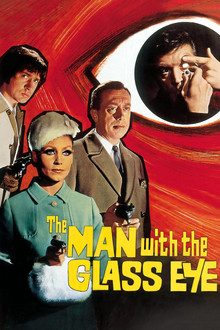
The Man with the Glass Eye
A man is found dead in a London hotel. The knife is still firmly stuck in the victim's chest, and Inspector Perkins strangely finds a glass eye in his jacket pocket. Kurt after that a second, mysterious murder happens: A city-famous dancer of the Las Vegas Girls, who perform at the London Odeon Theater, is poisoned. Is there a connection between the pretty dancer and the hotel guest? Inspector Perkins and his colleagues are pressed for time. The "man with the glass eye" strikes deadly again and again. A first clue leads Scotland Yard to a billiard club, where one has to show a glass eye as an admission ticket.
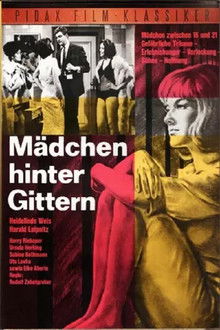
Mädchen hinter Gittern
The inmates of a reformatory for underage girls have had turbulent pasts: prostitution, crime, violence, and drugs dominated their lives. One of these young women is the rebellious Karin, who lets no one get close to her. Only the young pastor Johannes manages to reach her, bringing Karin's mysterious and sad past to light.
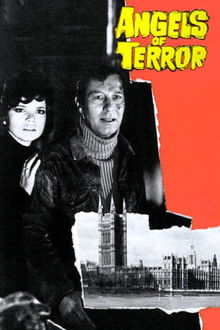
Angels of Terror
An Australian woman arrives in London to search for her sister who she finds is involved with a heroin smuggling gang. The gang itself is under attack from an unknown rival, who is methodically assassinating them with a shot to the head.
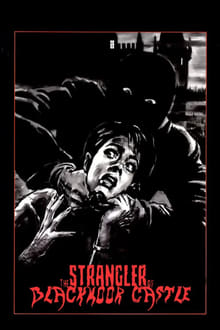
The Strangler of Blackmoor Castle
A strangler is loose on a British estate, and he not only strangles his victims but brands an "M" onto their foreheads before he decapitates them.