Personal Info
Known For
Gender
Birthday
Place of Birth
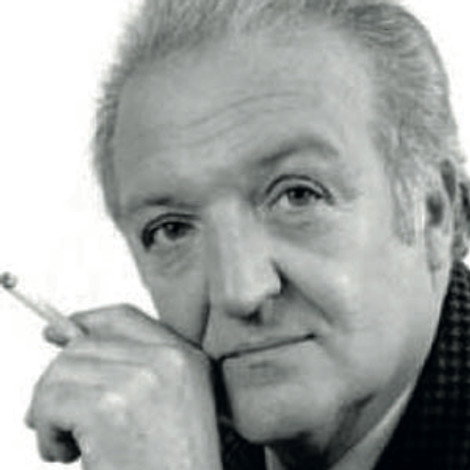
Bernard Freyd
Known for

Maigret
The pragmatic, reserved and refined Maigret investigates murders in his singular unhurried manner and inevitably discovers the truth.
Maigret
The pragmatic, reserved and refined Maigret investigates murders in his singular unhurried manner and inevitably discovers the truth.

Le Tartuffe
Orgon is a man of property duped by the false piety of the penniless Tartuffe. Orgon takes him into his house, believing him a paragon of virtue. Orgon orders his daughter to reject her fiancé and marry Tartuffe. First Dorine, the family servant, tries a strategy to avert the marriage; then Orgon's son tries his hand. They anger Orgon, and to prove paternal power, he disinherits his son and makes Tartuffe his heir. Next Orgon's wife tries to bring her husband insight, a stratagem that partially backfires. With the bailiff at the door ordering Orgon to vacate his own home and with Tartuffe at court to prove Orgon's a traitor, all seems lost.

Mother
Henri Verneuil was born Achod Malakian of Armenian parentage on October 15, 1920, in Rodosto, Turkey, and his family fled to France and settled in Marseilles when he was a young child. He later recounted his childhood experience in the novel Mayrig, which he dedicated to his mother and made into this 1991 film with the same name.

Ave Maria
Naive villagers find themselves duped by a pair of con artists who sweep into town proclaiming themselves "Holy Father" and "Holy Mother." Soon the pair of cons are making out like the bandits that they are, as the villagers hand over their money and their lands.

Sous les vents de Neptune
Commissioner Adamsberg and his team are undergoing training supervised by the Quebec scientific police. He discovers the murder of a young girl.

Jalna

Taggers
An Arab cop is caught up in a conflict involving two gangs of young graffiti artists.

Mad Love
After a successful bank robbery, Micky hopes to take back his girlfriend Marie who has been taken from him. On the way to Paris he meets Leon, a neurotic dreamer whom he considers an idiot. Leon can hardly understand what Micky is up to but he follows him everywhere and soon falls in love with Marie.

The Fourth Power
Yves Dorget, major reporter in a daily newspaper, finds on an "affair" part of a simple news item Catherine Carré, his former friend, editor and chief and star presenter of a television newscast.

Shipwrecked Children
Eight children of a wrecker live together on a strange island, in a supernatural happiness. Until their little paradise is disturbed when an old lady is discovered murdered there. They then embark on the investigation in search of the truth.

Au nom de tous les miens
Martin Gray, whose life has been marked by tragedy and who has overcome terrible hardships, has decided to share his story.
À corps et à cris
The Cat Way
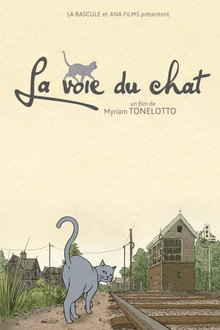
Through a mix of animation and filmed sequences, "The Cat Way" shows us an original vision of the human-cat relationship. Long perceived as the animal of the Devil, it was only after the French Revolution that the cat came to embody individual liberty. For 19th-century thinkers and artists, the cat represents much more than a muse; they are the individuals these men dream of being. From the 19th century to today, "The Cat Way" observes what has become of these libertarian aspirations.

États d'âme
In this political drama, five left-leaning friends gradually lose heart in the Socialist government elected in 1981 in France. One of the five men is a television broadcaster; the others are a teacher about to become an academic inspector, a tax man, the director of a cultural center, and a sociologist who is about to step into a ministerial position. Their interlocking lives are told in alternating vignettes over a four-year period, and the professions director Jacques Fansten has chosen for his main characters seem to be a comment on the media, education, budget or finance, the arts, and government bureaucracy under Socialist rule.