
Personal Info
Known For
Gender
Birthday
Place of Birth
Agata Buzek
Biography
Known for

Scene of the Crime
Tatort is a long-running German/Austrian/Swiss crime television series set in various parts of these countries. The show is broadcast on the channels of ARD in Germany, ORF in Austria and SF1 in Switzerland.

Polizeiruf 110
Polizeiruf 110 is a long-running German language detective television series. The first episode was broadcast 27 June 1971 in the German Democratic Republic, and after the dissolution of Fernsehen der DDR the series was picked up by ARD. It was originally created as a counterpart to the West German series Tatort, and quickly became a public favorite.
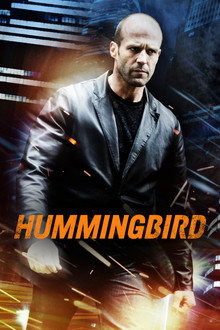
Hummingbird
Homeless and on the run from a military court martial, a damaged ex-special forces soldier navigating London's criminal underworld seizes an opportunity to assume another man's identity, transforming into an avenging angel in the process.
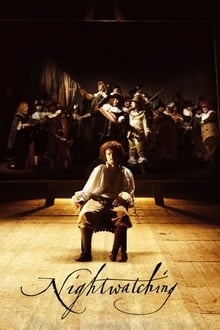
Nightwatching
An extravagant, exotic and moving look at Rembrandt's romantic and professional life, and the controversy he created by the identification of a murderer in the painting The Night Watch.
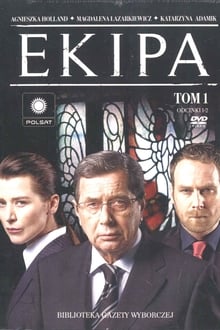
Ekipa
Ekipa is a Polish political drama TV series created and directed by Agnieszka Holland, aired from 13 September 2007 until 6 December 2007 on Polsat. Ekipa is the second Polish political fiction series after the 1980s miniseries The Career of Nicodemus Dyzma.
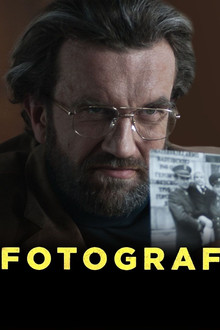
The Photographer
The Photographer is an elusive serial killer operating in modern-day Moscow. He leaves numbered tiles at the scenes of his crimes, similar to those placed at crime scenes by forensic teams. The investigation points to the old Red Army barracks in Legnica, and to events dating back to the 1970s. One of the people involved in the investigation is Natasha - the only person to have survived an encounter with The Photographer.
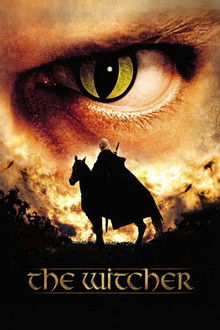
The Witcher
"Later it was said that the man came from the north from the Powroznicza gate. He walked on foot, and led his horse, which was laden, by the bridle. It was late afternoon and the stalls of the ropemakers and saddlers were already closed, and the street was empty. It was warm, and the man was wearing a black cloak thrown over his shoulders. He was drawing attention." - So begins the short story "The Witcher" by Andrzej Sapkowski, which gave rise to a seven-volume series.

The Net – Prometheus

High Life
Monte and his daughter are the last survivors of a damned and dangerous mission to deep space. The crew—death-row inmates led by a doctor with sinister motives—has vanished. As the mystery of what happened onboard the ship is unraveled, father and daughter must rely on each other to survive as they hurtle toward the oblivion of a black hole.

Pearl
Competitive bodybuilder Léa Pearl is preparing to compete for the prestigious Miss Heaven title. Her coach, Al, a former bodybuilding star, hopes that, thanks to Léa, he will be back in the spotlight once again. But at the last minute, Léa's ex arrives with their son Joseph, who she hasn't seen in four years.
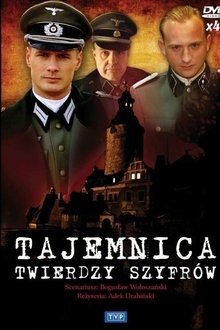
Tajemnica Twierdzy Szyfrów

Paparazzo
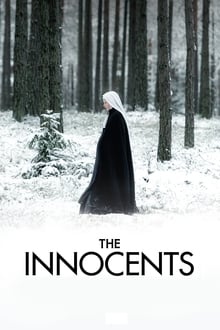
The Innocents
Poland, 1945. Mathilde, a young French Red Cross doctor, is on a mission to help the war survivors. When a nun seeks for her help, she is brought to a convent where several pregnant sisters are hiding, unable to reconcile their faith with their pregnancy. Mathilde becomes their only hope.

Foreign Body
A dashing young Italian in Poland finds himself caught between two women — a novitiate nun and a ruthless corporate ladder-climber — in this lacerating vision of contemporary Poland from master filmmaker Krzysztof Zanussi.
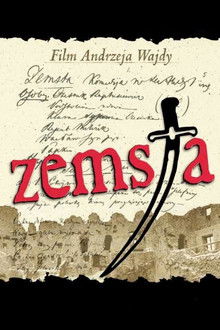
The Revenge
A winter day at a Polish castle, half owned by a fatalistic notary and half by a volcanic old soldier's niece. The old soldier, Cupbearer, and the notary are sworn enemies, which may doom the love between the niece, Klara, and the notary's son, Waclaw. On this day, the tongue-tied Cupbearer asks a braggart courtier, Papkin, to sue on his behalf for the hand of the widow Hanna. Papkin succeeds and