Personal Info
Known For
Gender
Birthday
Place of Birth
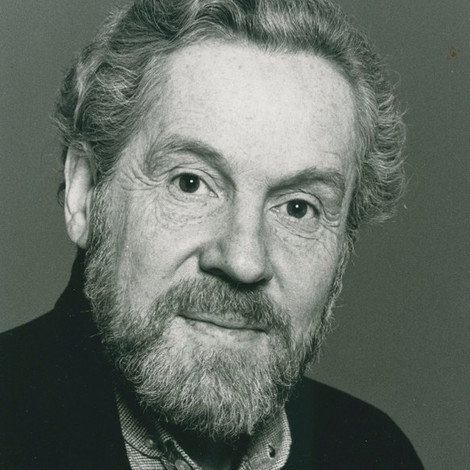
Erland Josephson
Biography
Known for

Autumn Sonata
After a seven-year absence, Charlotte Andergast travels to Sweden to reunite with her daughter Eva. The pair have a troubled relationship: Charlotte sacrificed the responsibilities of motherhood for a career as a classical pianist. Over an emotional night, the pair reopen the wounds of the past. Charlotte gets another shock when she finds out that her mentally impaired daughter, Helena, is out of the asylum and living with Eva.

Fanny and Alexander
Through the eyes of ten-year-old Alexander, we witness the delights and conflicts of the Ekdahl family, a sprawling bourgeois clan in turn-of-the-twentieth-century Sweden.

The Guldbagge Awards
The Guldbagge Awards is an official and annual Swedish film awards ceremony honoring achievements in the Swedish film industry. Winners are awarded a statuette depicting a rose chafer, better known by the name Guldbaggen. The awards, first presented in 1964 at the Grand Hôtel in Stockholm, are overseen by the Swedish Film Institute. It is described as the Swedish equivalent of the Academy Awards. The awards ceremony was first televised in 1981.

Ulysses' Gaze
An exiled filmmaker finally returns to his home country where former mysteries and afflictions of his early life come back to haunt him once more.

The Magician
A traveling magician and his troupe arrive in a Swedish town in the 1840s, where their act is scrutinized by local authorities and a skeptical medical official. Their stay leads to a series of confrontations that test the boundaries between performance, belief, and deception.

Hour of the Wolf
While vacationing on a remote German island with his younger pregnant wife, an artist has an emotional breakdown while confronting his repressed desires.

Fanny and Alexander
As children in the loving Ekdahl family, Fanny and Alexander enjoy a happy life with their parents, who run a theater company. After their father dies unexpectedly, however, the siblings end up in a joyless home when their mother, Emilie, marries a stern bishop. The bleak situation gradually grows worse as the bishop becomes more controlling, but dedicated relatives make a valiant attempt to aid Emilie, Fanny and Alexander.

Cries and Whispers
As Agnes slowly dies of cancer, her sisters are so immersed in their own psychic pains that they are unable to offer her the support she needs.

Scenes from a Marriage
Johan and Marianne's marriage appears stable, but their relationship begins to unravel when Johan reveals an affair. Over several years, we follow their separation, divorce, and continued interactions as they form new relationships while remaining emotionally bound to one another.

Scenes from a Marriage
Johan and Marianne are married and seem to have it all. Their happiness, however, is a façade for a troubled relationship, which becomes even rockier when Johan admits that he's having an affair. Before long, the spouses separate and move towards finalizing their divorce, but they make attempts at reconciling. Even as they pursue other relationships, Johan and Marianne realize that they have a significant bond, but also many issues that hinder that connection.

The Unbearable Lightness of Being
Successful surgeon Tomas leaves Prague for an operation, meets a young photographer named Tereza, and brings her back with him. Tereza is surprised to learn that Tomas is already having an affair with the bohemian Sabina, but when the Soviet invasion occurs, all three flee to Switzerland. Sabina begins an affair, Tom continues womanizing, and Tereza, disgusted, returns to Czechoslovakia. Realizing his mistake, Tomas decides to chase after her.
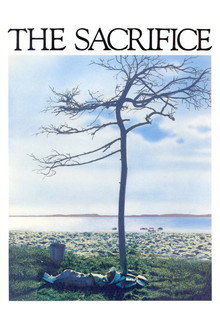
The Sacrifice
Alexander, a journalist, philosopher and retired actor, celebrates a birthday with friends and family when it is announced that nuclear war has begun.

Sofie
Liv Ulmann's directorial debut also had her co-authoring the screenplay (with poet Peter Poulsen) as based on a Henri Nathansen's 1932 novel about an affluent late 19th century Jewish merchant family in Copenhagen. Ulmann focuses on strong-willed daughter Sofie's progress through life: a love affair with a gentile painter, an arranged marriage , childbirth and ever more fateful challenges.

Rosenbaum

Ingmar Bergman Complete
The desolate and mysterious island of Fårö, Sweden, Baltic Sea, 2004. Swedish master filmmaker Ingmar Bergman (1918-2007) looks back on his personal and artistic life; a journey through more than sixty years devoted to film, plays and television programs. (Released in 2006, edited and abridged, as Bergman Island.)