Personal Info
Known For
Gender
Birthday
Place of Birth
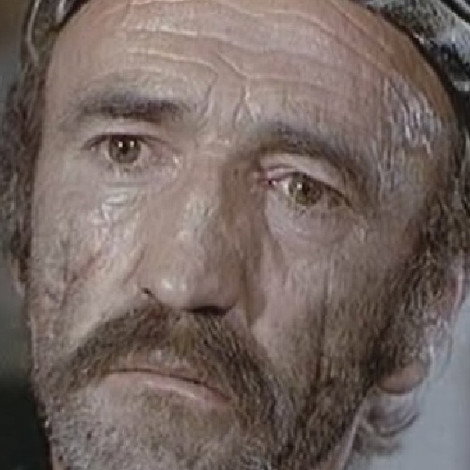
Veljko Mandić
Known for

Djekna Hasn't Died Yet, and We Don't Know When Will She
The comic adventures of a Montenegrin family that live in an isolated village high in the mountains, eternally waiting for their son to come back from his studies in Munich.


Horoscope
A gang of young delinquents from a coastal town terrorize the locals, the tourists that spend the summer holidays there, as well as the young girls. They are especially focused on a pretty girl that sells newspapers, and they make a bet which one will seduce her.

Pedestrian in a Car
A comedy TV mini-series produced by Titograd (Podgorica today) television.

The Marathon Family
The Topalović family has been in the burial business for generations. When the 150-year-old Pantelija dies, five generations of his heirs start to fight for the inheritance.

Silences
In the winter of 1941, Nazi forces pass through the village of Dolovi. No dialogue.

The Man to Kill
After the murder of the Russian Emperor Peter III, who was succeeded by Empress Catherine, Satan decides that the balance between good and evil on Earth has been destabilized. In order to set things right, he sends his representative to Earth - the teacher Farfa, who bears an unusual resemblance to Peter III. His mission is to seize power from the old Duke of Montenegro, and then to take back the Russian throne as Peter III. The people of Montenegro accept Farfa as their new leader, and he proclaims himself the new Emperor, Scepan Mali, successfully resisting an invasion by the Turks. Farfa is touched by the Montenegrins' kindness and courage, falls in love with the beautiful Elfa, and fails to follow Satan's plan. Not one to be crossed, Satan sets out to kill him.
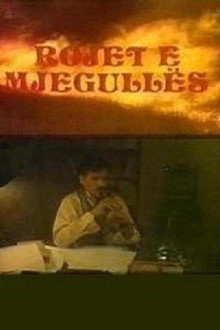
Keepers of the Fog
Images and reality intermingle in this account of the writer's own experiences under totalitarian regime.

The Mission of Major Atherton
This true story is made up of two episodes that show Operation Hydra. After the fall of the Uzice Republic and the success of the first enemy offensive, the British sent their mission and this series shows the events.

Svetozar Markovic
A biopic of an influential Serbian political activist, literary critic and philosopher. Svetozar Markovic developed an activist anthropological philosophy with a definite program of social change, which set foundations for socialist ideals in his homeland.
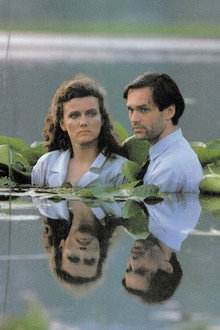
Days to Remember
They meet in Yugoslavia. Katharina, daughter of a Yugoslavian immigrant worker, has grown up in the Federal Republic of Germany. She is a confident, energetic career woman who has managed to work her way up to become a successful television journalist. She goes to visit her parent's country, to do a story about the children of immigrant workers in their home country. Although she says she doesn´t need a "home" any more, even she feels strange in her own country. Peter is a rather "untypical" sort of man: a dreamer, a thinker. He has given up his steady job as a composer for advertising films and is divorced. He goes to Jugoslavia to find something out about the past. He travels to the places where his father was stationed during the Second World War.

Sighting of the Holy Mother in the Village of Grabovica
Between myth and reality, between peace and disaster, between politics and religion. In a small place called Grabovica, everything runs quietly and slowly, everything is functioning properly until one day in the city appears a man who poses as a journalist and who brings the news that we should close the only school in the whole region due to lack of students. The news disrupts the inhabitants of the whole town and the whole situation will lead to a boiling point when you expose the that the man or the husband of a local teacher and the father of her newborn child.

Six Days in June
A young man finds a way to spend his last few days of freedom before joining the army. Set in eastern Bosnia in summer of 1968.

July 13th
This is a movie about the start of people's uprising in Montenegro in World War II. After the capitulation of the Yugoslav Royal Army in April 1941, the Italians managed to infiltrate their puppet regime in Montenegro. However, people dissatisfied with the new authorities, on July 13, 1941 decided that the Communists led start to fight for freedom.

The Dervish and Death
Ahmet Nurudin is a dervish and head of the Islamic monastery of the Mevlevi order in Sarajevo. He is a personification of morale and dogmatic belief, everything that Muslim religion of the Ottoman rule rests on. Throughout his life, the atmosphere of the city, the relations with the judge and the mechanism of government, the image of Ottoman Empire at the beginning of the nineteenth century is being revealed. Based on a highly praised novel by Meša Selimović.