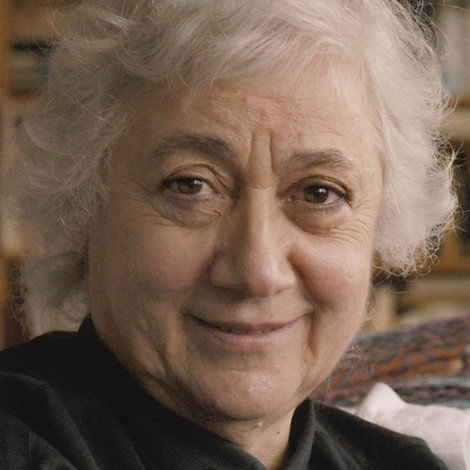
Personal Info
Known For
Gender
Birthday
Place of Birth
Isabelle Sadoyan
Biography
Known for

Three Colors: Blue
The wife of a famous composer survives a car accident that kills her husband and daughter. Now alone, she shakes off her old identity and explores her newfound freedom but finds that she is unbreakably bound to other humans, including her husband’s mistress, whose existence she never suspected.

That Obscure Object of Desire
After dumping a bucket of water on a beautiful young woman from the window of a train car, wealthy Frenchman Mathieu, regales his fellow passengers with the story of the dysfunctional relationship between himself and the young woman in question, a fiery 19-year-old flamenco dancer named Conchita. What follows is a tale of cruelty, depravity and lies -- the very building blocks of love.

Mr. Klein
Paris, France, 1942, during the Nazi occupation. Robert Klein, a successful art dealer who benefits from the misfortunes of those who are ruthlessly persecuted, discovers by chance that there is another Robert Klein, apparently a Jewish man; someone with whom he could be mistakenly identified, something dangerous in such harsh times.

Mother
Henri Verneuil was born Achod Malakian of Armenian parentage on October 15, 1920, in Rodosto, Turkey, and his family fled to France and settled in Marseilles when he was a young child. He later recounted his childhood experience in the novel Mayrig, which he dedicated to his mother and made into this 1991 film with the same name.

Subway
Fred, a raffish safe blower, takes refuge in the Paris Metro after being chased by the henchmen of a shady businessman from whom he has just stolen some documents. While hiding out in the back rooms and conduits of the Metro, Fred encounters a subterranean society of eccentric characters and petty criminals.

Merette
Merette is a pretty child, living within a patrician, strictly Calvinist family in the Switzerland of the 19th century. She is happy, until her mother dies, and Merette blames God, and gives up her religion. Her family turns against her, the villagers reject her, and her priest drives her into isolation.

The Hatter's Ghost
A hatter in a provincial town (Michel Serrault) leads the life of a respectable citizen but is in fact a serial murderer. The only person to suspect this is his neighbour the tailor (Charles Asnavour).

Flagrant désir
In the Médoc, a young woman is found drowned. An accident, her influential family of winegrowers maintains. Or rather murder, as the American inspector Morrison suspects. If so, why? What secrets this family keeps?

Elles et moi
January 1939. The fall of Barcelona seals the defeat of the Spanish Republicans. Five hundred thousand of them choose exile. Upon arriving in France, the men are disarmed and interned in camps. As for the families, the administration distributes them among makeshift centers, several of which are in Ardèche. Elles et moi chooses to follow the fate of the Esteva family during these terrible months and the five years of war that follow. Lluis, the father, lives in hope of reconquest. Pilar, his courageous and energetic wife, feels that this new country will become her home for a long time to come. She thus leads her two children, Isabel and Ignacio, into this new life...

Didine
Alexandrine, 35, who everyone nicknames Didine, peacefully goes with the flow, the opposite of her best friend Muriel. In this way, she one day crosses the threshold of a elderly person caregivers’ agency where, faced with an extrovert teenager, a charming man, and a cruel, elderly woman, she takes hold of her existence and encounters love.

The Eighth Day
An unusual and wonderful friendship develops between a busy but unhappy salesman and a resident of a mental asylum.

The Things of Life
The mind of Pierre Bérard, a successful middle-aged architect, is torn between his unstable present with Hélène, his younger lover, and his happy memories of the past with Catherine, his ex-wife; but his true destiny awaits him at a crossroads on his way to Rennes…

The Adolescent
In the summer of 1939, 13-year-old Marie goes with her parents to visit her grandparents in a small town near Avignon. Marie discovers her femininity and falls for a young Jewish doctor, but he prefers Eva, Marie's mother.

588 rue Paradis
A successful playwright reflects on his journey from his Armenian roots to adapting in France, forty years after his family's move to Marseilles. He now goes by a new name to fit in better with French society.

The Children of the Marshland
The film is set in Marais, a quiet region along the banks of Loire river in 1918. Riton is afflicted with a bad-tempered wife and three unruly children. Garris lives alone with his recollections of World War I trenches. Their daily life consists of seasonal work and visits from their two pals: Tane, the local train conductor and Amédée, a dreamer and voracious reader of classics.