
Personal Info
Known For
Gender
Birthday
Place of Birth
Bernard Ballet
Known for

Chez Maupassant
"Chez Maupassant" is a French anthology television series based on short stories by Guy de Maupassant. Created by Gérard Jourd'hui and Gaëlle Girre, it ran on France 2 in three seasons in 2007, 2008 and 2011. It consists of a total of 24 episodes of which half are 60 minutes long and half are 30 minutes.
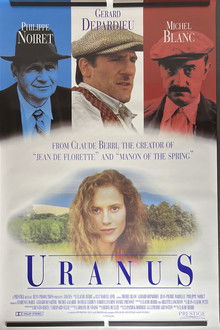
Uranus
After World War II, a small French village struggles to put the war behind as the controlling Communist Party tries to flush out Petain loyalists. The local bar owner, a simple man who likes to write poetry, who only wants to be left alone to do his job, becomes a target for Communist harassment as they try and locate a particular loyalist, and he pushes back.

Unleaded
Passionate about the singer Elvis Costello, Ulysses works every Saturday at a gas station in the middle of nowhere to pay for his meteorology studies. Shy and suffering from stagnation when confronted with a conflict situation, he does not respond to the insistent advances of Marie, who lives across the street. At the same time, Anton and Mirek, two English gangsters, are combing all the gas stations in the area in search of a loot hidden in the toilets.
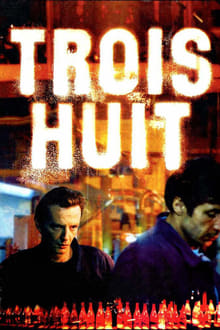
Night Shift
A worker in a bottle factory, Pierre decides to switch from day shift to night shift. In his new team, he runs into Fred, a charismatic and violent guy. Fred says loudly that Pierre is his boyfriend. In fact, he never misses an opportunity to bully or humiliate him. This could only be a bad joke. But the harassment continues in a downward spiral ...
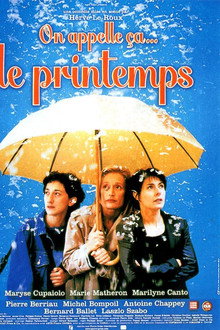
On appelle ça… le printemps
Fanfan leaves his friend Charles and thinks he can be accommodated by his friend, Joss. However, at the same time, Joss abandons the marital home. Fanfan and Joss have only to knock on the door of Manu, Fanfan's sister, who gathers them until Mytch, Manu's companion, throws everyone out. The three young women find themselves in the street and continue their run, while their lovers gang up to track them down. The mini-war of the sexes will flare up.
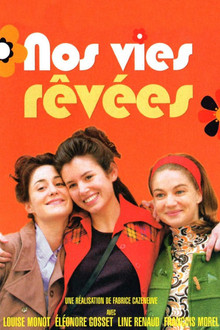
Nos vies rêvées
Bénédicte, Martine, and Juliette were classmates who formed an inseparable trio. Fifteen years later, Bénédicte and Martine return to their small native town of Pithiviers for Juliette’s funeral. But Juliette remains present in Bénédicte and Martine’s remembrances and through her eighteen-year-old daughter Scarlett, who bears a striking resemblance.

L'État de Grace
L'État de Grace was a French television show that featured France's first female president.
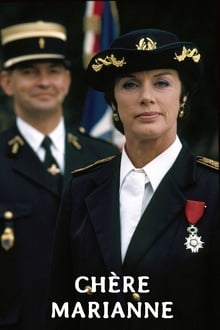
Chère Marianne
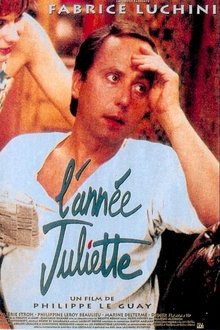
The Juliette Year
Camille Prader, back from a physicians' meeting, is waiting for his suitcase on the Airport conveyor belt. Clémentine, his girlfriend of the day, has come to fetch him. With a radiant smile, she tells Fabrice that she left everything to live with him. When Camille picks a case he realizes ha has taken the wrong one. The label shows it belongs to a musician called Juliette Graveur. Hegrasps the occasion to run away from Clémentine by claiming Juliette is his mistress....

L'amour au soleil
The story of two couples, one teenage, the other grandparents, living parallel love stories.

Papa est monté au ciel
La vie telle qu'elle change
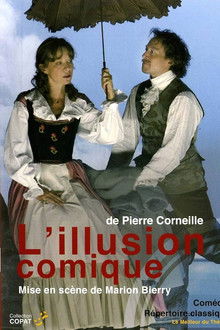
L'Illusion comique
A staging of Pierre Corneille's play "L'Illusion comique" by Marion Bierry.
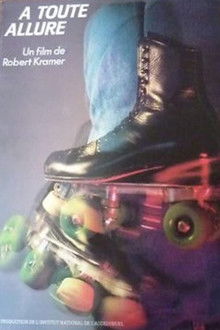
At Full Speed
A young couple who are amateur roller-skating buffs practice their chosen avocation at a Parisian roller rink. Their hopes rise with a chance to go to Chicago to compete, especially when a magazine reporter assures them that his company will back them -- but then lets them know some sex-related business is a part of the package. Caught up in the couple's drama are several other characters who look like they might need some help themselves, making the problem of how to get to the Windy City seem more and more insoluble.

Ligne de vie
An old man recounts: I have always worn glasses. Even in the camp, I managed to keep them. We feared the night almost as much as the day. One night, they brought in a newcomer, a bearded man. His drawings over the days had become essential to us. The guards did not understand that only death would prevent him from drawing. All that remains of the camp is this piece of wall, with his last drawing, which he called "Ligne de vie (Lifeline)."