
Personal Info
Known For
Gender
Birthday
Place of Birth
Simone Valère
Biography
Known for

Champs-Elysées

Midi trente

Le Grand Échiquier
Le Grand Échiquier is a French variety television program created and presented by Jacques Chancel. It aired at 8:30 pm on the first channel of the ORTF from January 12, 1972 to July 12, 1972, then on the second color channel of the ORTF from September 1972 to December 1974, and finally on Antenne 2 from January 1975 to December 21, 1989. The program returned to France 2 on December 20, 2018 and is hosted by Anne-Sophie Lapix.

Discorama

30 millions d'amis

Manon
Port of Marseille, France, recently liberated from the German yoke. Caught as stowaways aboard a ship, Manon, a young woman who was accused of collaborating with the Nazis, and Robert, a freedom fighter who saved her from reprisals, tell the captain about the many challenges they have had to face in order to survive.

Le deuxième coup de feu

Jocelyn
In 1786, Jocelyn entered the Seminary. He leaves his share of the inheritance to his younger sister Julie. In 1793, on the point of being ordained a priest, the Revolution forced him to take refuge in the Alps. There he meets Laurence, first disguised as a young boy. A great friendship binds them which turns into love when Jocelyn discovers the girl's true identity. Yet faithful to the promise he made to the Superior of his Seminary, Jocelyn will not abandon his faith.

La Cerisaie
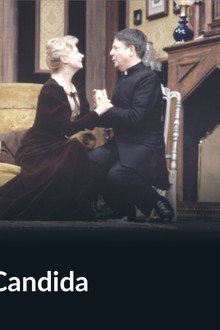
Candida

Imperial Violets
Violeta, an Andalusian gypsy, foretells a lady she will become empress. The lady is Eugenia de Montijo, and when she marries emperor Luis Napoleón of France she takes the young girl with her. The empress'cousin readily makes her his focus of attention, then she discovers a criminal attempt against the empress.

Un Flic
A Parisian police chief has an affair, but unbeknownst to him, the boyfriend of the woman he’s having an affair with is a bank robber planning a heist.

Double Jeu

Franciscan of Bourges
Albert is a Franciscan monk and a medical orderly at a monastery in France. Although he is German, the kindly monk helps hide French resistance members. Albert tries to maintain the delicate balance between the warring factions by helping out the afflicted and not getting involved in political ideology.

La Dixième de Beethoven
Play by Peter Ustinov, about a return to the modern world by Beethoven, who knocks on the door of a London music critic. He is fitted with a hearing aid, and l istens in horror to his works. The critic wishes Beethoven to complete his tenth symphony, and one night the piano emits a few notes by itself.