
Personal Info
Known For
Gender
Birthday
Place of Birth
John Tams
Biography
Known for
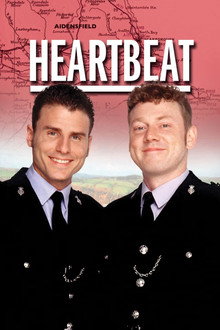
Heartbeat
Set during the 1960s in the fictional North Yorkshire village of Aidensfield, this enduringly popular series interweaves crime and medical storylines.
ScreenPlay
Screenplay was a drama anthology television series, broadcast on BBC between 1986 and 1993. Numerous episodes were produced including one named "Boswell and Johnson's Tour of the Western Islands" starring Robbie Coltrane as English writer Samuel Johnson who in the autumn of 1773, visits the Hebrides off the north-west coast of Scotland. That episode was directed by John Byrne and co-starred John Sessions and Celia Imrie.
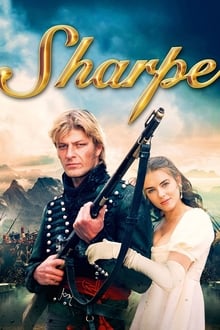
Sharpe
Sharpe is a British series of television dramas starring Sean Bean as Richard Sharpe, a fictional British soldier in the Napoleonic Wars. Sharpe is the hero of a number of novels by Bernard Cornwell; most, though not all, of the episodes are based on the books. Produced by Celtic Films and Picture Palace Films for the ITV network, the series was shot mainly in Turkey and the Crimea, although some filming was also done in England, Spain and Portugal. The series originally ran from 1993 to 1997. In 2004, as part of ITV's new set of drama, ITV announced that it intended to produce new episodes of Sharpe, in co-production with BBC America, loosely based on his time in India, with Sean Bean continuing his role as Sharpe. Sharpe's Challenge is a two-part adventure; part one premiered on ITV on 23 April 2006, with part two being shown the following night. With more gore than earlier episodes, the show was broadcast by BBC America in September 2006.
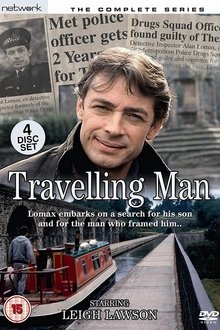
Travelling Man
After completing a two-year prison sentence for a bribe he didn't take, former DI Alan Lomax wants answers. With at least one luxury left - a narrowboat, and it's on the canals, among the day trippers and travellers, that he means to seek revenge. Not an easy task for an ex-detective isolated on the wrong side of the law.
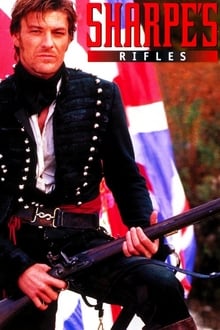
Sharpe's Rifles
Portugal, 1809. Fast moving, hard-hitting action adventure filmed on location in the Crimea, Portugal and England brings to the screen all the danger, romance and sheer spectacle of one of the bloodiest periods in English warfare. Richard Sharpe rises through the ranks of Wellington’s army by his courageous and daring exploits. He and his men operate behind French lines, risking their lives to undermine Napoleon's forces.
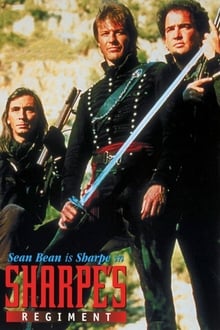
Sharpe's Regiment
June, 1813. Major Richard Sharpe's men are in mortal danger - not from the French, but from the bureaucrats of Whitehall. Unless reinforcements can be brought from England, the depleted South Essex will be disbanded, their troops scattered throughout the army. Determined not to see his regiment die, Sharpe returns to England and uncovers a nest of well-bred, high-ranking traitors, any one of whom could utterly destroy his career with a word, or a stroke of the pen. Sharpe is forced into the most desperate gamble of his life - and not even the influence of the Price Regent may be enough to save him.
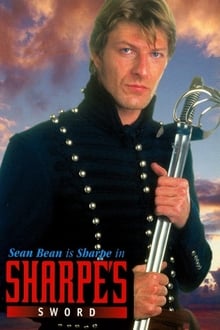
Sharpe's Sword
Franco-Spanish Border, 1813. Sean Bean returns as the courageous Major Richard Sharpe, his latest mission to protect the identity of the master spy, El Mirador. Sharpe captures Colonel Leroux who has been sent by Napoleon to assassinate El Mirador but Leroux escapes. In an ensuing battle, Sharpe's sword is destroyed and he is left for dead. He is lovingly nursed back to health by a beautiful young girl who has been rendered mute after witnessing the slaughter of her companions. Armed with a new sword forged by the faithful Sergeant Harper, Sharpe continues his mission to protect the life of El Mirador and seek retribution.
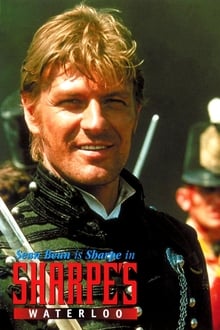
Sharpe's Waterloo
France, 1815. Sharpe seems to have settled down for life on a tranquil French farm with his new partner Lucille when the sudden news of Napoleon's return from exile compels him to go back to the army to fight in the great Battle of Waterloo. He joins the staff of Wellington's ally, the Prince of Orange. Once again reunited with the Chosen Men, Sharpe abandons his inept commander to organise the defence of the British key positions on the farm of La Haie Sainte and plays a courageous and important role in securing one of Britain's most famous victories.
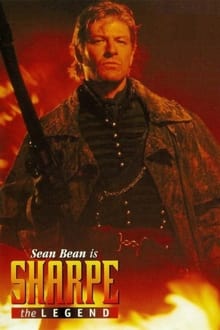
Sharpe: The Legend
Several years after the battle of Waterloo, a former soldier from Shoreditch sits in a London inn reminiscing about the brave and determined officer who took him to hell and back. The narrator is Rifleman Cooper, and the officer whose fame he recalls is the legendary Richard Sharpe.
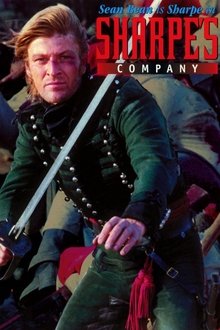
Sharpe's Company
Spain, 1812. The Duke of Wellington plans to lay siege to Badajoz. A murderous figure from Sharpe's past uses a beautiful woman to revenge himself on Sharpe, now the father of her child. Sharpe has reason to be happy, he holds his daughter for the first time and is given command of the Light Company again, together with his captaincy. But will his happiness be short lived?
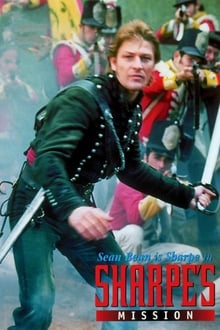
Sharpe's Mission
France, 1813. Wellington orders Sharpe to join the dashing colonel Brand on a hazardous journey behind French enemy lines with the aim of blowing up an ammunition store. Sharpe's wife Jane becomes disillusioned with Sharpe's frequent absences. Left behind in the camp, she warms to the attentions of another admirer. Meanwhile, Sharpe is out in the mountains and is dangerously outnumbered, with with the French ranks closing in. He must risk his own life, however, to confront a far deadlier enemy on his own side.
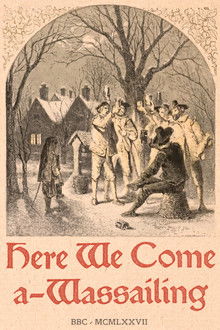
Here We Come A-Wassailing
A documentary on the surviving syncretic pagan midwinter customs of the British Isles, focusing on nine ritual celebrations ranging from the Moray Firth in the north, the Somerset Levels in the south, Humberside in the east, and County Kerry in the west. Featuring music by the Albion Band and narration by John Tams.
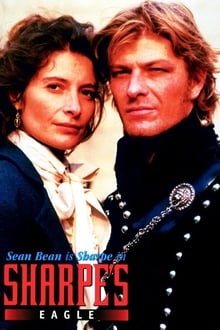
Sharpe's Eagle
Spain, 1809. The newly promoted Captain Sharpe will be stripped of his rank unless he can save the honour of the regiment by capturing a French Imperial standard: an eagle.
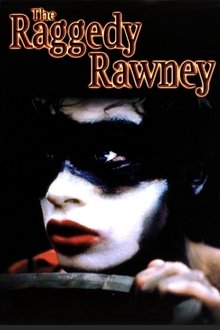
The Raggedy Rawney
During WWII a youth deserts his country's army after a combat experience, but not before wounding his commanding officer with a knife in order to escape. The young man, now very emotionally distraught, dresses in women's clothes and eventually joins a passing gypsy caravan, who think him a young girl... as well as a kind of seer, or 'rawney'. In time, however, he regains some composure and becomes attracted to one of the gypsy girls, which only leads to problems within the gypsy band, especially when the wounded commanding officer finds him.