
Personal Info
Known For
Gender
Birthday
Place of Birth
Gérard Philipe
Biography
Known for
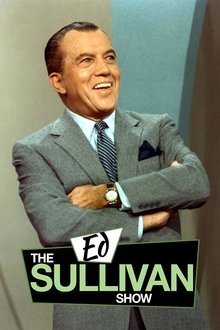
The Ed Sullivan Show
The Ed Sullivan Show is an American TV variety show that originally ran on CBS from Sunday June 20, 1948 to Sunday June 6, 1971, and was hosted by New York entertainment columnist Ed Sullivan. It was replaced in September 1971 by the CBS Sunday Night Movie, which ran only one season and was eventually replaced by other shows. In 2002, The Ed Sullivan Show was ranked #15 on TV Guide's 50 Greatest TV Shows of All Time.
Cinépanorama
Cinépanorama

The Proud and the Beautiful
Life in a small Mexican village where joy and misery, hope and pain, passion and guilt, love and decay, life and death are mixed in the peasants life and two French citizens who end up stranded in there, during a typhoid epidemic.

Encyclopédie audiovisuelle du cinéma
Produced for television by Claude-Jean Philippe, the « Encyclopédie audiovisuelle du cinéma », recounts the history of French cinema from its birth to the beginning of the 1960s. With commentary read by Jean Rochefort.
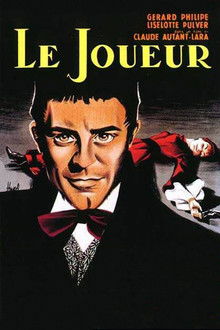
The Gambler
In 1866, a young Muscovite named Alexei Ivanovitch arrives in Baden Baden, then the gambling capital of Austria, and is soon engaged by General Zagorianski to look after his children. Alexei discovers that his employer is a compulsive gambler who has been almost ruined by his addiction. The only money the General has is provided by the Marquis de Grieux, an adventurer who intends to marry Zagorianski’s sister, Pauline. In doing so, de Grieux hopes to profit from the vast inheritance that will come the General’s way from his Aunt Antonina, who is presently very ill. Alexei is appalled by this society which lives only for money. He loves Pauline and wants to take her to a healthier place, but when she refuses to marry him, he begins to gamble at the casino…
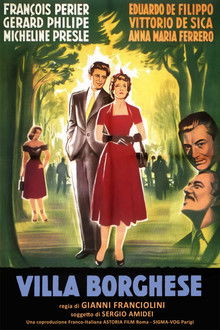
It Happened in the Park
Villa Borghese, Rome's biggest urban park, is the place where everyday laughs and dramas are consumed. The movie is made of six vignettes set there.
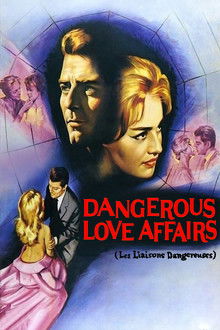
Dangerous Love Affairs
Juliette de Merteuil and Vicomte de Valmont are a sophisticated couple, always looking for fun and excitement. Both have sexual affairs with others and share their experiences with one another. But when Valmont meets the beautiful young Marianne at a ski resort, he breaks the one rule of his unconventional marriage: never fall in love.
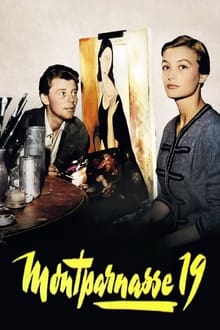
The Lovers of Montparnasse
Biographic film chronicling the last year of the life of the Italian painter Amedeo Modigliani, 1919, who falls in love with a girl from a wealthy family. Her parents are against this relationship and stop financial help. Modigliani worked and died in abject poverty in the Montparnasse Quarter of Paris, France.

Fan-Fan the Tulip
Fanfan is a young handsome peasant. He joins the army to escape marriage because a gypsy girl predicted he will get glory and the king's daughter as a wife. But the gypsy girl was in fact Adeline, the daughter of the recruiting officer. Once he has discovered the stratagem, Fanfan refuses to forget this dream and decides to fulfill the destiny of the fake prediction.
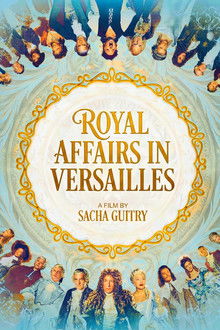
Royal Affairs in Versailles
Witty narration follows the history of Versailles Palace; founded by Louis XIII, enlarged by autocratic Louis XIV, whose personal affairs and amours, and those of his two successors, are pursued in more detail to the start of the Revolution, after which the story is brought rapidly up to date.

With André Gide
Nobel-prize-winning author, social justice crusader, anti-colonialist, adventure traveler, musician, and one-time Communist: André Gide was a larger-than-life character who dominated French letters from the turn of the 20th century to his death in 1951. Directed by Marc Allégret, with whom Gide traveled extensively in French Equatorial Africa, the film was made in the year leading up to the writer’s death.
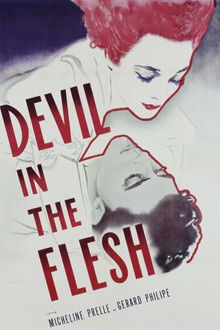
Devil in the Flesh
In France during World War I, Marthe waits for her husband, Jacques, while he fights on the front lines. Marthe then begins a tempestuous affair with 17-year-old François, with whom she had a dalliance before marrying Jacques. Jealous François struggles with the fact that Marthe is married, while she tries to prove her devotion to her young, hotheaded lover. Things become even more complex when Marthe becomes pregnant with Jacques' baby.
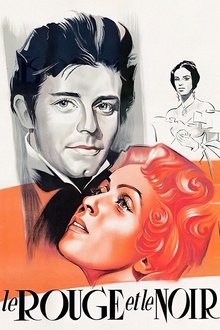
Le Rouge et le Noir
It's no holds barred for Julian in pursuit of upward mobility. Although expected to channel career aspirations into the Church of the post-Napoleonic era, his intensely romantic liaisons propel him forward at a pace he cannot control.
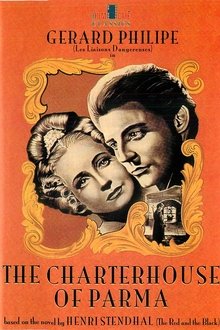
The Charterhouse of Parma
This adaptation of Stendhal's timeless masterpiece of French literature tells the tale of Fabrice Del Dongo (Grard Philipe) a young archibishop who gives his heart and soul to romance rather than to the Church creating upheaval in the lives of evergone around him the Countess of Sanseverine (Maria Casares) is but one of the may women who love him. In turn she incurs jealous retributions from those in high places who desire her. For his crimes Fabrice is thrown in Prison where from Crimes Fabrice is thrown in prison where form his lonely window he falls in love with his jailer s daughter and plans a daring escape she however calls his plan insane and takes a vow to the Virgin Mary to never see him again ever if his escape succeeds the Charterhouse of Parma explodes with conflicting desires man s desire form God vs. his desire for romance.