
Personal Info
Known For
Gender
Birthday
Place of Birth
Ewa Krzyżewska
Biography
Known for

Theatre Macabre
Horror legend Christopher Lee hosts this anthology in the tradition of Alfred Hitchcock Presents, each half-hour episode adapting a story from a classic author, with tales by Edgar Allen Poe, Fyodor Dostoevsky, Ambrose Bierce, Robert Louis Stevenson, and Oscar Wilde.

Ashes and Diamonds
A young academy soldier, Maciek Chelmicki, is ordered to shoot the secretary of the KW PPR. A coincidence causes him to kill someone else. Meeting face to face with his victim, he gets a shock. He faces the necessity of repeating the assassination. He meets Krystyna, a girl working as a barmaid in the restaurant of the "Monopol" hotel. His affection for her makes him even more aware of the senselessness of killing at the end of the war. Loyalty to the oath he took, and thus the obligation to obey the order, tips the scales.

All Souls' Day
A pair of lovers go off to a small hotel in a little town. The memories of war, however, intrude on their idyll. The girl and boy relive certain wartime experiences in flashback. She was a communist who drove a boy loving her to give himself up.


Pharaoh
Young Pharaoh Ramses XIII clashes with Egypt's clergy over influence on the affairs of the state and its coffers. inexperienced, but quite ambitious pharaoh is putting up a fight against a powerful clan of priests usurping rule over the country.

Zuzanna i chłopcy
Two man and a woman get buried by the snow while on a cave expedition. Tensions rise between the two men, both in love with the woman as they try to find a way out.

Liczę na wasze grzechy
A popularity-hungry young journalist writes a sensationalist article on a supposed teen suicide club.

How Far, How Near
A middle-aged man sets out on a symbolic journey through past, present, and future to learn why an old friend committed suicide, and learns much about his own life along the way.
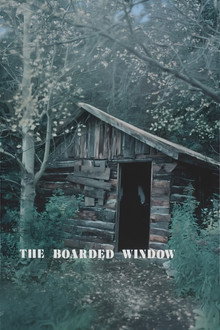
The Boarded Window
In a secluded forest house, a woman tormented by anxiety and paranoia lives with her helpless husband. Their fragile peace shatters when she suddenly falls ill and appears to die, setting the stage for a tense and haunting drama of isolation and dread.

Naprawdę wczoraj
The story concerns a succesful writer at the height of his career. He is in a state of crisis, unable to forget the girl he had a brief affair in the 40's. At the promotion of his new book he meets her after the years and reminisces about the past, when he was on a government mission to recover a missing art treasure, a triptych. After the years the girl, now married, barely remembers the whole thing, while he re-examines the affair which he has so much romanticized.

Declaration of Love to G.T.
Dr. Gisa Tonius, a physicist in her thirties who has a nearly adult stepdaughter, cherishes the desire to have her own child. Suddenly, a big interdisciplinary research project threatens to significantly change Gisa′s life. Uncertain whether to look for professional or private fulfillment she asks her family and friends for their opinions. They all have different views on the point at issue. While her husband is afraid of losing her to her profession, her professor thinks that because of her talent she has an obligation towards science. In the end, Gisa reaches a decision: She wants to have a baby as well as take on the research project.

Sposób bycia
A forty-year old man, destroyed physically and mentally by life experiences recounts his life.

The Bells Toll for the Barefooted
A dramatic story from the end of WW II and a remarkable contemplation of the value of true friendship, meaning and purpose oflife or the possibility to be humane even in inhuma ne conditions. In a frosty mountain setting a cruel struggle for life takes place. After a fight, two partisans return to their brigade carrying along a young German soldier as a captive. But suddenly, amidst the hopelessness of barren mountains. all protagonists find themselves in a liminal existential situation.

Atomic War Bride
At a church in the country, eternally optimistic John marries Maria, his Atomic War Bride, as a war starts, planes buzz overhead and bombs start dropping. Though John is "mobilized" by the military seconds after the ceremony, he and Maria seek to be reunited.

Jealousy and Medicine
In 1930s, a doctor has an affair with the wife of a wealthy industrialist in Poland.