Personal Info
Known For
Gender
Birthday
Place of Birth
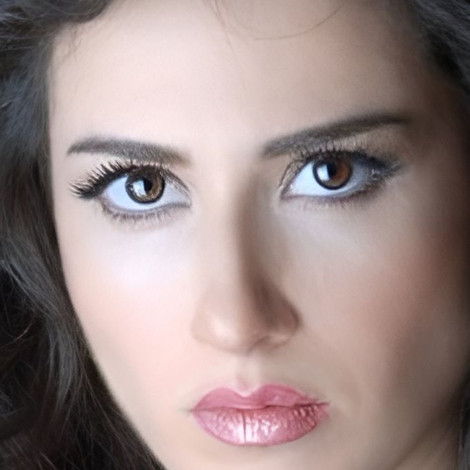
Maisoun Abou Asaad
Biography
Known for

Moawiya
The most expensive Arabic series ever made, chronicling the life of Muawiya ibn Abi Sufyan — from his early opposition to Islam, to his conversion, governorship of Syria, and ultimate founding of the Umayyad Caliphate. Spanning civil war, conquest, and political intrigue across the early Islamic world, this sweeping epic covers one of history's most controversial and consequential rulers.

Al-Hout
A drama series that tells the story of the coastal environment during the era of the French mandate in Syria, especially the environment of fishermen in light of the exploitation and greed of some people and the bitter struggle of others against the French occupier.

Naked Souls
A contemporary social series that takes place in Damascus, and deals with the subject of doubt in the human being when some of its constants in life are shaken.
My Heart Is With You

Law, However
The series explores the difficult circumstances faced by people from diverse backgrounds and professions, including a university professor, a new journalist, a low-income employee, and others. The central character is the general manager of a large, responsible construction company, where the potential for illicit gain is significant. He is a fickle man, a master of manipulation, who feigns honor and morality because he respects the law out of sheer fear of it—the core premise of the show. The series unfolds in a satirical, socially relevant, and humorous style, relying on witty situations to elicit a smile.

Rijal Al-Izz
Rijal Al-Izz — Men of Honor — is a 2011 Syrian Damascene period drama set in the Saroujeh neighborhood of Damascus during the French occupation of the 1930s. The series follows Abd Al-Rahman Al-Shami, a wrongfully accused man who escapes a death sentence and transforms into a resistance fighter, striking fear into the French occupiers while navigating betrayal and injustice within his own community. Starring Rashid Assaf and Qusai Khouli.
On Fear and Isolation
Four brothers, each living a life filled with fear and isolation: Akram (Abdel Moneim Amayri), the eldest brother, is an employee who appears committed and reserved, but in reality suffers from a sexual complex that causes him to fail in his repeated attempts to get engaged; As for Lamis (Caresse Bashar), she is a teacher involved in a forbidden love affair with her friend’s husband; she works to ruin their lives so she can be alone with her lover. As for Hosam (Rami Hanna), is a computer teacher who falls in love with Najwa, a relationship that changes his negative view of women. Basma (Maysoun Abu Asaad), a pharmacist searching for rational love, gets involved with Ghassan (Khaled Al-Qish), only to discover later that he is a deceiver; she breaks up with him and gets involved with someone else who is just as bad as he is. How will things end for these siblings? And will love return to set their lives back on track?

Alive
The series deals with social stories of several different characters who carry the same obsessions, fears, and concerns, and then their paths intersect in a way that makes them unite with each other to overcome those fears.

Talea Al Feda
A story that examines the unique social fabric of the city of Damascus through the neighborhood of Talea Al Feda, where Muslims live alongside Christians and Jews, coexisting in tolerance and peace.

City Kitchen
A Damascene chef finds sanctuary at the restaurant he works in, nurturing both his craft and his four children. But when his daughter goes missing, their world unravels, testing their morals and the bonds that hold them.

Behind the Sun
Alaa Al-Din Zeibak, a man from a well-off family, has Down syndrome, and he crosses paths with Badr, a man of a humble origin, who has autism spectrum disorder. As they interact, several situations ensue, shedding light on the lives and struggles of the differently-abled people.

His Excellency the Madman
The events follow a series of crimes starting with a smuggling operation that leaves Hajj Salem paralyzed and Abu Aziz dead, followed by the assassination of Judge Saba Ezzat and her husband Aws's confession.

Harair
A Syrian historical‑social drama set in early 20th‑century Damascus, following women whose lives are shaped by political upheaval, restrictive traditions, and shifting social norms. The series explores resilience, dignity, and personal sacrifice as its characters confront oppression, family pressures, and the struggle for autonomy. A layered, female‑centered portrait of courage amid a transforming society.

El Hob kolloh
Al-Hob Kolloh — All of Love — is a 2014 Syrian romantic drama told through a collection of intertwined love stories drawn from everyday life. Each story explores the joys, sacrifices, and struggles that define human relationships, set against the backdrop of a society under pressure. From personal longing to the hardships of war, the series weaves together emotional narratives that reflect the many faces of love in the Arab world.

Damascus: The Smile of Sadness
The film tells the story of Sabria (the protagonist), who suffers from the male mentality in society during the period from the days of the Great Syrian Revolution until the 1940s, and depicts the Syrian woman’s attempt to achieve her freedom and equality with men.