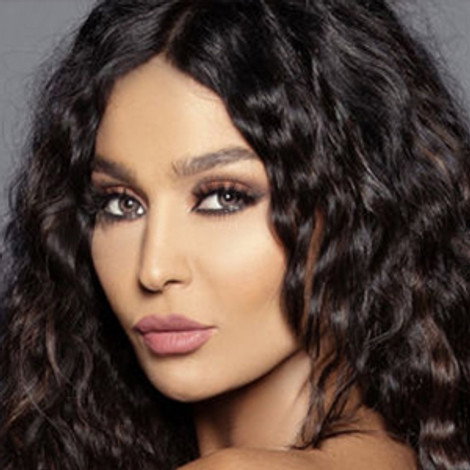
Personal Info
Known For
Gender
Birthday
Place of Birth
Rawaa Yassin
Known for

The Harem
Haramlek is a Syrian historical drama set during the late Ottoman era in Syria. It explores life inside elite households, focusing on women’s quarters (“haramlek”) and the hidden power struggles within. The story follows intertwined characters dealing with love, betrayal, and ambition, revealing how influence is exercised behind closed doors, especially by women navigating strict social structures.

Hammam AlQishani
The series goes into details of the events that Syria went through between the years 1955-1959, including the tripartite aggression against Egypt in 1956, the establishment of unity between Syria and Egypt, and the revolution against the monarchy in Iraq, through the Qishani neighborhood, where its people work as merchants, lawyers, doctors, intellectuals and other works.

As'ad AlWarrak
During the period of the French occupation of Syria, the events of the series revolve around As'ad AlWarraq, an orphan, illiterate, poor young man who is pushed by circumstances between various paradoxes, between false accusations and the injustice of his neighborhood people towards him.

Ayamana Alhulwa
A Syrian social drama series that sheds light on a neighborhood in one of the slums in the vicinity of Damascus, around a poor family consisting of a mother and her four children, who strive to meet their needs and achieve their ambitions with the tools available to them, while focusing on solving future problems at the time, leaving them to chance, luck, mischief, whim, or influence.

Alahed
The events take place inside a Damascus neighborhood in two time periods separated by 15 years, during the period that preceded the liberation of Damascus from the Ottoman occupation, and the period of the Ottoman control over the neighborhood, as a strong conflict erupts among the notables of the neighborhood to respond to and resist it.

The Curse of Mud
The series revolves around politics and corruption in 1980s Syria. An aspiring university student is forced to become a police officer and climb the political ladder, revealing bitter truths along the way.

Biography of Al-Jalali Family
The series sheds light on the life of the Al-Jalali family, one of the most prestigious families in the city of Aleppo. The story revolves around a man who amassed a great fortune through both legitimate and illegitimate means, including depriving his siblings of their rightful inheritance. As time passes, the elder of the Al-Jalali family falls ill and finds himself with no one to assist him and his children except his brother—whom he had previously denied his wealth. However, mysterious events surround the disappearance of Haj Amin's money at the hands of his brother Anas.

Takht Sharqi
The story of four young men who were high school classmates. Despite the differences in their understanding of life, their work and their tendencies, they somehow share something in common, as their destinies intersect to tell a story about love, friendship and the double standards of morality.

Roses in salty soil
The life and suffering of seven girlfriends in our modern society, as each has her own demands and hopes, from searching for work, to achieving self-fulfillment, human dignity, and balanced living psychologically and socially.
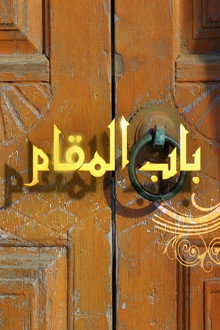
Bab AlMaqam
The events of the work take place in the city of Aleppo in the early 1950s. The work deals with the issue of disagreement between enlightened thought and puritan thought, between two brothers because of a beautiful love story within the framework of Aleppo customs and traditions in that period.

Hasiba
Since her childhood, Hassiba has lived in suffering with her father because of the French occupation of Syria, as she moves with him from one place to another in search of security. She continues her struggle journey when she grows up and takes the path of resistance against the occupiers.
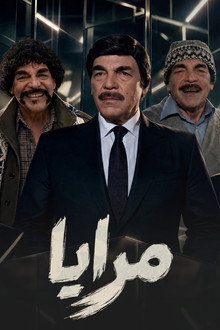
Maraya 2003

Enta Omry
A poor man makes a great fortune, but his wife believes that the richer he gets, the more likely he is to marry another woman. So she takes it upon herself to rid him of all his money to prevent a possible second marriage.

Exiting to the Well
The series explores the suffering of Sednaya prison inmates during the Assad regime, presenting real-life stories and experiences that reflect the harshness of life behind bars. It highlights the psychological and emotional transformations prisoners undergo inside the prison and the impact of this harsh experience on their lives after

Men Underneath the Fez
Men Under the Fez is a Syrian ensemble drama that explores the quiet gap between public virtue and private behaviour. Set in a society where educated, “progressive” men speak fluently about equality and modern values, the series gradually reveals the contradictions in their personal lives — and the emotional cost carried by the women closest to them. Through intersecting stories of marriages, desire, hypocrisy and self-deception, it offers a sharp, often uncomfortable portrait of everyday patriarchy. Directed by Hisham Sharbatji, starring Khaled Taja and Karess Bashar.