Personal Info
Known For
Gender
Birthday
Place of Birth
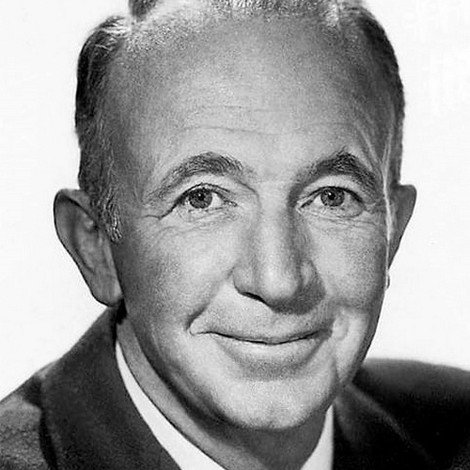
Walter Brennan
Biography
Known for

The Merv Griffin Show

What's My Line?
Four panelists must determine guests' occupations - and, in the case of famous guests, while blindfolded, their identity - by asking only "yes" or "no" questions.

Dick Powell's Zane Grey Theatre
Dick Powell's Zane Grey Theatre, sometimes simply called Zane Grey Theatre, is an American Western anthology series which ran on CBS from 1956 to 1961.
Dick Powell's Zane Grey Theatre
Dick Powell's Zane Grey Theatre, sometimes simply called Zane Grey Theatre, is an American Western anthology series which ran on CBS from 1956 to 1961.

The Dinah Shore Chevy Show
The Dinah Shore Chevy Show is an American variety series hosted by Dinah Shore, and broadcast on NBC from October 1956 to June 1963. The series was sponsored by the Chevrolet Motor Division of General Motors and its theme song, sung by Shore, was "See the U.S.A. in Your Chevrolet", which continued to be used in Chevrolet advertising for several more years after the cancellation of the show.

The Real McCoys
The Real McCoys is an American situation comedy co-produced by Danny Thomas' "Marterto Productions", in association with Walter Brennan and Irving Pincus' "Westgate" company. The series aired for five seasons on the ABC-TV network from 1957 through 1962 and then for its final year on CBS from 1962 to 1963. The series, set in the San Fernando Valley of California, was filmed in Hollywood at Desilu studios.

The Ford Television Theatre
This show started in New York City, with Broadway actors and actresses. It then moved to Hollywood, California, where Hollywood actors and actresses headed the cast.

This Is Your Life
This Is Your Life is an American television documentary series broadcast on NBC, originally hosted by its producer, Ralph Edwards from 1952 to 1961. In the show, the host surprises a guest, and proceeds to take them through their life in front of an audience, including special guest appearances by colleagues, friends and family. Edwards revived the show in 1971-72, while Joseph Campanella hosted a version in 1983. Edwards returned for some specials in the late 1980s, before his death in 2005. The show originated as a radio show on NBC Radio airing from 1948 to 1952.

The Oscars
An annual American awards ceremony honoring cinematic achievements in the film industry. The various category winners are awarded a copy of a statuette, officially the Academy Award of Merit, that is better known by its nickname Oscar.

Alias Smith and Jones
Alias Smith and Jones is an American Western series that originally aired on ABC from 1971 to 1973. It stars Pete Duel as Hannibal Heyes and Ben Murphy as Jedediah "Kid" Curry, a pair of cousin outlaws trying to reform. The governor offers them a conditional amnesty, as he wants to keep the pact under wraps for political reasons. The condition is that they will still be wanted— until the governor can claim they have reformed and warrant clemency.

The Glen Campbell Goodtime Hour
The Glen Campbell Goodtime Hour is an American network television music and comedy variety show hosted by singer Glen Campbell from January 1969 through June 1972 on CBS. He was offered the show after he hosted a 1968 summer replacement for The Smothers Brothers Comedy Hour. Campbell used "Gentle on My Mind" as the theme song of the show. The show was one of the few rural-oriented shows to survive CBS's rural purge of 1971.

The Guns of Will Sonnett
Ex-cavalry scout and gunfighter Will Sonnett and his grandson, Jeff, search the West for Will's son—and Jeff's father—Jim Sonnett, a former lawman and gunslinger, who has avoided seeing his son in order to keep him away from the assortment of killers and bounty hunters who are after him.

The George Gobel Show
The George Gobel Show is an American television series hosted George Gobel that aired on NBC from 1954 to 1960.
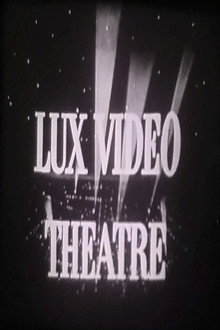
Lux Video Theatre
Lux Video Theatre is an American anthology series that was produced from 1950 until 1959. The series presented both comedy and drama in original teleplays, as well as abridged adaptations of films and plays.

Cavalcade of America
Cavalcade of America is an anthology drama series that was sponsored by the DuPont Company, although it occasionally presented a musical, such as an adaptation of Show Boat, and condensed biographies of popular composers. It was initially broadcast on radio from 1935 to 1953, and later on television from 1952 to 1957. Originally on CBS, the series pioneered the use of anthology drama for company audio advertising. Cavalcade of America documented historical events using stories of individual courage, initiative and achievement, often with feel-good dramatizations of the human spirit's triumph against all odds. This was consistent with DuPont's overall conservative philosophy and legacy as an American company dating back to 1802. The company's motto, "Maker of better things for better living through chemistry," was read at the beginning of each program, and the dramas emphasized humanitarian progress, particularly improvements in the lives of women, often through technological innovation.