
Personal Info
Known For
Gender
Birthday
Place of Birth
Alma Prica
Biography
Known for
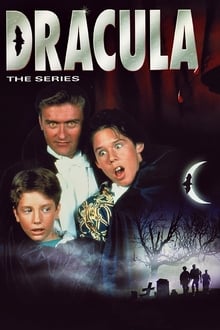
Dracula: The Series
Dracula: The Series is a short-lived syndicated children's horror television series developed by Glenn Davis and William Laurin, about Count Dracula (aka Alexander Lucard; A. Lucard, if you will) and his struggles with Gustav Helsing, Gustav's young nephews Max and Chris Townsend, and schoolgirl Sophie Metternich, with whom Chris develops romantic feelings. The series formula is relatively straightforward, with the four heroes learning of some nefarious plot by Dracula and setting out to foil it, with some success. In keeping with the novel, but not most media lore, vampires can travel in sunlight but lack their abilities. Anyone bitten just once by a vampire transform into a zombie-like servant; this process is preventable by applying holy water to the bite.
The File
The four private episodes connect several people who keep appearing, such as Inspector Danilo and his assistants. The first case begins when the conductor of a night tram at dawn discovers the body of an unknown man under the underpass ...
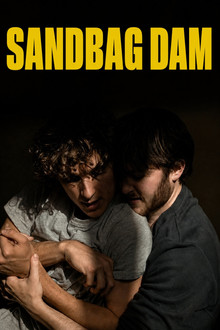
Sandbag Dam
A story about a forbidden love set in a village threatened by swollen rivers. Upon his return home for his father’s funeral, Slaven revives his relationship with his childhood friend, a young sportsman named Marko, his teenage love, and the reason his father kicked him out of the house. Now tempted to reunite, they need to make peace with their own decisions and struggle against the family restraints.

The Seventh Cronicle
In the mid-1950s, an unnamed convict succsesfully manages to escape from the Goli Otok prison island, seeking shelter in a monastery on the nearby island of Rab and striking a kinship with one of the nuns in it. A few days later, an agent of the Yugoslav State Security Service arrives on the island, desperate to find the man's whereabouts. The nuns and the monks face a decision of their lifetime. Are they going to turn the wounded man they know nothing about to the authorities, or will they continue concealing him and risk their lives in the process?
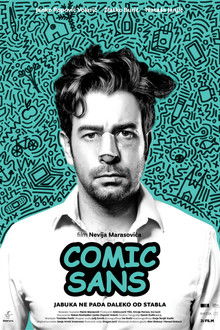
Comic Sans
A young and successful copywriter Alan Despot, after trying in vain to renew a broken relationship with his girlfriend, goes to the island of Vis and finds himself torn between his eccentric father, another ex-girlfriend and her fiancé. New situations and circumstances help Alan to view his own life from a new perspective.
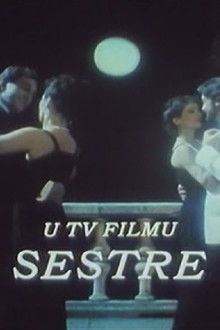
Sisters
Based on the motifs of Slavko Batušić’s play Chamber Trio, the main characters are sisters Julia and Regina, and Regina’s husband Marcel, in the vortex of an intimate and psychological drama of unresolved marital relations.

Brave Boys
During the Croatian War of Independance of the 1990s, a group of soldiers knocks on the door of a small family apartment. Šomi, the youngest of the family, tries to protect them at all costs.
The Pianist
A young pianist joins the partisans because he decides not to play for the Germans before the scheduled concert. By taking a random path, guided by his conscience, he was initially accused of being a spy. The young pianist will feel a certain uneasiness among the partisans all the time, thinking that the task of the moment is only a direct struggle with the enemy.
Ekran sneži
A community nurse Ema comes to work in a small village in the lowlands as a replacement, where she discovers the diary that her antecedent left behind, thus finding out more about the ill children she cured and the secrets of this sleepy settlement.
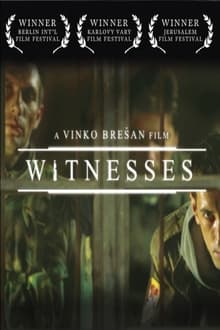
Witnesses
The extended version of the eponymous film served as a TV mini-series. The plot is centered in the city of Karlovac in 1992, during the Croatian War of Independence. The front lines, where Croatian and Serbian forces fight each other, lie near the city. Meanwhile, in the city of Karlovac, a Serbian civilian Vasić is murdered. The story follows the local police officer Barbir (Dražen Kühn), who tries to solve the murder in spite of ethnic hatred and war revolving nearby.
Headscarfs
Two elderly women must put aside their pride and differences after one of them is bitten by a venomous snake.
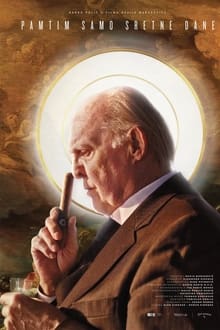
Good Times, Bad Times
Sitting in a restaurant representing the waiting room to the other world, a tired old man watches the patrons who represent him and his immediate family during the important moments of his life. Moments that have impacted him and the family, and have turned him into a man he was at the end of his life. The old man is forced to look these events in an objective way, observe them from the sidelines, as the judge and jury of a tragic life filled with regret, bitterness, and bad decisions. At a certain point, it becomes clear that the old man has actually died and is watching his own life.
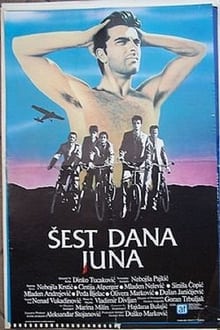
Six Days in June
A young man finds a way to spend his last few days of freedom before joining the army. Set in eastern Bosnia in summer of 1968.
Grunts of Intellectual Sows of Europe Today
Based on Krleza’s essay written in 1935 which warned about the rise of fascism and Nazism in pre-WWII Europe.
Nightfall, Full of Skepticism
Actors play out scenes and conversations based on Cengic’s biographical book Dance over Volcanoes (Ples na vulkanima) about Krleza as well as Krleza’s own poetry about his struggles, work, national myths and ethics.