
Personal Info
Known For
Gender
Birthday
Place of Birth
Fanny de Castro
Known for

Cuéntame cómo pasó
Recounts the experiences of a middle-class family, the Alcántaras, during the last years of the rule of Francisco Franco and the beginning of the Spanish Transition to democracy.

La que se avecina
La que se avecina is a Spanish television comedy created by Alberto Caballero, Laura Caballero and Daniel Deorador. The TV-series focusing around the inhabitants of Mirador de Montepinar, a fictional building located on the outskirts of a big city. Both its storylines and cast are heavily based on Aquí no hay quien viva, which ended when Telecinco bought Miramón Mendi, the series production company. The episodes debuted on the Telecinco network, and were later rerun by the same network as well as cable/satellite channels FactoríaDeFicción and Paramount Comedy. The series debuted in 22 April 2007 and became popular thanks to its funny characters, witty script, use of catchphrases and capacity to integrate and poke fun at contemporary issues; the program presents a caustic satire of many of the 'types' found in Spanish society. The name of the show involves wordplay, as "vecina" is the Spanish word for neighbour.

Paco's Men
Follows police officer Francisco "Paco" Miranda and his men through funny cases.


Volver
Three generations of women deal with family secrets while surviving the east wind, fire, insanity, superstition, lies and even death.

A golpes
María, Juanita, Vicky, Mena and Nitzia (Zay Nuba) are 5 girls who live on the outskirts of Madrid without an encouraging future. Their only recourse to survive is by doing muggings. They know it's wrong but can't find another solution. Only love will ease their pain

Camarón: When Flamenco Became Legend
The life of Camarón de la Isla, the legendary Spanish flamenco cantaor, from his beginning until his death; the relationships he struck up with his wife, la Chispa, and guitarists Paco de Lucía, Tomatito and Paco Cepero…

Amador
A drama centered on a young woman who takes a summer job caring for a bed-ridden older man, and the intimate secrets they begin to share with one another.

Rumbos
During a long night of August, some people have different experiences that leave a deep impression in them. Linked by a radio night show, all them cross the city of Barcelona, not knowing that their fates will collide with each other in unexpected ways.


The Son
Pedro is a 17 years old boy who attends high school as all the boys do. In the afternoon he and his friends mess around. What Pedro loves the most is his mother's lentil soup.

To Hell With The Ugly
Eliseo is ugly, lame and single. He hasn't met the woman of his life and has never known love. Nati is ugly, missing a breast and separated. She found the man of her life but, even so, has never experienced true love. Eliseo thinks that the worst of his life is still to come. Nati thinks that the best of her life is still to come. The death of Eliseo's mother reunites them twenty years on in a last chance to find happiness and love. But what happens when the woman of your life is married to your brother

Beneath Still Waters
Studying under a disciple of Aleister Crowley, the leader of an upper class group invokes a supernatural force that slowly devours the village of Marienbad and its inhabitants, threatening to spread beyond its geographical limits. The mayor from the town nearby commissions the building of a dam which would flood the valley and therefore submerge the village forever sealing the evil force under water after leader and his followers were incapacitated to be kept from escaping. However, fate ensured the leader's freedom as he remained in the depths when the waters covered Marienbad. Now 40 years later an array of disappearances and deaths in mysterious circumstances are threatening the town next to the reservoir that now covers Marienbad.
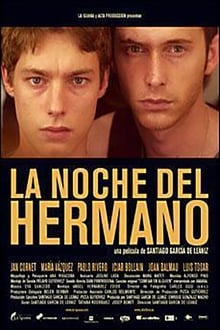
The Night of the Brother
The Night of the brother ("La Noche del Hermano") is a chiaroscuro tale in which the characters' not always explicit feelings cover the gamut from darkness to light through the thin line between love and fear. Because the events of life are often less astonishing than the way they are shown to us.

20 Centimeters
Colloquially-told story of a few days in the life of Marieta, who's saving money for the last operation in her change from man to woman. She works as a prostitute in Madrid and longs for a legitimate job. Whenever she builds up her savings, her housemate and best friend Tomás finds ways to spend, lose, or cost her those funds. She meets Raúl, whom she likes and who likes her; the trouble is he also likes that part of her she wants removed. If that's not enough, she also has narcolepsy, and when she conks out, she dreams of musical-theater numbers in which she's the singing and dancing star. Are these dreams always going to be 20 centimeters out of reach?