
Personal Info
Known For
Gender
Birthday
Place of Birth
Cristina Alcázar
Known for

Cuéntame cómo pasó
Recounts the experiences of a middle-class family, the Alcántaras, during the last years of the rule of Francisco Franco and the beginning of the Spanish Transition to democracy.

Amar es para siempre
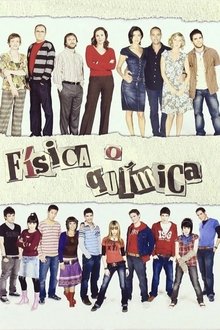
Physics or Chemistry
It tells the stories of a group of teachers and students from a central fictional school in Madrid. Under the gaze of some new teachers, newcomers to the center, we will know the passions, interests, aspirations and dreams of a group of rebellious teenagers who are in their last years of high school.
Cardo
María is a thirty-year-old from Madrid who is dissatisfied with her existence and, despite her efforts to make an artistic career a reality, she has no choice but to end up working in a flower shop in her neighbourhood.

Shared Custody
Cris and Diego just broke up and agree they want to stay friends. But that gets tricky when they move back in with their parents. The grandparents are eager to treat them like kids again. It doesn't matter that Cris and Diego are over forty years old, or have a five-year-old daughter, Cloe.
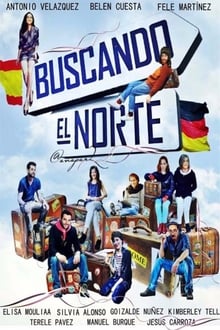
Buscando el Norte
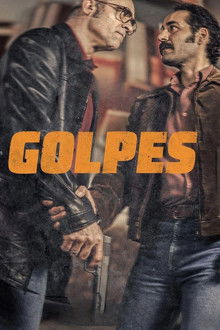
Golpes
Fresh from prison in 1980s Spain, Migueli reunites his gang for heists to settle past debts. His brother Sabino, now a cop assigned to the case, knows his methods - but Migueli won't stop until he reaches his goal.

The Tour

The Who
Tell the history of a married couple (María Pujalte and Javier Cámara) that at the beginning of the 80s they become the first divorced family in the democratic Spain.

Terror y feria

Checkmates
Candela, the headmistress of an elite school, after a traumatic divorce, returns to her old high school to lead a group of rebellious students through chess. There she will learn that in chess, and in life, it doesn't matter if you are a king or a pawn, because everyone ends up in the same box.
Escape
A young man becomes convinced that the solution to all his problems is to live in jail, and he will do whatever it takes to get it.
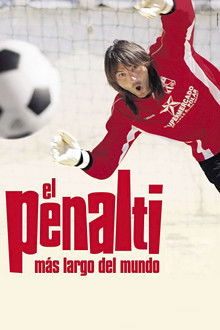
The Longest Penalty Shot in the World
Fernando (Fernando Tejero) is a loser. A gray type, without ambition, that works like bookcases distributor in a supermarket of the quarter. In his free short whiles, he is a substitute keeper of a football team, a third regional one. In all the season he has not played a single minute. But the last Sunday of the league the referee indicates penalty and the regular keeper injures itself. Fernando must occupy the goal for the first time. If penalty scores, the team of the district will proclaim champion. If no, all the effort of a year will not have been worth for anything. When the penalty is just about to be kicked, a group of indignant fans with the referee invades the field and prevents the kick. The competition committee decides that the penalty must play the following Sunday, in the same goal, with same players and the field closed to the public. El Penalti más largo del mundo, (The Longest Penalty Shot in the World) is exactly the history of that week of delay.