Personal Info
Known For
Gender
Birthday
Place of Birth
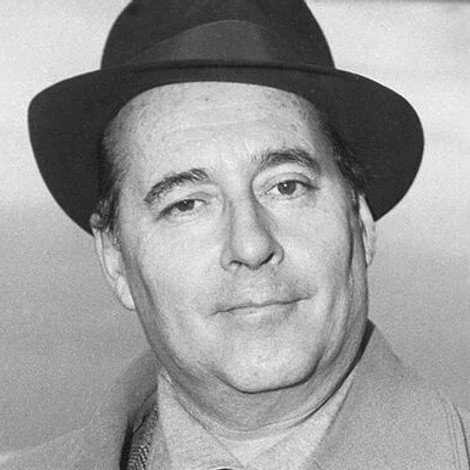
Roberto Rossellini
Biography
Known for

Mentiras verdaderas
Daily interviews discussing the guest's personal lives and national contingency.


Cinépanorama

Un film et son époque

L'età del ferro
A comprehensive overview of the entire Iron Age from the time of the Ertuscans to the present day.

Man's Struggle for Survival
Blurring the boundaries between documentary and historical fiction, this twelve-part series examines and imagines man's struggle to survive, from the days of cave dwellers to modern journeys into space.

Amazing Monsieur Fabre
It centres on the life of the entomologist Jean-Henri Fabre and his total devotion to studying insect behavior, travelling from Avignon to Paris, from Paris to his death in Sérignan. He is honoured by the French president Raymond Poincaré and his patience, obstinacy and knowledge are also recognised by Napoleon III, the publisher Charles Delagrave and the philosopher John Stuart Mill. They reach their climax in his book, Souvenirs entomologiques.

The War of the Volcanoes
In 1948, a fan letter arrived for director Roberto Rossellini from Ingrid Bergman, one of Hollywood’s biggest stars; after a meeting in New York, Rossellini invited Bergman to Italy to work on a project. Meanwhile, Anna Magnani, one of Italy’s biggest stars and Rossellini’s longtime lover, was furious. When the Rossellini/Bergman project was announced as a tale set on Stromboli, one of the volcanic Aeolian Islands, Magnani quickly set up her own Aeolian project, financed by Hollywood, to be called Volcano. Italy’s tabloids simply went wild: the prospect of these two great divas battling it out with rival productions was breathlessly followed, especially as it became clear that the Rossellini/Bergman relationship was more than professional. Francesco Patierno has created an engrossing, revealing and highly entertaining chronicle of this cinematic battle royal.

Anna Magnani - Recitare la verità

Cinéma et Réalité
In this documentary, giants of italian cinema such as Rossellini, De Sica, Fellini and Zavattini talk about the importance of cinema after WW2, and about huge moments of social rebellion. This movie gives the floor to the creators of italian neorealism.

Grierson
A portrait of John Grierson, the first Canadian Government Film Commissioner and founder of the National Film Board in 1939. Interweaving archival footage, interviews with people who knew him and footage of Grierson himself, this film is a sensitive and informative portrait of a dynamic man of vision. Grierson believed that the filmmaker had a social responsibility, and that film could help a society realize democratic ideals. His absolute faith in the value of capturing the drama of everyday life was to influence generations of filmmakers all over the world. In fact, he coined the term 'documentary film'.

General Della Rovere
In WWII-Italy, the Gestapo blackmails a con man to impersonate a dead partisan commander in order to extract information from his fellow inmates.

Morceaux de Cannes
We thought we'd seen, read, and heard everything there was to see about the Cannes Film Festival, from the glitz and gossip to the scandals and censorship. And yet, Emmanuel Barnault's "Morceaux de Cannes" (Pieces of Cannes), by this leading expert on Italian and French cinema, convinces us otherwise. The third largest event in the world (after the Olympic Games and the FIFA World Cup) reveals its secrets only sparingly, as this film attests. The result of passionate research in the INA archives, these 52 minutes, without interviews or voice-over narration, string together rare and sometimes previously unseen footage. Taken together, they tell a surprising, original, and heartwarming story of the Festival. On the beach, on a street corner, in a restaurant, or in the privacy of a hotel room, these forgotten archives summon the greatest filmmakers, actors, and actresses of the last seventy years, from Jean Cocteau to David Lynch, for an anthology of the Festival's history.

L'India vista da Rossellini
In this long journey through India, with a total running time of 251 minutes, viewers have the opportunity to discover, among other things, the city of Bombay at that time, the fishermen of Versova, the eating habits of Indians, regions such as Malabar and Bengal, India’s diverse wildlife, and the work of then–Prime Minister Nehru, one of the most ardent supporters of Rossellini’s project.

Ingrid Bergman: In Her Own Words
A personal and captivating account of the extraordinary life and work of Ingrid Bergman (1915-82), a young Swedish woman who became one of the most celebrated actresses in world cinema.