Personal Info
Known For
Gender
Birthday
Place of Birth
Youssef Hanna
Biography
Known for

Aldighri
AlDaghari is a Syrian social comedy series, based on the story of Turkish writer Aziz Nesin, produced by Syrian Arab Television in 1992, directed by Haitham Haqqi. It tells the story of a fraudulent person who exploits the gullibility of the villagers.

اختفاء رجل
Izz ad-Din al-Qassam
A historical series that reviews the life of the martyr Izz al -Din al -Qassam, and its transition from Syria to Palestine to escape the death sentence issued by the French, to establish the resistance in Palestine against the British occupation.
The Dupes
The film follows three Palestinian refugees brought together by dispossession and hope for a better future. Hiding in the tank of a truck, the men attempt to make their way across the border into Kuwait, the "promised land."

Another Face of Love
A newly graduated young doctor has hopes of making his way steadily in his country, or of traveling to another country in order to achieve his dreams. In the village, he wakes up from his rosy dream he lived before he traveled to a harsh reality, after he is accused of murder.
Men Under the Sun
Three Palestinian men strive to escape the hardships of life in a refugee camp. Under the scorching sun, the men enlist the help of an old man, Abu Al-Khaizuran, to smuggle them in an empty water tank across the desert.
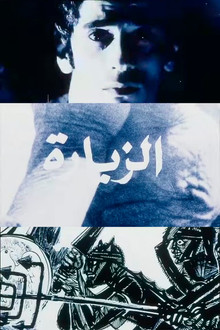
The Visit
An oneiric film poem about a murder in occupied Palestine, in which Qais Al-Zubaidi used drawing, poetry, music, phonograph and pantomime with his technical virtuosity and formal expressionism. Featuring poetry from Mahmoud Darwish, Samih al-Qasim, and Tawfiq Ziad.
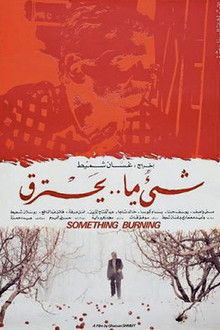
Something Is Burning
After the 1967 setback, Abu Ramzi is displaced from the Golan with his family, and he is tired in order to secure a livelihood and his wife who works in sewing helps him. As for the son Ramzi, he dreams of riches quickly and in the easiest way, which drives him to collide with his father, who dreams of a roof that shelter him through halal earnings.
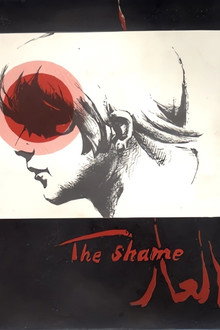
Shame: A Trilogy
An anthology film that features three stories about the suffering of the people of the Syrian countryside in the time of feudalism; the first is about a poor peasant who falls victim to an agent of feudalism, the second is about a little girl, who has to get medicine for her feverish mother. As for the third story, it depicts the tools of feudalism in wresting the land from the peasants.