Personal Info
Known For
Gender
Birthday
Place of Birth
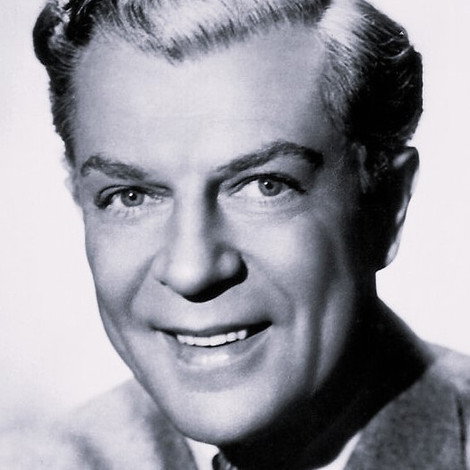
Viktor de Kowa
Known for

Bambi
The Bambi, often called the Bambi Award and stylised as BAMBI, is a German award presented annually by Hubert Burda Media to recognize excellence in international media and television to personalities in the media, arts, culture, sports, and other fields "with vision and creativity who affected and inspired the German public that year", both domestic and foreign. First held in 1948, it is the oldest media award in Germany. The trophy is named after Felix Salten's book Bambi, A Life in the Woods and its statuettes are in the shape of the novel's titular fawn character. They were originally made of porcelain until 1958, when the organizers switched to using gold, with the casting done by the art casting workshop of Ernst Strassacker in Süßen.

Was bin ich?
Gut gefragt ist halb gewonnen

Schlussakkord

Tannenberg
Shortly after the outbreak of World War I August 1914, Eastern Front. The Russian surprise attack on the northeasternmost part of the country causes serious problems for the German defenders.

The Optimist
A moron buys a worthless piece of land, which a swindler passed off as an oil field.
Der Groß-Cophta

Slim Callaghan greift ein

Thunder at the Border
Firehand and his Apache friend Winnetou are determined to get justice for the murder of four young braves. They set off to track down the gang responsible for the horrendous act.

Der blaue Stern des Südens

The Carnival Fairy
Film version of the operetta by Emmerich Kalman. Victor has won 10 000 Mark with his ceiling painting. In the local pub, he celebrates his triumph. Countess Alexandra happens to drop into the pub too, and is thought to be a model by the sponsor of the prize, Count Meredith. Victor soon has to save her from an embarassing misunderstanding. The two men insult each other and Victor loses his prize.
Da stimmt was nicht
A councilor is tricked by an impostor, whom he believes to be a baron. He gives him money and his marriageable daughter -- but then the real baron shows up and plays the chauffeur.

The Young Baron Neuhaus
Vienna, 1753. Baron Neuhaus is flirting with two ladies-in-waiting, hoping to get a job at the imperial court. He succeeds, and the empress orders him to investigate the immoral conduct in the palace of which Neuhaus himself is the cause.

Encounters in Salzburg

Die göttliche Jette
Cheeky Jette is a typical Berlin girl. Together with her mother, she performs couplets in a Berlin suburb theatre every night. Then, a young Austrian baron, who is worshipping Jette, enables her to audition for Königstädtisches Theater. Although she at first fails with an aria from an opera, Jette wins over the hearts of the board members with her fresh style when she performs a cheeky couplet that was written by Barsch, the stage manager of the suburb theater.