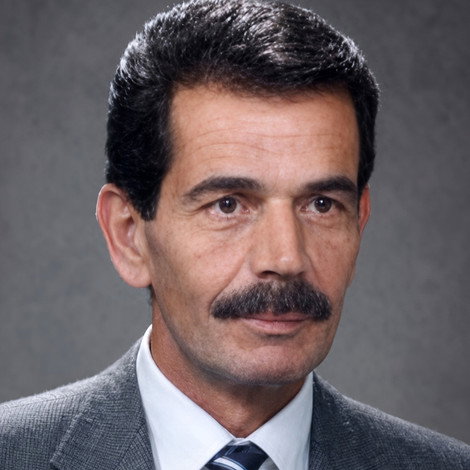
Personal Info
Known For
Gender
Birthday
Place of Birth
Bassam Lotfy
Biography
Known for

Hammam AlQishani
The series goes into details of the events that Syria went through between the years 1955-1959, including the tripartite aggression against Egypt in 1956, the establishment of unity between Syria and Egypt, and the revolution against the monarchy in Iraq, through the Qishani neighborhood, where its people work as merchants, lawyers, doctors, intellectuals and other works.

The Falcon of Quraish
When the Abbasids overthrow the Umayyad Caliphate in Damascus, slaughtering nearly the entire dynasty, one young prince escapes — Abd al-Rahman. Hunted across deserts and seas, he eventually reaches the fringes of the Muslim world and, through sheer will and political genius, founds a new Umayyad emirate in Andalusia. Written by Walid Seif and directed by Hatem Ali, this is the first chapter of their celebrated Andalusian trilogy — epic, human and historically meticulous.

Palestinian Alienation
The first comprehensive dramatic telling of the Palestinian Nakba, seen through the eyes of a poor rural family from the 1930s British Mandate era through the massacres of 1948 and the defeat of 1967. Written by Palestinian poet Walid Seif — based on his own family history — and directed by the late Syrian master Hatem Ali, this is widely considered one of the greatest Arab television dramas ever produced. A monumental work of collective memory, historical witness and human endurance.

The Leader
In 1918 Damascus, after the downfall of the Ottoman Empire and before the French colonization of the country, six Damascene neighborhoods decide to choose one head to rule over them, only for clashes over the throne to crystalize and extend.

Al-Hout
A drama series that tells the story of the coastal environment during the era of the French mandate in Syria, especially the environment of fishermen in light of the exploitation and greed of some people and the bitter struggle of others against the French occupier.

Diaries of a General Manager
A journalist working in the same newspaper as her husband, and intellectual conflict arises between them because of the differences between the nature of men and women. The series shows the relationship between the spouses, revealing many attitudes of the “Eastern Man”.

A Hero From This Time
The series revolves around a poor man who wants to get rich. As he has a dream that he has found a treasure, his social status changes as he goes out every night to abandoned areas and begins digging and goes home by day to rest.

Cordoba's Spring
The second chapter of the acclaimed Andalusian trilogy by Walid Seif and Hatem Ali. Set in the golden age of Umayyad Cordoba, it traces the extraordinary rise of Muhammad ibn Abi Amir — known as Al-Mansur — from a young scholar arriving in Cordoba seeking knowledge, to the most powerful man in Andalusia. A sweeping story of ambition, political genius and the glittering, fragile peak of Arab civilisation in Spain. Stars Taim Hassan and Jamal Suleiman.

We Will Return
The story of a young Palestinian who left his refugee camp to become a resistance fighter in the Palestine Liberation Organization.

Ayamana Alhulwa
A Syrian social drama series that sheds light on a neighborhood in one of the slums in the vicinity of Damascus, around a poor family consisting of a mother and her four children, who strive to meet their needs and achieve their ambitions with the tools available to them, while focusing on solving future problems at the time, leaving them to chance, luck, mischief, whim, or influence.
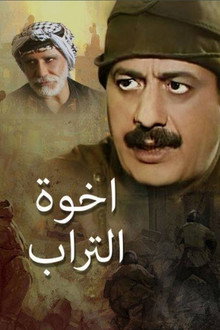
Brothers of the Soil
The series revolves around the Arab Revolt that broke out in Syria against the Ottoman occupation that had ruled the country for four centuries.

Seraa Al Zaman
Set in a traditional Damascene neighborhood, the story follows—in a comedic way—the protagonist's quest to find the woman he loved but never confessed his feelings to over forty years ago, after he begins seeing her in his dreams every day.
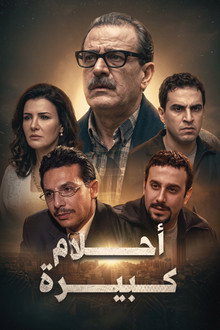
Big Dreams
The Halaby family works in trade. When the father decides to write all his property over to one of his sons, the two brothers clash, until the eldest brother falls ill, and his younger son is forced to give up his ambition to take care of their business.

The End of a Brave Man
Mufid the monster, the naughty teenager, did not find anyone who knew how to deal with him properly, so he did not discover anyone around him and develop the good qualities that Mufid was distinguished for. The society in which he lived, starting from the harsh father at home, to the ignorant and arrogant teacher at school, to the mukhtar who punished him for cutting off the tail of Abboud's donkey... All of these were the cause of Mufid's loss and his premature end. As a result of this treatment, Mufeed could not bear to stay even for a single minute in the farm, so he ran away and decided never to return to this farm that caused him pain and persecuted him.

kum alhajar
The series monitors the social, political and cultural life in Syria from the period 1932 to 1936, where the events take place in two neighboring areas: the city of Aleppo, and a supposed rural area called Kom alHajar.