
Personal Info
Known For
Gender
Birthday
Place of Birth
Ove Sprogøe
Biography
Known for
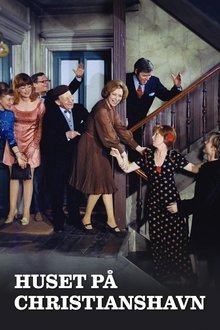
The House at Christianshavn
The series follows the residents of an apartment building on Copenhagen's Christianshavn, as they go about their daily lives and challenges. There is Olsen, a mover with an old fashion view of the world, Clausen who runs the local pet shop, Egon the career focused assistant, their wives who work hard to keep their spouses lives together, the young couple Tue and Rikke who recently moved in, the hard working caretaker Meyer, who never puts in to much effort, and of course Emma, the innkeeper of Rottehullet, where all the important decisions are made while running up the bar tab. The series was produced by Nordisk Film for Danmarks Radio TV station between the years 1970-77. The series' first director was Ebbe Langberg, then Erik Balling and Tom Hedegaard respectively. The series was conceived by an author team of well-known Danish authors such Leif Panduro, Benny Andersen, and Lise Nørgaard.
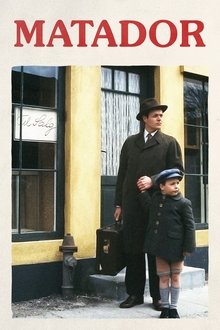
Matador
Matador is a Danish TV series produced and shown between 1978 and 1982. It is set in the fictional Danish town of Korsbæk between 1929 and 1947. It follows the lives of a range of characters from across the social spectrum, focusing specifically on the rivalry between the families of two businessmen: The banker Hans Christian Varnæs, an established local worthy, and social climber Mads Skjern, who arrives in town as the series opens. The name Matador was taken from the localised edition of the boardgame Monopoly, also the series' tentative English title. In addition, in contemporary Danish a "matador" is often used to describe a business tycoon, in the series referring to the character of Mads Skjern and his craftiness as a self-made entrepreneur. Directed by famed Danish film maker Erik Balling, Matador was the idea of author Lise Nørgaard who wrote the bulk of the episodes alongside Karen Smith, Jens Louis Petersen and Paul Hammerich. The series is one of the most well-known and popular examples of Danish television and represents the peak of longtime development of Danish TV drama by the public service channel Danmarks Radio. The series has become part of the modern self-understanding of Danes, partly because of its successful mix of melodrama and a distinct warm Danish humour in the depiction of characters, which were portrayed by a wide range of the most popular Danish actors at the time; but also not least because of its accurate portrayal of a turbulent Denmark from around the start of the Great Depression and through Nazi Germany's occupation of Denmark in World War II.
Vores år
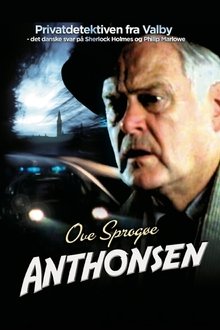
Anthonsen
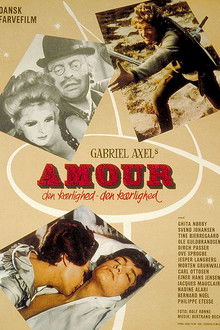
Amour
This three-part movie begins with a young woman married to an older, cold-hearted man in the year 1200. Two rivals have a swordfight over the affections of the woman. Part two takes place in 1910 and finds an amorously unfaithful wife taking on her many lovers while her unsuspecting husband lurks nearby. The final part finds a count and countess engaging in extramarital affairs in France during the 1840s.
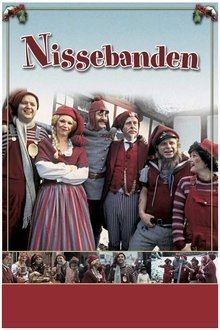
Nissebanden
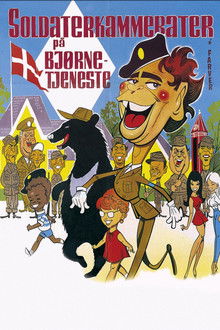
Friends at Arms: On a Bear Run
The German bear Fido from Münich is sweet, easygoing and nice, and just loves Danish soldiers. Thus, the bear marches together with the recruits and even wants to share their beds in this strange Danish comedy.
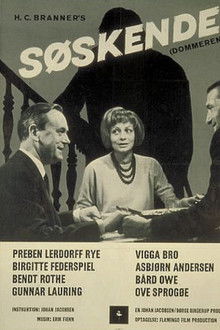
Søskende
Three siblings see each other again after many years at their father's deathbed. The eldest, Arthur, a lawyer, has everything under control – or so it seems, as the middle child, Irene, is struggling with her abusive husband, while little brother Michael is the outsider, living a sleepless life of booze and prostitutes. When their father is close to death, the three are called together, and a major family drama unfolds in their father's living room. Gradually, they agree that they should stand together instead of arguing about old affairs. But when their sick father suddenly falls down the stairs, it is as if all good intentions fall to the floor again.
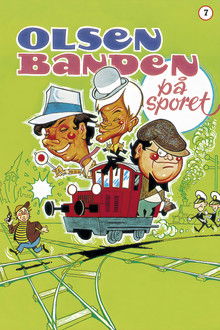
The Olsen Gang on the Track
Egon and his two cronies managed to sneak a fortune with them to Spain. Here they live a life in a whirl of pleasures, but they are not truly happy. While Egon always has the money chained to him, Bøffen still manages to steal them. Egon ends up in jail once again, and when he comes out, he has a brilliant plan.
Aladdin or the Wonderful Lamp
With sinister intentions, evil sorcerer Noureddin lures the young Aladdin into a dark cave to retrieve an old lamp that doesn't look like anything special. But: When Aladdin rubs it, the genie of the lamp appears and can grant any of his wishes, whether it's the princess or the entire kingdom.

Krigsdøtre
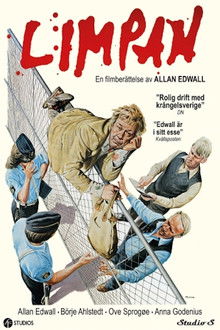
Limpan
Limpan is an alcoholic who has been put into a caretaking home for alcoholics. He's promised a job on the 'outside', but he's not released from the home, so he runs away. He misses the job and gets caught and is brought back, but they won't accept him, since it's after closing time. During a couple of days, he wanders back and forth between the home and the world, meeting several different people who all have their different problems, which Limpan confronts and all the time, there's the question of alcohol; to drink or not to drink.
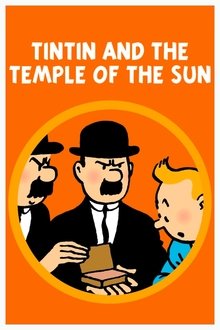
Tintin and the Temple of the Sun
When seven archaeologists find an ancient Inca temple, they become victims of an ancient curse. Back in Europe, one by one they fall into a deep sleep and only once a day, all at the same time, they wake up for a few minutes and experience hallucinations where the sinister living mummy of Rascar Capac appears.
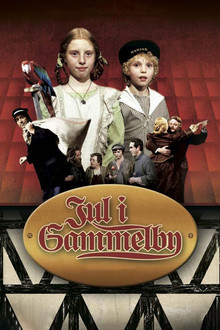
Jul i Gammelby
There are real elves in the attic of the old Mayor's House. The elves do everything they can to ensure that the children Mads and Mette have a real Christmas in the Mayor's House. In the midst of the Christmas rush, they make sugar and flour disappear so that no one can bake Christmas cookies—neither the baker nor the citizens of Gammelby. The mayor is unhappy about the strange events and can only think about whether the good ship "Hope," which is supposed to bring new supplies, has been wrecked. There has been no news from the ship for several months, and the big question is whether "Hope" will return to Gammelby before Christmas. If not, there will be no Christmas for Mads and Mette and all the citizens of Gammelby...