Personal Info
Known For
Gender
Birthday
Place of Birth
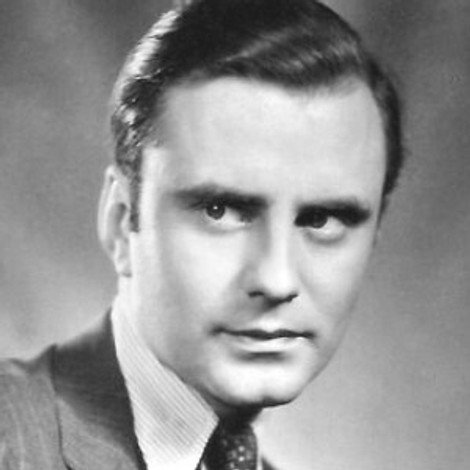
Wolfgang Liebeneiner
Known for

Was bin ich?

Schlussakkord

Everyone Obeys My Command
For more than 50 years, Pauline Neuber has directed the "Olympia" theatre, but lately, business has been bad. It appears that no one will be able to make it better either: the audience doesn't seem to like the plays; the press even less so; and the shareholders of the theatre want to sell their shares. In short, the "Olympia" has one foot in the grave. Erich, grandchild of Pauline and always underestimated by her, gets to know Hella Bergson, the daughter of the theatre critic Peter Bergson, and falls in love with her - but doesn't have an idea whose daughter she is. He plays her some melodies from the first operetta he's ever composed and Hella convinces him to have the operetta performed in the "Olympia". During rehearsal of the operetta, however, a fight breaks out between Erich and Hella over a stupid misunderstanding.
Every Day Isn't Sunday
After winning the lottery young draftsman Erich decides to quit his job and enjoy his riches on a big scale, thus alienating his bride, his grandmother and his friends. Soon con men try to swindle him out of his money.
Filmgeschichte(n) aus Österreich

Artist Love
In 1887 in Munich, a rising artist paints a portrait of a dancer. The success of it during an exhibition leads to him being awarded a major commission in Rome, and he begins to move in high society. By the time he returns home he has almost forgotten about her.

Donaumelodien
Stefan is the son of the owner of a Bavarian steamship concern, which plies the Danube. During a trip to Budapest, he falls in love with the beautiful Etelka, who, unbeknownst to Stefan, is the daughter of his father's Hungarian competitor. By chance, they lose sight of each other; but as Stefan's father enters into negotiations with Etelka's father about a merger of the two companies, the children find each other once again.

A Night on the Danube
After meeting up with a charming blonde and her female orchestra on a Danube river steamer, a nobleman who had aspired toward the classics turns to popular music instead.
Der zerstreute Walzer - Eine musikalische Phantasie

Die schönen Tage von Aranjuez
As a gang of classy jewel thieves hop from one European country to another, an engineer rescues a woman from their clutches.

Liebelei
Vienna in the beginning of the twentieth century. Cavalry Lieutenant Fritz Lobheimer is about to end his affair with Baroness Eggerdorff when he meets the young Christine, the daughter of an opera violinist. Baron Eggerdorff however soon hears of his past misfortune...

Dissatisfied Woman
Lisa's marriage is all in all quite happy; unfortunately, her husband never listens to her when it comes to buying new things. To change this situation, she fakes a loss of memory and pretends not to know who her husband is. When he calls the young psychiatrist Dr. Spinelski for help, Lisa acts, as if she believes he is her husband; and as part of the therapy, Spinelski makes sure that Lisa gets everything she wants. Finally, Lisa comes to the conclusion that she'd rather have her real husband and so pretends to fall for him, whereupon they start a new life together. I'll remember to try that the next time I'm not allowed to buy some beer.

The Blonde Carmen
A singer tired of the stage retreats to a hotel in the country. There, she finds love and a way back into show business.

Tobias Knopp, Adventure of a Bachelor
The wealthy man Tobias Knopp becomes ever more lonely and quirky over the years. He had let himself go, his girth increased significantly, and his hair fell out. Over that, he waited too long for the right woman and stayed a bachelor involuntarily. But now, he wants to try again one more time and wants to get married after all. But first of all, the right woman for this has to be found, and thus Knopp embarks on a journey to look for a wife all through the German lands. During that, he visits his friends who are already married for a long time and gets all kinds of advice from them on how to get to know a woman and to conquer her heart. On his journey, Knopp then learns much about the different facets of married life. After countless adventures, he, however, doesn’t find an adequate partner and returns home frustrated. But perhaps, his housekeeper might be able to help out?

Freut Euch des Lebens
A Bavarian comedy centered around Gusti, the lovely waitress of the restaurant „Bratwurstglockl“, who is adored by all the men. When the spoiled snob Carl Maria complains to the manager about the restaurant, Gusti is summarily dismissed and accepts the invitation of the poor chamber singer Gottlieb Bumm to accompany him on a three-day trip to the Zugspitze he won in a contests. While there, they both live well above their means and Gusti runs into Carl Maria again.