Personal Info
Known For
Gender
Birthday
Place of Birth
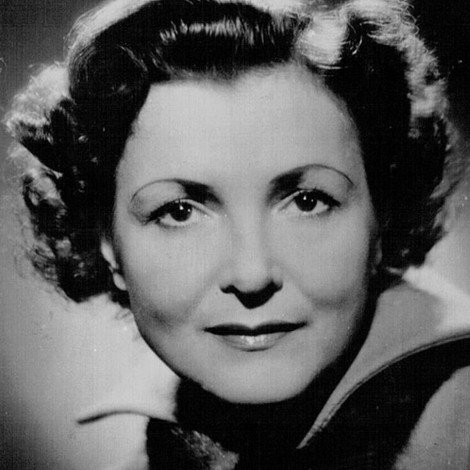
Maria Andergast
Biography
Known for

Was bin ich?
Zwischenmahlzeit

Immortal Waltz
Johann Strauss firmly established himself as the leader of a dance orchestra in Vienna in the 1840s. His sons Johann junior and Josef have clearly inherited their father's talent. Nevertheless, father Johann is strictly opposed to both of them training as composers.

Three Girls Around Schubert
Composer Franz Schubert becomes involved with a family with three daughters, falling in love with the two blonds, first one, then the other; but will he notice the quiet brunet third daughter, who has fallen madly in love with him?

Last Stop
Endstation offers the American viewer tantalizing glimpses of busy, bustling mid-1930s Vienna. Otherwise, this minor yarn of an amorous streetcar conductor is strictly formula material. The film benefits from the star power of Paul Horbiger, resplendently garbed in an elaborate conductor's uniform. Also worth noting is the performance of Maria Andergest as the woebegone hatmaker whose fate is inextricably linked with hero Horbiger. Incidentally though the direction is credited with one E. W. Emo, Paul Horbiger actually called most of the shots on Endstation.


The Bird Seller
The film is an adaptation of the 1891 operetta Der Vogelhändler by composer Carl Zeller, with libretto by Moritz West and Ludwig Held, though it incorporates few of the original songs, using them mostly instrumentally or in the background. The plot follows Adam, a Tyrolean bird seller in 18th-century Rhineland, who hopes to marry his beloved Christl, a postmaster's daughter; to secure his future, she arranges for him to perform at court, but complications arise when she is mistakenly suspected of an affair with a philandering prince.

Die Pfingstorgel
The residents of the villages Strasslach and Rott are anything but friends. The residents of the “enemy” town are ridiculed at every chance the residents of the other village can get to do so. And it’s no different, when Rott is getting ready to celebrate the 300th anniversary of its founding. The residents of Strasslach ridicule their neighbors, because the Rotters don’t want to celebrate the anniversary, because it’ll cost money. Even the church doesn’t have an organ, because that would cost money, too.

Little Melody from Vienna
Vienna shortly after World War II. A music professor, in whose house a young widow with three children is quartered by the housing office, changes under the influence of the charming lady.

Der alte Sünder

Der Verschwender
A Merry House
The seamstresses Franzi and Mizzi have opened up a small shop in a suburb of Vienna. Mizzi is of the opinion, however, that her friend could have a much better life if only she'd marry Karl, the son of the landlord, who has been hot for her for quite a while now. Next store to them lives a rather elegant gentleman, whom Mizzi does not like. One day, an excited woman bursts into the studio, tears off her clothes and begs the girls to act as if they're fitting her for a dress should her husband waltz on in, too. In fact, her jealous husband Stefan does show up and is thrilled to discover that his Gerda isn't cheating on him. But Mizzi and Franzi are positive, that she's been meeting a certain elegant gentleman next door.
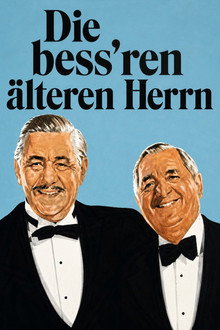
Die bess'ren älteren Herrn

So ein Früchtchen
