
Personal Info
Known For
Gender
Birthday
Place of Birth
Hans-Joachim Hegewald
Known for

Polizeiruf 110
Polizeiruf 110 is a long-running German language detective television series. The first episode was broadcast 27 June 1971 in the German Democratic Republic, and after the dissolution of Fernsehen der DDR the series was picked up by ARD. It was originally created as a counterpart to the West German series Tatort, and quickly became a public favorite.
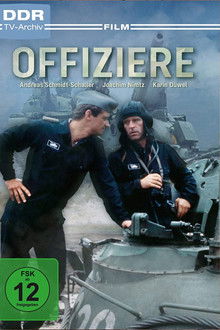
Offiziere
Major Leska, who has proven himself as a troop officer in a tank battalion in complicated maneuvers, is to become an instructor. He sees this as a challenge and is looking forward to the new task. But then the decision is made in favor of his friend Hans Helbig, who has just graduated from the military academy with distinction and was once Leska's subordinate. The conflict that erupts between Leska and Hans puts a strain on their working relationship and puts their friendship to the test. They have to prove themselves during an important maneuver.
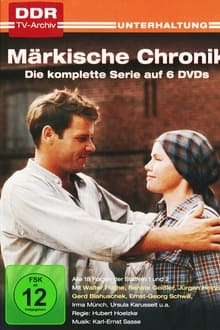
Märkische Chronik

Zahn um Zahn
A man who has just become unemployed kills his closest relatives before he judges himself. Commissioner Schimanski determined.

Das Eigentor
The young Ulf Ansorge is an exceptional talent in Hagenheim soccer. He is considered the most talented player in his team and is also the team's top scorer. He is now set to move to another city to study and is therefore toying with the idea of changing clubs. The sports board, of which Ulf's future father-in-law is also a member, tries to persuade him to stay. In his inner conflict, Ulf finally scores an own goal on purpose to make the decision for himself.
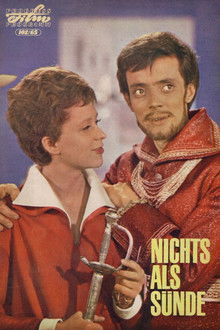
Nichts als Sünde
Based upon Shakespeare′s "Twelfth Night", the movie tells the story of the Duke of Illyria who is in love with the Countess Olivia. Olivia, however, keeps eluding him. When the Duke sends her a page to bring her a message, Olivia falls in love with the messenger who is in fact a woman called Viola. After she was shipwrecked on the shores of Illyria, Viola assumed the role of her missing brother. She cannot return Olivia′s love because she, in turn, adores the Duke.
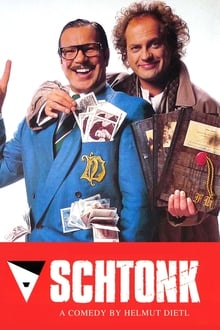
Schtonk!
Schtonk! is a farce of the actual events of 1983, when Germany's Stern magazine published, with great fanfare, 60 volumes of the alleged diaries of Adolf Hitler – which two weeks later turned out to be entirely fake. Fritz Knobel (based on real-life forger Konrad Kujau) supports himself by faking and selling Nazi memorabilia. When Knobel writes and sells a volume of Hitler's (nonexistent) diaries, he thinks it's just another job. When sleazy journalist Hermann Willié learns of the diaries, however, he quickly realizes their potential value... and Knobel is quickly in over his head. As the pressure builds and Knobel is forced to deliver more and more volumes of the fake diaries, he finds himself acting increasingly like the man whose life he is rewriting. The film is a romping and hilarious satire, poking fun not only at the events and characters involved in the hoax (who are only thinly disguised in the film), but at the discomfort Germany has with its difficult past.
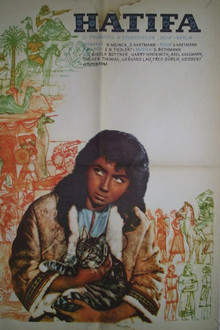
Hatifa
Hatifa is tired of her difficult fate and escapes from the place of her enslavement, a quarry in the desert. There she wanders around in freedom, but ultimately helpless, without water or food. Shortly before dying of thirst, she is saved by the sage Simsal, who is traveling with a caravan of the merchant Ganem. Hatifa quickly makes many friends, including the young servant Hodja. Only to him she confides her secret. The girl had to keep the fact that she was a slave to herself. After all, anyone who helps escaped slaves is mercilessly threatened with the death penalty. Out of consideration for the caravan, they both flee, but are soon picked up by Ganem. When he realizes that he can make a lot of money with Hatifa, he sells her again to a quarry.

Daniel und der Weltmeister
Little Daniel is a huge fan of cycling. He constantly drives around on his three-wheeler, knowing that he wants to become a famous racing cyclist – just as fast and famous as the world champion Täve Schur. But until then he has to struggle with the difficulties of growing up. His mother, for example, wants him to drink milk – even though Daniel does not find this very suitable for world champions. To get affirmation, Daniel starts searching for his role model Täve. On the way, he has some interesting encounters and experiences many adventures. When he finally meets Täve at a race, Daniel is astonished to watch him pleasurably drink a bottle of milk after an outstanding victory.
Abendbesuch
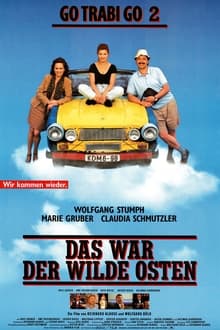
Go Trabi Go 2: Those Were the Days of the Wild East
Elated by the Italian attitude to life, family Struutz returns to Bitterfeld and experiences a shock: In the turmoil of the reunification her house must give way to a golf course. Hope Udo teacher, his wife Rita and daughter Jacqueline through the surprising inheritance of a factory near Dresden. But of market economy, the staid Saxons unfortunately have no idea. Help comes in the guise of adventurer and condoms dealer Charlie, who works as a "business consultant" and gives Udo a Rock & Roll crash course in capitalism - with unsurpassed success.

The Architects
The architect Daniel Brenner is in his late thirties when he receives his first challenging and lucrative commission: to design a cultural center for a satellite town in East-Berlin. He accepts the offer under the condition that he gets to choose who he works with. This way, he reunites with former colleagues and friends - most of them architects or students of architecture who have since chosen a different profession due to personal restraint or economic confinement. Together, they develop a concept which they hope will be more appealing to the public than the conventional and dull constructions common to the German Democratic Republic. However, their ambitious plans are once and again foiled by their conservative supervisors. As frustration grows, Daniel has trouble keeping his career in balance with his family-life: his wife Wanda wants to leave for West-Germany.

Lotte in Weimar
Johann Wolfgang von Goethe (1749-1832) was the author of Werther, the romantic novel that was transformed into a play during Goethe's lifetime and which initiated the whole German romantic movement. The book's story tells of young love and suicide. In this East German film, based on a book by Thomas Mann, Lotte (Lilli Palmer) was the woman who served as the model for the heroine in the novel Werther. She comes to Goethe's hometown for a visit, and her experiences there eerily re-create episodes from the book. Goethe comes across as a pompous old bore, and his friends as pandering sycophants, in this very proper communist party-sponsored, anti-heroic movie.
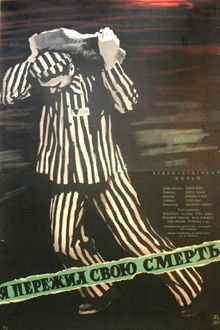
I Survived Certain Death
Telling the prisoners of a death camp. Boxer Tony Majer, who got into a concentration camp for a fight with the Gestapo, remembers the murderous work in quarries, on the cruel torture of the Nazis and prison solidarity that helped him survive.
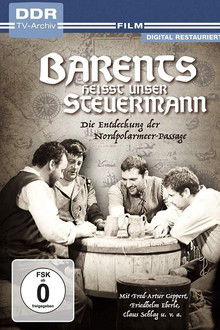
Barents heißt unser Steuermann
In 1596, the Dutchman Willem Barents sets sail on a long voyage with two ships to find a north-eastern sea route to China for the Amsterdam merchants. Ice masses and storms force the prudent navigator Barents to separate from Rijp, the captain of the second ship, so that he can organize a rescue operation in Holland. Trapped in the polar winter, Barents and his crew hope for help...