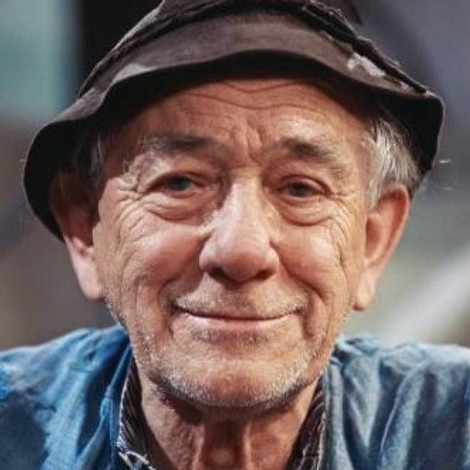
Personal Info
Known For
Gender
Birthday
Place of Birth
Ludwig Schmid-Wildy
Biography
Known for

Scene of the Crime
Tatort is a long-running German/Austrian/Swiss crime television series set in various parts of these countries. The show is broadcast on the channels of ARD in Germany, ORF in Austria and SF1 in Switzerland.

Zum blauen Bock


Das Kriminalmuseum
Das Kriminalmuseum was a German television series. It ran from 1963 to 1970 on ZDF and was one of its first programs. Each episode began with a tracking shot through an unspecified crime museum, stopping at one of the displays, whose story was then told. Each episode was between 60 and 75 minutes long and featured different actors as the criminal commissioner. The best known was Erik Ode, who in 1969 moved to Der Kommissar, appearing in 97 episodes. The theme music of the series was written by German composer Martin Böttcher, who also composed the complete scores for five episodes.

Die seltsamen Methoden des Franz Josef Wanninger
Die seltsamen Methoden des Franz Josef Wanninger is a German television series.

Königlich Bayerisches Amtsgericht
Königlich Bayerisches Amtsgericht is a German comedy television series. It was produced by ZDF in the years 1968 to 1972 and contains 52 episodes. It is set in the German Empire shortly before World War I and revolves around the court proceedings of the Königlich Bayrisches Amtsgericht in the fictional Bavarian small town Geisbach. Almost all actors speak with a Bavarian dialect. The series features many famous Bavarian actors like Gustl Bayrhammer, Hans Baur and Max Grieser.


Die Pfingstorgel
The villagers of Mauth are notorious for their stinginess. They are so thrifty that they can't even afford an organ for their church. When the mayor of Mauth goes to a wedding in the neighboring village, he attracts the ridicule of the entire pub society. Furious, he goes home and suggests to the local council that they should at least buy an organ to avert the ridicule from the village.