Personal Info
Known For
Gender
Birthday
Place of Birth
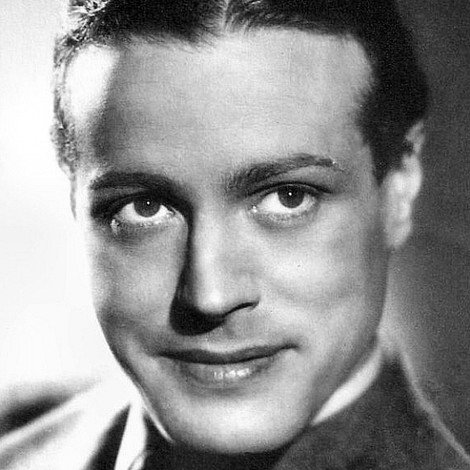
Wolf Albach-Retty
Known for
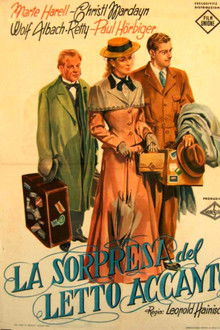
Romantische Brautfahrt

Frühlingsluft
At the behest of the financially strapped Duke, his nephew, Crown Prince Rudolf, is to marry someone of suitable rank. But Rudolf has no interest whatsoever in his uncle's plans and works under his commoner's name as an engineer in a car factory. Then a certain Count Rasumirski appears before the Duke and explains that the famous operetta diva Vera Naldi is actually a Russian princess who knows nothing of her origins. They hatch a plan to marry Rudolf off to her. But at the theater, Rudolf falls not for the singer, but for the secretary. Instead, Rudolf's other uncle begins to take an interest in Vera. Then, however, it turns out that Rasumirski is an imposter and Vera is not a princess at all...
General Housecleaning
The head of a squad of maids captures the heart of a wealthy young bachelor.
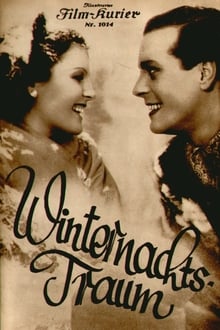
Winter Night's Dream
The wintry mountainscapes of Bavaria provide the backdrop for this airy German comedy. The story is set in motion when young clerk Boenecke (Richard Romanowsky) accidentally delivers a check to the wrong bank. Boenecke's boss Schumann (Walter Steinbeck) suspects the clerk of embezzlement -- especially since our hero has taken off on an extended Alpine vacation with his sweetheart Hilde (Magda Schneider). Before this comic chain reaction can be straightened out, hero and heroine have become entangled with a gang of female pickpockets. Essentially a "moonlight and strudel" confection, Winterachtstraum was perfect escapist entertainment for Magda Schneider's legions of fans.
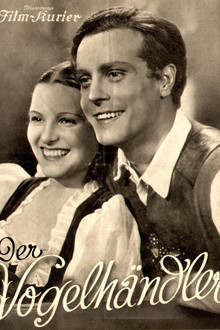
The Bird Seller
The film is an adaptation of the 1891 operetta Der Vogelhändler by composer Carl Zeller, with libretto by Moritz West and Ludwig Held, though it incorporates few of the original songs, using them mostly instrumentally or in the background. The plot follows Adam, a Tyrolean bird seller in 18th-century Rhineland, who hopes to marry his beloved Christl, a postmaster's daughter; to secure his future, she arranges for him to perform at court, but complications arise when she is mistakenly suspected of an affair with a philandering prince.
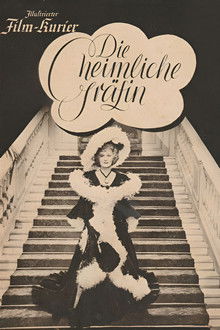
Die heimliche Gräfin
A comedy of confusion in aristocratic Vienna at the turn of the 19th into the 20th Century: The young Bohemian Countess Antschi Dorival trades places with her friend Martina, because she wants to become an actress and applies as such at the city theatre under a false name. And so, Martina attends the Vienna Opera Ball, posing as the countess. Because of their striking similarity to one another, Martina is confused with the impostor Sonja Lubomirska, who shortly before stole a necklace belonging to the wife of Archduke Johann Sylvester.
Millionäre
"Millionaires" is an Austrian feature film from 1937, a comedy directed by Karlheinz Martin. The film premiered on July 31, 1937, in Vienna and is based on a story that illuminates life and love in the social milieu of the time.
Frühjahrsparade
This Hungarian musical comedy (English title: Spring Parade) was produced by Joseph Pasternak, who later remade the picture in Hollywood as a Deanna Durbin vehicle. The original 1934 version stars Franciska Gaal as a Hungarian serving girl who heads to Vienna to visit a relative. Stopping over at an outdoor carnival, Gaal is told by a fortune teller that she will enjoy a happy marriage with a handsome and wealthy stranger. Later on, she finds herself at a fancy dress ball, where a good-looking aristocrat, assuming that our heroine is a countess masquerading as a peasant, falls in love with her. Delighted that the fortune-teller's prophecy seems to be coming true, Gaal finds herself in a dilemma when she falls in love with poverty-stricken soldier Wolf Albach Retty. But things turn out OK when Retty, the regimental drummer, composes a hit song which brings him fame and fortune, thereby neatly fulfilling that prophecy.
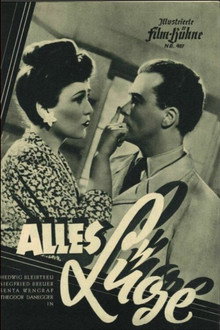
Alles Lüge
Klementine Plamershof is a fun-loving young woman. She has long been “confined” to a girls’ boarding school, where she is studying music with growing reluctance.
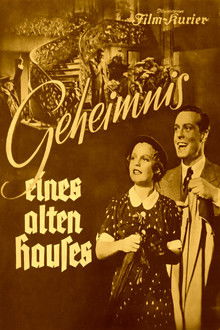
Geheimnis eines alten Hauses
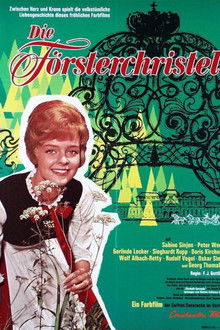
Die Försterchristel
Homeland
The opera singer Maddalena had been cast out by her family after they learned she was to bear the child of a banker, von Keller, who had seduced and abandoned her. Her return to her native city has her father warn her to remain away, because she is a threat to her family, and her sister Marie's wedding. However, von Keller threatens the reputation of her family with an underhanded banking scheme. He commits suicide, and Maddalena is reconciled with her family.
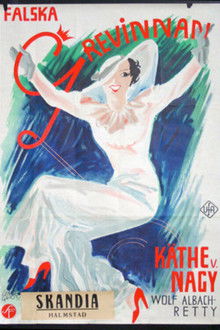
Once a Great Lady
A young woman working as a secretary for a Berlin car business tries to impress a rich Australian visitor by pretending she is a foreign countess.
Tales from the Vienna Woods
A journalist travelling by train to Vienna meets an American millionairess travelling incognito. They become friends and decide it'd be fun to swap places for awhile.
A Merry House
The seamstresses Franzi and Mizzi have opened up a small shop in a suburb of Vienna. Mizzi is of the opinion, however, that her friend could have a much better life if only she'd marry Karl, the son of the landlord, who has been hot for her for quite a while now. Next store to them lives a rather elegant gentleman, whom Mizzi does not like. One day, an excited woman bursts into the studio, tears off her clothes and begs the girls to act as if they're fitting her for a dress should her husband waltz on in, too. In fact, her jealous husband Stefan does show up and is thrilled to discover that his Gerda isn't cheating on him. But Mizzi and Franzi are positive, that she's been meeting a certain elegant gentleman next door.