
Personal Info
Known For
Gender
Birthday
Place of Birth
Shinobu Otake
Biography
Known for

The Boy and the Heron
While the Second World War rages, the teenage Mahito, haunted by his mother's tragic death, is relocated from Tokyo to the serene rural home of his new stepmother Natsuko, a woman who bears a striking resemblance to the boy's mother. As he tries to adjust, this strange new world grows even stranger following the appearance of a persistent gray heron, who perplexes and bedevils Mahito, dubbing him the "long-awaited one."

NHK Kōhaku Uta-Gassen
NHK Kōhaku Uta-Gassen (NHK紅白歌合戦, "NHK Red and White Song Battle"), more commonly known simply as Kōhaku, is an annual New Year's Eve television special held on December 31 every year, and produced by Japanese public broadcaster NHK. It is broadcast live simultaneously on NHK General TV, BS4K, BS8K, and NHK radio (nationally) and internationally on NHK World Premium and some overseas (mainly cable) broadcasters who buy the program. The program divides the most popular music artists of the year into competing teams of red and white. The "red" team or "akagumi" (紅組) is composed of all female artists (or groups with female vocals), while the "white" team or "shirogumi" (白組) is all male (or groups with male vocals).

Arrietty
14-year-old Arrietty and the rest of the Clock family live in peaceful anonymity as they make their own home from items "borrowed" from the house's human inhabitants. However, life changes for the Clocks when a human boy discovers Arrietty.
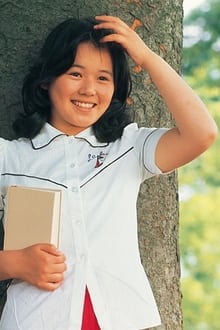
Mizuiro no toki
The 15th NHK Asadora. Starring Shinobu Otake in a story about a young woman striving to become a doctor and her mother, who is a nurse. The first six-month Asadora. Average rating of 40.1%.

Idaten: Tokyo Olympics Story
Traces Japan’s history with the Olympic games and the 1964 Tokyo Olympics for viewers before Tokyo hosts the event again in 2020. The first half tells the story of marathon runner Kanakuri Shiso, who became one of the first Japanese nationals to participate in the Olympics in Stockholm in 1912. The second half features Tabata Masaji, the coach who laid the foundations of Japanese swimming and helped bring the games to Tokyo for the first time in 1964.

Audrey
Mizuki is a would-be actress who has yet to attain her goal, struggles to keep the dream in her heart alive while dealing with the reality of her normal life, far away from lights, cameras, and action she longs for. Despite words of warnings from her family, which includes her birth and step mothers, intended to keep her from reaching her destiny, she actually makes it onto a set of one of the film companies in Tokyo. She experiences the peaks and valleys of a starting actress, but receives a blow when news of the company collapses and eventually closes. Mizuki returns home, but, the fire once lit, still burns.
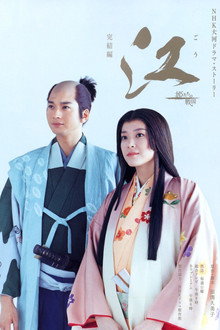
Princess Go
Princess Go was the youngest of the most famous three sisters in Japanese history, who each led a remarkable life in an age of turmoil and civil war. Go loses her parents in the war, marries three times, and feuds with her own sister in competing for power. Go's husband becomes the second Tokugawa Shogun and she ensures her prominence as she gives birth to a son who later becomes the third Shogun and a daughter, a wife of the Emperor. The drama describes the age of the civil war through the eyes of Princess Go, who plays a significant part in establishing the age of peace that lasts over 200 years in Japan.
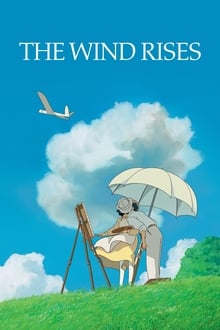
The Wind Rises
A lifelong love of flight inspires Japanese aviation engineer Jiro Horikoshi, whose storied career includes the creation of the A-6M World War II fighter plane.

Mary and The Witch's Flower
Mary Smith, a young girl who lives with her great-aunt in the countryside, follows a mysterious cat into the nearby forest where she finds a strange flower and an old broom, none of which is as ordinary as it seems.

Where Does the Sea Begin
A love story depicting the connection between parents and their children in various forms.
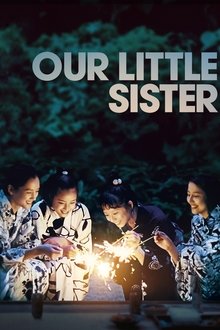
Our Little Sister
After the death of their estranged father, 3 adult sisters invite their teenaged half-sister to live with them.
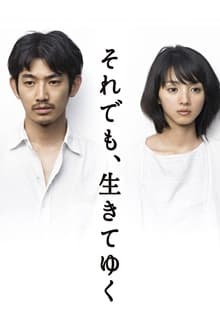
Still, Life Goes On
Fukami Hiroki's younger sister was killed by a friend. Hiroki then meets the killer's sister, Toyama Futaba, 15 years after the incident. Both of their families have been burdened with grief, but through their meeting they struggle to find a brighter tomorrow.

PICU: Pediatric Intensive Care Unit
Takeshiro Shikota is a 27-year-old pediatrician in Hokkaido, Japan. He was born and raised in Hokkaido. One day, Takeshiro is transferred to the newly established PICU (Pediatric Intensive Care Unit). The unit is for children under the age of 15 who require advance and intensive treatment. There, he meets Dr. Hajime Ueno. Hajime is a pioneer in his field and hopes to establish PICU all over Japan. His goal is to bring sick children to PICU as quickly as possible and accept them under any circumstances. Meeting with Hajim, changes Takeshiro life as a pediatrician.

Tuesday Suspense Theater
"Tuesday Suspense Theater" was broadcast every Tuesday from 21:00 to 22:54 ( JST ) on the Nippon Television network for 24 years from September 29 , 1981 to September 27, 2005. It was a two-hour drama slot. As a general rule, suspense dramas with one complete episode (very rarely, two parts) were broadcast every week from 21:00 to 22:54 ( JST ). It is a broadcast frame. Some episodes also aired horror, historical dramas, and special effects dramas.
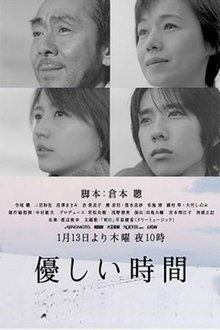
Affectionate Time
This is the story about one small coffee shop located in the northern island of Hokkaido. Yukichi Wakui used to work as a successful businessman at a prestigious trading firm. He worked for several years in New York as well as other cities around the world. When his wife Megumi died at the age of 47 in a car accident three years ago, he decided to leave the company. He was only 57. When Megumi died in the accident, her 18-year-old son Takuro was at the wheel. Yukichi declined an offer to switch to an affiliate company after his retirement, and moved to Megumi's hometown Furano, Hokkaido instead. There he started a small coffee shop named "The Forest Clock."