
Personal Info
Known For
Gender
Birthday
Place of Birth
Antônio Abujamra
Biography
Known for

Andando nas Nuvens
The adventures of a man with amnesia who struggles to rediscover his past while learning to live in the present.

Começar de Novo
Children of arch-enemy families in the city of Ouro Negro and separated as teenagers, Miguel and Letícia meet again 30 years later, without knowing who the other is.

Another Power
The first scenes of the telenovela Another Power were recorded at Palermo and Tonnara di Scopello two cities in Italy. One of the most impressive scenes was the terrible explosion of a car where were Tony Castellamare’s wife and their twin daughters; after he arrive at the crime scene, he testified the explosion causing the death of his family.

Que Rei Sou Eu?
In the imaginary king of Avilan, the bastard prince Jean Pierre leads a popular group against councilors who will invade Rainha Valentine's palace and take away the power.

Sassaricando
After becoming a widower, businessman Aparício Varela takes over as president of Tecelagem Abdala and decides to win back the great love of his life, Rebeca.

Cortina de Vidro

Amazônia

O Mapa da Mina
The main plot revolves around a hidden treasure. The story begins when a gang steals ten million dollars worth of diamonds in Uruguay. To escape the police, one of the thieves, Rodolfo Torres de Almeida, flees to Argentina. His partner, Ivo Simeone, travels to São Paulo with the jewels. Ivo decides to hide the precious stones and, to ensure he doesn't forget the hiding place, has a map tattooed above the buttocks of a girl, the daughter of his neighbor. The thief takes care to photograph the girl so he can identify her in the future. Ivo is arrested and, eight years later, when he gets out of jail, he is run over and killed. Before dying, however, he manages to tell his son Rodrigo the secret about the treasure map. The young man follows the clues given by his father and discovers that the young woman with the tattooed map is Elisa, a novice nun cloistered in a convent, about to take perpetual vows.

Os Ossos do Barão
Os Ossos do Barão is a Brazilian telenovela produced by SBT and originally broadcast from April 28 to September 8, 1997. It is an adaptation of Jorge Andrade's 1963 play of the same name, adapted for television by Walter George Durst, with collaboration from Duca Rachid, Mário Teixeira, and Marcos Lazarini. The telenovela stars Ana Paula Arósio, Tarcísio Filho, Juca de Oliveira, Othon Bastos, and Leonardo Villar. Set in São Paulo in 1948, the story follows Egisto Ghirotto, the wealthy son of Italian immigrants who dreams of gaining social prestige by marrying his son, Martino, to Isabel, the great-granddaughter of the late Baron of Jaraguá. Their romance sparks a bitter conflict between a rising immigrant family and a declining aristocratic dynasty, exposing themes of class, ambition, tradition, and the social transformation of Brazil.

Wounded Hearts
Corações Feridos is a Brazilian telenovela that aired on SBT from January 16 to May 23, 2012. It is a remake of the Mexican telenovela La Mentira written and adapted by Íris Abravanel, based on the original by Caridad Bravo Adams and directed by Del Rangel.

A Idade da Loba
Valquíria, after the death of her husband, leaves the small town of São José do Barreiro, in the interior of São Paulo state, in search of professional fulfillment, alongside her best friend, Irene. In this new phase of their lives, they encounter a shared love from thirty years ago, Montenegro. This reunion is marked by many misunderstandings, including the difficulty Montenegro and Valquíria have in being together permanently. In parallel, other storylines will develop: that of Suzana, Valquíria's daughter who discovers that Montenegro is her real father and does not accept him; and that of the various residents of Piconês's boarding house, where Valquíria lives, who seek professional success and romantic fulfillment.

Antônio Alves, Taxista
Antônio Alves, Taxista is a Brazilian telenovela produced by Ronda Studios and broadcast by SBT from May 6 to August 10, 1996. It is a Brazilian adaptation of the Argentine telenovela Rolando Rivas, taxista (1972), created by Alberto Migré. Adapted by Ronaldo Ciambroni, with direction by Jorge Montero and general direction by Marcelo Travesso, the telenovela stars Fábio Jr., Guilhermina Guinle, Branca de Camargo, Rubens Caribé, Elaine Cristina, Murilo Rosa, and Eliete Cigarini. The story follows Antônio Alves, a humble taxi driver who moves to São Paulo after the death of his parents and becomes responsible for supporting his four younger siblings. While trying to build a better life, he meets Mônica, a young woman from a wealthy family, and the two fall in love despite their different social backgrounds. Their relationship faces family conflicts, personal struggles, and challenges involving friendship, responsibility, and the search for happiness.

Cupido Electrónico
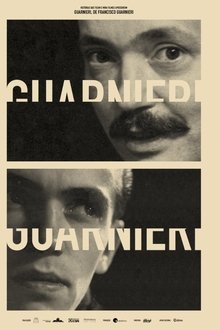
Guarnieri
Develops from the life, work and memory of Gianfrancesco Guarnieri, one of the most important names in the history of Brazilian theater, to examine the courses of dramaturgy and politics in the last decades. Guarnieri, besides being a TV star, was also seen as the synthesis of the politically engaged artist in Brazil. His sons, also actors, saw a separation between art, work, and politics. As he investigates the portraits of two generations, grandson and director Francisco aims to understand the place of his own generation in history, in art and the world as a whole.
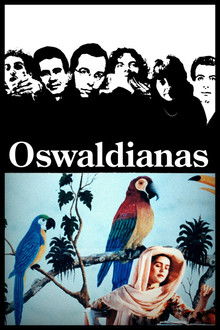
Oswaldianas
Collective film with five segments around the works and life of brazilian writer Oswald de Andrade.