Personal Info
Known For
Gender
Birthday
Place of Birth
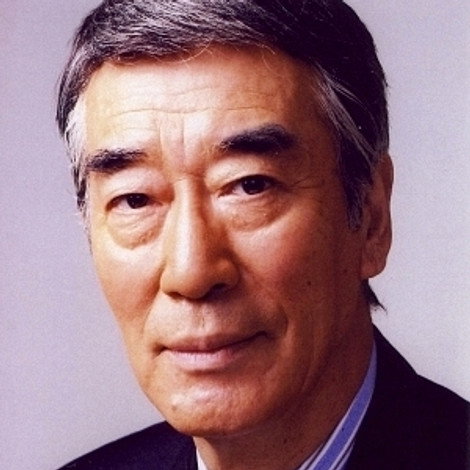
Atsuo Nakamura
Biography
Known for

Legal High
A lawyer with a big personality works with an straightlaced recent law graduate on various law cases in Japan.

Kogarashi Monjiro
Monjiro was born into a poor farm family in Mikazuki Village, Nitta County, Ueshu, and abandoned his hometown when he was 10 years old. He has been traveling aimlessly with a long toothpick in his mouth. Monjiro avoided getting involved in anything, but wherever he went, he ended up getting involved in incidents

Taira no Kiyomori
Villain or hero, Taira no Kiyomori changed Japanese history forever 900 years ago. Without ever knowing his real father, Kiyomori was raised as a samurai. Together with his stepfather, he wiped out piracy along Japan's western coast, becoming a full-fledged warrior samurai. In an age when samurai were looked down on as members of the lower class, Kiyomori was skillful at winning the hearts and minds of the people. By rounding up surrendered pirates and achieving other successes, Kiyomori eventually became the de facto ruler of Japan.

Jin
After awakening in the Edo era, a neurosurgeon uses his medical knowledge to help those around him while searching for a way back to the present day.


Wasted Land
Iki Tadashi is a military leader named who was captured by the Soviets during World War II. Treated as a war criminal, he was sentenced to many years of labor in a harsh Siberian detention camp. After 11 years of imprisonment, he is released. He returns to Japan and begins readjusting to life as a civilian, rejecting an offer from his former colleague to work on a defense project. Tadashi has decided to never involve himself in war again, much to the joy of his family. Instead, he attempts to set off on a new path working at a major trading company. --Tokyograph

Three Sisters
The Story is about three daughters of a "Hatamoto" during the end of the Edo period and the Meiji Restoration.

The Water Margin
The Water Margin is a Japanese television series based on Water Margin, one of the Four Great Classical Novels of Chinese literature. The novel details the trials and tribulations of 108 outlaws during the Song Dynasty. This adaptation follows Lin Chung and his clashes with the local government official Kao Chiu. The Water Margin is famous for its, sometimes obscure, but memorable philosophical quotes, such as "Do not despise the snake for having no horns,for who is to say it will not become a dragon?""

Priceless
Originally a mid-level manager (Kimura Takuya) with a promising future in a big corporation and loved by his subordinates, the life of this elite employee changes dramatically one day. Having for some reason attracted the attention of the senior management, he is framed for a crime which he knows nothing of and forced out of the workplace. Even after that, he is assailed by a series of surprises and in one day, he loses his house, wealth and handphone until he is without a cent to his name. At his wits end, he comes to a park where he encounters two children. Learning from them how to survive even if he does not have money, he somehow weathers this crisis and discovers the truly important and priceless things in life. The good thing about him is that his carefree personality amazingly does not shift. It is not resentment and bitterness that become his driving force, but the love and help of the people he meets that enables him to keep go forward step by step.

Kwaidan
Taking its title from an archaic Japanese word meaning "ghost story," this anthology adapts four folk tales. A penniless samurai marries for money with tragic results. A man stranded in a blizzard is saved by Yuki the Snow Maiden, but his rescue comes at a cost. Blind musician Hoichi is forced to perform for an audience of ghosts. An author relates the story of a samurai who sees another warrior's reflection in his teacup.

Veterinarian Dolittle
Tottori Kenichi is a foul-mouthed but gifted veterinarian nicknamed Dolittle. His catch phrase is 'pet care means business'. He is the director of his animal clinic and rescues not only 'voiceless' pets but also helps their owners, who lack understanding and caution, with their problems and worries. Working with him is animal nurse Tajima Asuka. Hanabishi Masaru is Dolittle's rival, a charismatic vet and director of another animal hospital who has not only an opposite personality but also a different stance towards pet care.

Steel Frame
Sharply revealing the issue of Japanese construction industry where bid-rigging was a common practice among the giants. After working diligently for three years at a construction site, Heita unwillingly transfers to a sales department where he becomes a part of the illegal collusion -- to limit open competition and obtain high-price public works within the colluding parties. He is torn from conducting unlawful action to save his company, yet deep inside wishing to abide by the law to follow his justice. What will his answer be?

Yuki-hime Onmitsu Dōchūki
The story begins with Kiyomasa Kato's granddaughter, Princess Yuki, on her way from Kumamoto to Edo to appeal directly to the Shogun.

Kumokiri Nizaemon
A Japanese television jidaigeki that was broadcast in prime-time in 1995 on Fuji TV. It is based on Shōtarō Ikenami's novel of the same title and stars Tsutomu Yamazaki. In the Kyōhō period, there was a group of bandits called Kumokiri from the people of Edo. Tokugawa shogunate appoints Abe Shikibu a head post of the Hitsuke Tōzoku Aratamegata to arrest Kumokiri clan.
