
Personal Info
Known For
Gender
Birthday
Place of Birth
Aracy Cardoso
Biography
Known for

The Trapalhões
Os Trapalhões was a Brazilian comedy group and also a Brazilian television series created by Wilton Franco. Its members were Dedé Santana, Zacarias, Mussum and their leader Didi Mocó, that was played by Renato Aragão. The name Trapalhões is derived from the Portuguese verb atrapalhar, which means the opposite of helping, to do something the wrong way or to Those that confuse. The name is translated "Tramps" in English DVD subtitles. It was aired by Rede Globo from 1977 to 1999. On March 18, 1990, Zacarias died due to respiratory failure, but the group and the series didn't come to an end until July 29, 1994, when Mussum died due to an unsuccessful heart transplant.

A História de Ana Raio e Zé Trovão

Mandala
Jocasta, an 18-year-old sociology student and daughter of communist activist Túlio Silveira, is actively involved in the country's political landscape. She is in love with Laio—her polar opposite—a disengaged, esoteric young man who lives off his wealthy father's allowance. A mystic, Laio makes no move without consulting his guru and friend Argemiro, whom he turns to upon learning of Jocasta's pregnancy. The cowrie shell reading reveals that his son is destined to kill him and enter into a romantic relationship with his mother. Terrified, Laio disappears with the child immediately after birth, aided by Argemiro—who loves Laio and loathes Jocasta. Twenty-five years later, Jocasta is a successful yet restless woman searching for her missing son. She is estranged from Laio, who has spent recent years expanding his father's fortune through involvement in underground gambling. On a highway, he encounters Oedipus, unaware that the young man is his son.

Plumas & Paetês
After an accident, Marcela arrives in São Paulo and decides to assume a new identity. Torn between love, she plunges into a world that is not her own.

Zazá
Santos Dumont's daughter, Marisa Dumont, known as Zazá, flies over the Eiffel Tower in a replica of the 14 Bis. During one of her flights, she decides to find guardian angels to protect her seven children.
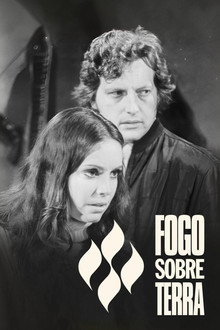
Fogo Sobre Terra
The plot takes place in a fictional city called Vale do Café, where two powerful families, the Toledo and Fontes, are locked in an intense dispute for power and land ownership. Conflicts are marked by betrayals, forbidden loves and dark secrets. The soap opera addresses themes such as ambition, revenge, romance and conflicts between families, showing the fire that consumes the land and human relationships.

Pecado Capital
Carlão is an honest but hot-tempered taxi driver who discovers a suitcase containing two million reais in his car, the proceeds of a bank robbery. This is the second version of the telenovela, originally aired in 1975.

Of Body and Soul
Diogo is an upright judge, professionally recognized, married to the submissive Antônia, with whom he maintains a relationship of appearances, only to preserve the family institution. Diogo falls madly in love with Bettina, and the two have an affair. Deciding to fully embrace their passion, Diogo and Bettina plan a trip together, but he ends up not having the courage to abandon Antônia and leaves his lover waiting at the airport. Upon realizing she is alone, Bettina despairs and suffers a serious car accident. Her brain death is diagnosed, and her heart is transplanted into Paloma. Upon learning of Bettina's death and the transplant of her heart, Diogo, feeling guilty, becomes obsessed with the idea of getting close to Paloma, believing that in doing so he would be close to the heart of the woman he loved. Paloma is a young woman who abandoned her fiancé Tavinho at the altar to marry Juca, her first boyfriend.

Água Viva
Nelson, a fishing champion, and his brother Miguel, a renowned plastic surgeon, compete for the love of Lígia, an ambitious woman who seeks to climb the social ladder by any means necessary.

A Gata Comeu
After getting lost on a sea excursion, Jô Penteado and Fábio Coutinho develop mutual feelings during the two months they spend stranded on a deserted island.
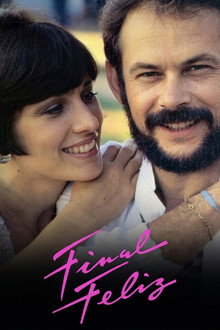
Final Feliz
César, a sugar mill owner in Pernambuco, lives in Rio de Janeiro with his wife Maria Luiza and daughters, Débora and Suzy. One day, tired of his life, he decides to fake his own death and assume another identity. César does this with the help of França, the financial director of the sugar mill – which also belongs to Alaor. César and França stage a car accident, plunging off Avenida Niemeyer in Rio and disappearing into the sea. César leaves Alaor on the verge of bankruptcy and Maria Luiza and the two girls in poverty, completely transforming their lives.

Selva de Pedra
Cristiano Vilhena is a young man from the countryside who dreams of high society, risking his happiness alongside Simone.
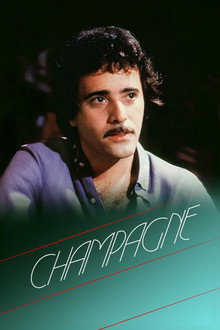
Champagne
In 1970, during a glittering New Year's Eve party attended by the aristocracy, a young pantry maid named Zaíra is mysteriously murdered. Thirteen years later, the prime suspect—Gastão, a humble waiter and former colleague of the victim—seeks to prove his innocence with the help of his son, Nil, becoming entangled in the lives of the other party guests. The story also follows a cunning pair of jewel thieves: the sophisticated Antônia Regina and João Maria—a criminal lawyer and member of the declining aristocracy who takes up the cause of Nil's father.

Nina

O Amor é Nosso!
The telenovela tells the story of Pedro, a young singer seeking recognition and success. The son of Celso and Anita leaves his parents' home when he discovers that his brother Claudio has become involved with his girlfriend Selma. The singer then goes to live in a student community, where he meets the siblings Bruno, a composer, and Nina. Pedro and Bruno begin a professional partnership. Nina ends up falling in love with the singer, but is torn between him and the former seminarian Chico.