Personal Info
Known For
Gender
Birthday
Place of Birth
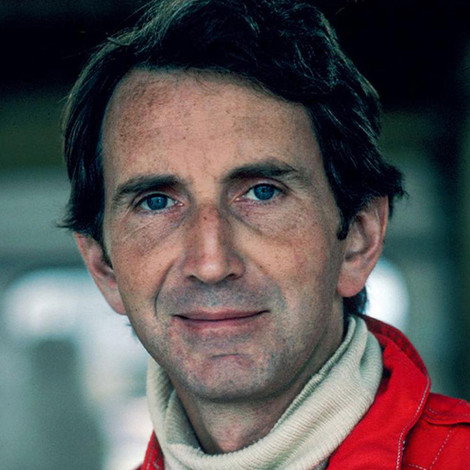
John Watson
Biography
Known for

Race to Perfection
With unseen archive footage and interviews with the sport's greatest names, this Sky original docuseries celebrates the incredible 70-year history of Formula 1.

Ayrton Senna do Brasil
Made for a TV documentary on the life and career of Ayrton Senna on the 20th anniversary of his death.

Ayrton: Retratos e Memórias
A look more intimate, human and minimalist - and consequently less sporty and statistical - for the character Ayrton Senna da Silva (1960 to 1994). A chronology of events and remarkable episodes of the career and personal life of the sportsman, from the testimony of more than 50 interviewed, among pilots, former pilots, Formula 1 professionals, journalists, friends and people who were close to Senna.

Superswede: A film about Ronnie Peterson
Ronnie Peterson nicknamed “Superswede” was the fastest formula 1-driver in the 70s who never became a world champion.

Mosley: It's Complicated
The life and career of controversial F1 and political figure, Max Mosley.

1
Set in the golden era of Grand Prix Racing '1' tells the story of a generation of charismatic drivers who raced on the edge, risking their lives during Formula 1's deadliest period, and the men who stood up and changed the sport forever.

BTCC 1998 Review
The 1998 BTCC season saw one of the most potentially explosive competitions ever, with eight manufacturers, five former champions and three ex-F1 drivers lined up to battle for the title. After five rounds there were five different winners in five different cars. In all, nine drivers won races, representing six different manufacturers. Like all the best championships, this one went ‘down-to-the-wire’. As Rydell and Reid lined up on the grid for the final round at Silverstone, the record crowd were anticipating a dramatic and thrilling season finale.
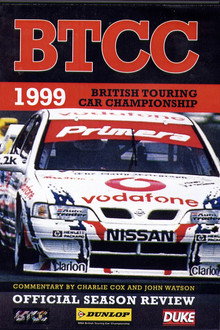
BTCC 1999 Review
1999 in the British Touring Car Championship saw the multi-million pound factory teams of Ford, Honda, Nissan, Renault, Vauxhall and Volvo battle it out over the 13 rounds at eight different tracks. However, it was a drive by privateer Matt Neal in a 1998 Nissan Primera that grabbed the headlines early on the season and highlighted why BTCC is so special. Matt picked up a cheque for £250,000 from series organiser Alan Gow for being the first privateer to take the chequered flag against the might of the big factories! Once the leading teams got over the shock it was Nissan (Laurent Aiello and David Leslie), Volvo (Rickard Rydell) and Honda (James Thompson) who would carry the fight through the season. Night racing added extra spice to the show during the summer - and proved popular with drivers and fans alike.

Double First - Williams & Jones: Formula One 1980 - A Review Of The 1980 Grand Prix Season
The new decade brought a record number of entries for the start of the season. Expectations were high that the champions of 1979, Ferrari and Jody Scheckter, could be beaten. Enter Team Williams and Alan Jones - the new force in a bright new era for Formula One racing. But it took the entire 1980 season before the victory was in the bag. Jones took the opening race, but then faltered. Brabham’s Nelson Piquet took advantage in the interim, completing a spectacular double in the Dutch and US GPs to lead the championship with two races remaining. It was up to Williams and Jones to pull out all the stops to seize the title.

Hunt vs Lauda: F1's Greatest Racing Rivals
James Hunt has never been equalled. Could swashbuckling Hunt catch the scientific Lauda? Could Niki overcome an appalling crash to come back from the dead and fight James all the way to the last race of the season? This powerful story captures the heart of the 1970s - told through unseen footage and exclusive interviews with the people who were really there - the team managers, families, journalists and friends who were in the front row of the season that changed Formula 1 forever.

1982 FIA Formula One World Championship Season Review
The 1982 Formula One season was the 33rd FIA Formula One World Championship season. It commenced on January 23, 1982, and ended on September 25 after sixteen races. The World Drivers' Championship was won by Williams driver Keke Rosberg. Rosberg was the first driver since Mike Hawthorn in the 1958 season to win the championship after winning only one race. 11 drivers won a race during the season, none of them more than two times. Scuderia Ferrari won the World Constructors' Championship.

Grand Prix: The Golden Years
The late 60's, 70's and early 80's were regarded by many as the most exciting and historically significant period in the history of modern Grand Prix racing. It was a time when sport saw major investment from significant motor manufacturers. A time when technology leapt forward with Turbo charged engines, six wheel cars, advanced braking/handling packages and the very best of early aerodynamic styling. Today's legends were in full flight. Drivers such as Graham Hill, Jackie Stewart, James Hunt and Niki Lauda were carving themselves a place in motor racing history. This specially presented DVD video covers this very special time helping you to enjoy an relive those classic Grand Prix moments.

Lauda's Comeback: Formula One 1977 - A Review Of The 1977 Grand Prix Season
1977 saw Niki Lauda start the season, scarred but fit. And determined to put his horrific accident in '76 behind him. Despite Lauda's poor start and total of only 3 wins for the season, he picked up points at all but three GPs, and was rewarded for his consistency with his second championship victory. Lauda chose not to complete the season, and instead, Ferrari gave the drive to a young and ambitious Gilles Villeneuve.

1981 FIA Formula One World Championship Season Review
This fascinating record of one season of Grand Prix racing is the first ever FOCA review programme and sets the high standard for which these programmes have since been renowned. From the first green light at West Long Beach the season is charged with controversy. The aerodynamic "skirts" have gone and new hydraulic devices are in place. Carbon fibre bodies appear as the F1 cars get re-invented during the winter months.

Crash and Burn
Crash and Burn chronicles the thrilling and turbulent career of Irish racing driver Tommy Byrne, who rose from a rough, working-class background to the cusp of Formula 1 in the 1980s. Directed by Seán Ó Cualáin, the film explores Byrne's undeniable talent and rebellious personality, which set him apart on the track but also clashed with the conservative and elite world of Formula 1. Byrne’s story is filled with highs and lows, from his dominance in lower racing categories to his brief, rocky stint in Formula 1 and subsequent struggles. The documentary combines interviews, archival footage, and personal insights to portray the complexities of Byrne’s character and his “what could have been” legacy in motorsport.