Personal Info
Known For
Gender
Birthday
Place of Birth
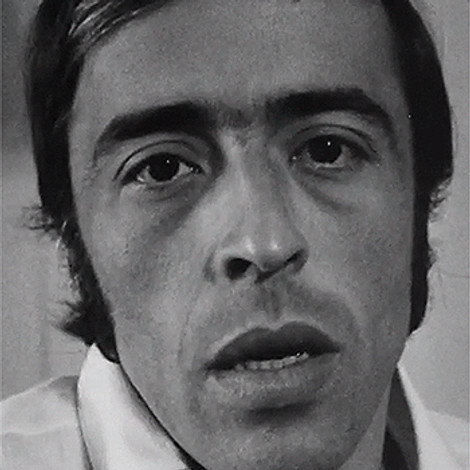
Paulo Villaça
Biography
Known for

Vale Tudo
Fátima Accioly is a young, callous woman who wants to be rich and successful at any price. After selling her family's house in the country, she heads to Rio and gets to know dress man César who is unscrupulous himself. Meanwhile, her mother Raquel stays behind without home and money, but finally tries to find her daughter in the big city. Both women come in contact with the rich Roitman family which changes their lives forever.
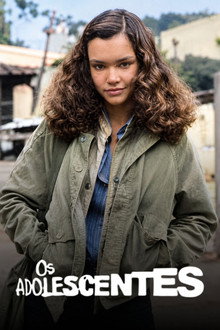
The Teenagers
Four teenagers, each facing a major conflict. Majô, the daughter of separated parents, has fallen in love with her mother Raquel’s husband, the teacher Túlio. Caíto, who is gay, lives in a dysfunctional home where his parents' marriage—Dirceu and Marilu’s—is going from bad to worse. Doca is a drug addict, and his sister Bia has become pregnant by her boyfriend, Michel. Their parents, Odilon and Paula, are deeply unhappy as well. Interwoven with their stories is that of Túlio—a former addict turned upstanding teacher—who encounters a haunting figure from his past: his ex-sister-in-law, Fernanda.

Helena

Super Plá
After a fall, intelligent young Plácido becomes a little slow. As an adult he works at a bank and his keen intelligence returns when he drinks the soft drink "Super Plá". Other side stories include the love relationship between Baby Stompanato and Joana Martini, and the life of Majô Prado, a neurotic millionairess and prominent personality living in São Paulo.

O Bofe

Ana

Colônia Cecília
At the end of the 19th century, Italian immigrants settled in the municipality of Palmeira, Paraná, creating Brazil's first anarchist society, Colônia Cecília. Giovanni Rossi suffers from the failure of the experiment. He is a veterinarian, agronomist, biologist, and journalist. But above all, he is an idealist, with a strong personality and obsessed with the desire to live with free humanity.

Quem Ama Não Mata
The miniseries addresses the difficulties in romantic relationships through the story of five middle-class couples with different views on marriage, love and fidelity. The protagonists, housewife Alice (Marília Pêra) and dentist Jorge (Cláudio Marzo), married for eight years, seem like a perfect couple. However, the union is in crisis because they are unable to have a child. Jorge discovers that he is sterile and, disappointed, does not reveal the fact to Alice, who suffers from not being able to get pregnant. The relationship becomes increasingly difficult due to the lack of dialogue and they become violent towards each other. A murder connects the plots: in the first chapter, the viewer learns that there was a crime, but does not know who the victim is: Jorge or Alice. The mystery is only revealed in the last chapter, when it is discovered that Jorge is the murderer.

Golden Years
In the 1950s, Lurdinha and Marcos fall in love at the first sight. She studies at the Institute of Education, and he studies at the Military College. Two traditional educational institutions in 'Tijuca', in the North Zone of 'Rio de Janeiro'. But Lurdinha's conservative parents reject Marcos because he is son of separated parents and try, in every way, to keep him away from her.
Tudo em Cima

A Máfia no Brasil
The story begins when the police find a murdered young woman and link the crime to the activities of a drug gang. One of the central characters of this gang is Lucien, protagonist of the miniseries. He is one of the main mafia leaders in the country and the son of the powerful boss of União Corsa. Lucien disputes authority within the organization with Lorenzo, his antagonist. Still in the first chapter, Lucien meets the model Heloísa. The young woman comes from a middle-class family and dreams of social mobility. He falls madly in love with her, and the two begin a rapturous romance.
O Jardineiro Espanhol
O Jardineiro Espanhol is a 1967 Brazilian telenovela that is based on A. J. Cronin's 1950 novel, The Spanish Gardener. The series was written by Tatiana Belinsky and directed by Fabio Sabag. It starred Ednei Giovenazzi as Nicholas, and Osmano Cardoso as the gardener. Other actors included Ana Rosa, João José Pompeo, Marcus Toledo, and Paulo Villaça. The British film adaptation was released in 1956, and TV Tupi originally broadcast another Brazilian adaptation of Cronin's novel in 1958.

Lady on the Bus
Solange is a recently married young woman whose wedding night did not end well. After constant fights with her husband, she decides to live through her sexual frustration by sleeping with strangers she picks up on crowded buses in Rio de Janeiro.

The Torturer
Zionists hire a hitman to kill a Nazi war criminal exiled in a Latin American country, where he's being protected by the local dictator. Get ready for gunshots; sex scenes; strange form of tortures; a cocaine-addict priest who helps the dictatorship; contemptous remarks and behavior from the main "hero"; amusing sequences of Chuchu having fun with beautiful women pretending to be James Bond; and the wimp colonel who is in love with a male prostitute. It's all good and fun to watch but remember that this is a product of its era, so it's quite possible to see some objectionable things. But for the most part it's never crass or insanely offensive.