Personal Info
Known For
Gender
Birthday
Place of Birth
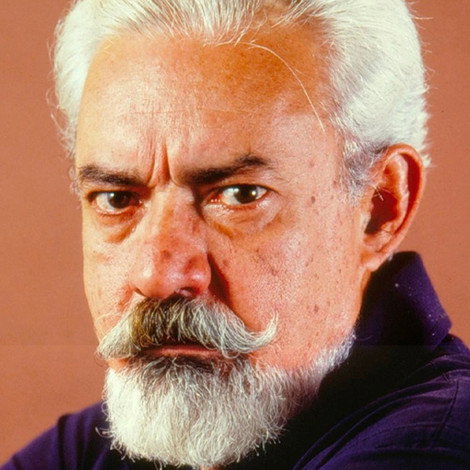
Fernando Torres
Biography
Known for

The Trapalhões
Os Trapalhões was a Brazilian comedy group and also a Brazilian television series created by Wilton Franco. Its members were Dedé Santana, Zacarias, Mussum and their leader Didi Mocó, that was played by Renato Aragão. The name Trapalhões is derived from the Portuguese verb atrapalhar, which means the opposite of helping, to do something the wrong way or to Those that confuse. The name is translated "Tramps" in English DVD subtitles. It was aired by Rede Globo from 1977 to 1999. On March 18, 1990, Zacarias died due to respiratory failure, but the group and the series didn't come to an end until July 29, 1994, when Mussum died due to an unsuccessful heart transplant.

Family Ties
A mature and successful woman, Helena becomes involved with Edu, who is twenty years her junior. She battles prejudice in order to live her love, but their romance fizzles out when she realizes that her daughter Camila has also fallen in love with him. Her dilemma grows even worse when she discovers that the girl has leukemia. Helena must disclose the real identity of Camila‘s father in order to try and find a compatible bone marrow donor. In order to save her, she decides to give up her new love and have another baby with her daughter‘s father.

Sétimo Sentido

Dance with Me
Quinzinho and João Victor are identical twins separated at birth, unaware of each other's existence. The brothers eventually draw closer, guided by their instincts.

Zazá
Santos Dumont's daughter, Marisa Dumont, known as Zazá, flies over the Eiffel Tower in a replica of the 14 Bis. During one of her flights, she decides to find guardian angels to protect her seven children.

Simplesmente Maria

Mad Love
The young and rich Patricia, daughter of Ambassador André Dumont's first marriage, is in love with and reciprocated by Luiz Carlos, a poor boy, son of the family's maid, Isolda. Whoever doesn't like to see her with the maid's son is her stepmother, Renata Dumont, André's wife. Renata is an ambitious woman who hides her humble origins and a secret from the past that unites her with Isolda. Career, she married the diplomat André, from a traditional family, with whom she had a son, Lipe.

Amor com Amor Se Paga
Nonô Corrêa, a character inspired by Molière's "The Miser", is the story's protagonist. The orphan Zezinho crosses paths with Nonô and wins the neurotic gentleman's heart.

Dez Vidas

Terras do Sem Fim
The central theme of the soap opera is the struggle for political control in the interior of Bahia between the two most powerful *coronéis* (landowning bosses) of the cocoa region: Sinhô Badaró and Horácio da Silveira. Virgílio, an ambitious lawyer, is summoned to the town by Colonel Horácio but ends up becoming involved with Ester, the colonel's wife. Captain João Magalhães is a card sharp who poses as a military engineer, successfully deceiving the entire town. He falls in love with Sinhô Badaró's daughter, Donana. By the end of the story, he reveals that he had only gotten close to the Badarós out of opportunism. After numerous clashes with Sinhô Badaró, Colonel Horácio secures political power in the town of Ferradas, with the acknowledgment of the local population.

A Gordinha

Kiss of the Spider Woman
The story of two radically different men thrown together in a Latin American prison cell. One is Valentin, a journalist being tortured for his political beliefs. The other is Molina, a gay window-dresser who fills their lonely nights by spinning romantic fantasies drawn from memories of old movies.

Innocence
In the 19th century, a country girl is seduced by a young doctor who's staying at her house for a few days, caring for her, and tries to hide the forbidden romance from her father, who disapproves of the relationship.

O Descarte
After Cláudia, haunted by her husband’s death on a car crash, starts a romance with another man, she starts receiving threatening letters.

Engraçadinha Depois dos Trinta
After marrying everyday man Zózimo, Engraçadinha, who had been through intense sexual experiences as a teenager, settles to live a quiet and normal life. As the years go by, her teenage daughter's behaviour seems to call back Engraçadinha's own teenage days.