Personal Info
Known For
Gender
Birthday
Place of Birth
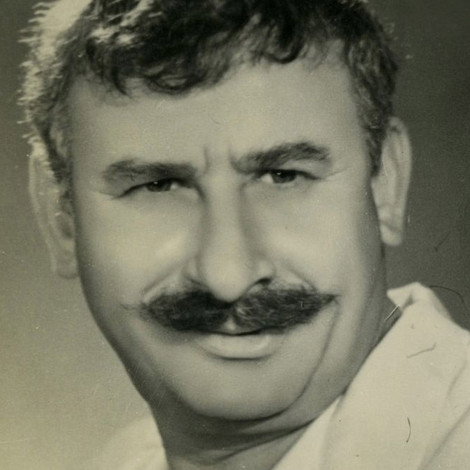
David Abashidze
Biography
Known for
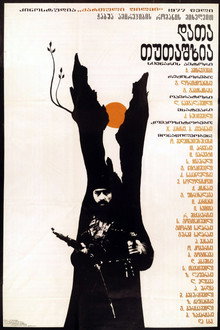
Data Tutashkhia
A just man becomes an outlaw. He is pursued by the police over the years, while he tries to fight the injustice in the world, but he can't figure out the minds of his fellow men, and is often misunderstood.

An Unusual Exhibition
The war is over. Once a young sculptor, and now a soldier, he returned home. Married, there were children. In search of work, he was hired to make grave monuments. Time passed... At one time, visiting a cemetery with friends, he saw with different eyes all his work done over the years...

Business Trip
Agricultural machinery design engineer Mikhail Shcherbakov goes to the countryside instead of taking a vacation. The tractor designed by him does not work in one of the collective farms. Circumstances force him to stay much longer than he expected. Here he meets Klava, who works in the apiary. And far from being on official business, the engineer remains on the collective farm.

Kidnapping of the Century
Two car mechanics friends decide to holiday on the Black Sea coast. The news of the arrival of the "famous masters" excited the residents of the southern town, followed by adventures, misunderstandings and the abduction of one of them.

Like a Morning Mist
A lonely provincial man asks his childhood friends to come to his hometown. He is forced to explain the reason for their gathering to his surprised friends by the unexpected invitation.

Don't Believe that I'm No Longer Here
The film is based on a real story. Climbers found the purse of a military postman killed during World War II, letters sent 30 years later.

Not Every Comet Dies Down
The film recounts a meeting between veterans of the WWII at the site of former battles.

Tbilisi and Her Citizens
A sixteen novels about a life of a people in Tbilisi, capital of Georgia.

Bashi-Achuki
The 17th century rebellion in Kakheti masterminded by Bidzina Cholokashvili gets about the whole Georgia. An Imeretian youth nicknamed as Bashi-Achuk is a real exterminator of the Persians. He attacks the Persian escort and sets free the Georgian women who were supposed to be locked up in the Shah’s harem. Bashi-Achuk’s twin sisters are among the rescued captives. Abdushahil, a Persian warrior who was defeated by Bashi-Achuk in wrestling, falls in love with Mzisa, Bashi-achuk’s sister. Mzisa brings Abdushahil to the camp of the Georgian rebels. Abdushahil learns that he is a Georgian too. As a child he was kidnapped and brought up in Persia. Abdushahil’s army gives up and the Georgians win the battle.

Matsi Khvitia
It’s about a 13th-century Georgian legendary avenger, the noble robber Matsi Khvitia, who bravely fought against the princes’ arbitrary rule.

The Right Hand of the Grand Master
It is set during the 11th century and tells of the reign of King George I. He is at war with Byzantine Empire ruled by Basil II. Apart from ongoing war, he has to fight rebellious Georgian tribes. Problems occur when King George falls in love with Shorena. For her, the King is willing to go against the church. The story is based on famous novel by Konstantine Gamsakhrudia.

Wedding Imeretian Style
Arriving in his native village, a young sculptor falls in love with one of the villager girl and decides to create a statue of her. This relationship ends with marriage after many vicissitudes.

Children of the Sea
The film delves into the moral dilemmas of human relationships. An old sailor, the sole survivor of a ship that sank during the war, grapples with the weight of a moral compromise made many years ago. As he reflects on his past, he recalls his carefree life, filled with mistakes, and the crime he committed against the captain of the lost ship.
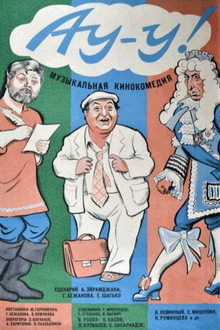
Au-u!
The film comprises three cinematic novellas: (1) “And They Arrived at the Peasant’s Hut… or the Adventures of Writer Senya in Search of the Hidden Word,” in which writer Senya draws inspiration for his rural novels from his housekeeper Yermolayevna’s tales; (2) “The Song, or How the Great Louarsab Organized a Choir,” where a city visitor attempts to form a choir of centenarian elders in a Georgian mountain village; (3) “What Is Our Life?! or What Is Our Life?!”—during a musical reenactment of pre-Revolutionary France, a drunken actor’s tardiness forces King Louis XIV (also the theater committee chairman) and the cast to improvise the play’s ending.

Magdana's Donkey
This chamber drama is set in Georgia on the turn of the 19th and 20th centuries. A simple peasant family makes its living by selling yogurt which the Magdany widow takes every morning to the town market. Once, in their mother’s absence, the children – six-year-old Mikho and three-year-old Kato – found an abandoned donkey on a road leading to their village. The foundling was fed, tended, and the moment the donkey opened its big, tender eyes, it was named “Lurdja”, which means “blue-eyed”. Surrounded by love and care, the donkey became a big help in the poor household. But this idyll was not to last long…