
Personal Info
Known For
Gender
Birthday
Place of Birth
Ruth de Souza
Biography
Known for
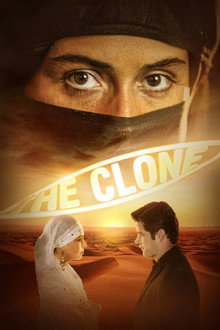
The Clone
Human cloning. The Islamic world. Two young people, two different cultures, two different beliefs. An impossible love story that not even time could erase. During a trip to Morocco, Lucas has a forbidden romance with Jade. He returns to Brazil after the death of his twin brother Diogo. A close family friend, scientist Albieri uses this situation to produce the first human clone using cells taken from Lucas. Twenty years later, Jade, Lucas and his clone form an odd love triangle.

Power Play
Eloá and Osmar's marriage is thrown into crisis when a mysterious man crosses their path. With a thirst for prestige and power, Eloá will face the consequences of her ambition.

Wildcat
After the extermination of her family, Claudia returns to her hometown determined to take revenge. As she infiltrates the businesses of the crime suspects, her plans become hampered by passion.

Mandala
Jocasta, an 18-year-old sociology student and daughter of communist activist Túlio Silveira, is actively involved in the country's political landscape. She is in love with Laio—her polar opposite—a disengaged, esoteric young man who lives off his wealthy father's allowance. A mystic, Laio makes no move without consulting his guru and friend Argemiro, whom he turns to upon learning of Jocasta's pregnancy. The cowrie shell reading reveals that his son is destined to kill him and enter into a romantic relationship with his mother. Terrified, Laio disappears with the child immediately after birth, aided by Argemiro—who loves Laio and loathes Jocasta. Twenty-five years later, Jocasta is a successful yet restless woman searching for her missing son. She is estranged from Laio, who has spent recent years expanding his father's fortune through involvement in underground gambling. On a highway, he encounters Oedipus, unaware that the young man is his son.

O Homem Que Deve Morrer

Rainha da Sucata
Maria do Carmo becomes wealthy through her father's business dealings and becomes a successful businesswoman, but she retains the habits of her humble past.

Sétimo Sentido

Little Missy
In 1886, in the small town of Araruna, Little Missy rejects the actions of her father—the slave-owning Colonel Ferreira—alongside Rodolfo, an active abolitionist republican with whom she falls in love.

Partido Alto
The lives of people living in contrasting environments in the South Zone and the suburbs of Rio de Janeiro intertwine, with a focus on female characters, samba, and organized crime.

Verão Vermelho

Duas Vidas

O Bem-Amado
Based on the work of Dias Gomes, 'O Bem Amado' is a political satire that revolves around Odorico Paraguaçu, the opportunistic mayor of the city of Sucupira.

O Rebu

Assim na Terra Como no Céu
