
Personal Info
Known For
Gender
Birthday
Place of Birth
Joel Barcellos
Biography
Known for

Secrets of Sand
Twin sisters with contrasting personalities, Ruth and Raquel, rival in the fictional Pontal D'Areia, on the coast of Rio de Janeiro.

Cutie Pie... Her Loves and Sins
Raised in a conservative home, Engraçadinha challenges taboos and forbidden passions over two decades. Between desires, guilt and secrets, she lives intensely her loves and her sins.

A Justiceira
Diana is woman who lost her child for her Husband. A evil man behind a series of crime operations. Searching for her son, Diana is hired for a underground organization to fight crimes all over Brazil. Now, Diana has the meanings to locate her former husband and search for her son.

The Conformist
A weak-willed Italian man becomes a fascist flunky who goes abroad to arrange the assassination of his old teacher, now a political dissident.

The Agony
Cropped hair, a rosemary branch behind the ear, yellow shirt of shiny satin, he's behind the wheel of his car when passing by a woman who walks by the roadside. Strongly painted lips, printed dress with round skirt and red shoes matching the color of the lipstick, she catches his attention. He gives her a ride, the two of them stare in silence for a few moments. They introduce themselves to one another and between the two establishes an absurd dialogue and full of metaphors. And they are driving around in corners of Rio de Janeiro, to the sound of Noel Rosa and Lamartine Babo. Eva and Antena, she a seer, he, an assassin on the run, initiate an unusual case of love, a marginal love, where boredom often gives way to tragedy, creating the agony of a holiday spent in an abyss.
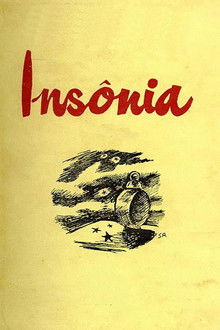
Insônia
A three-episode anthology film based on short stories by Brazilian writer Graciliano Ramos.

My Home Is Copacabana
Arne Sucksdorff’s drama follows four homeless children—Jorginho, Rico, Lici, and Paulinho—struggling to survive in the Rio de Janeiro slums. They shine shoes, scavenge food, and pickpocket while dreaming of escape from the streets. When Rico, once escaped from a brutal institution in Caxambu, falls ill, he chooses to return there rather than die outside. A somber portrait of poverty and resilience, the film was selected for the 1965 Cannes Film Festival.
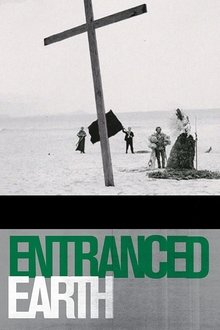
Entranced Earth
Eldorado, a fictitious country in America, is sparkling with the internal struggle for political power. In the eye of this social convulsion, the jaded journalist Paulo Martins opposes two equally corrupt political candidates: a pseudopopulist and a conservative. In this context, Paulo is torn between the madness of the elite and the blind submission of the masses. But, in this complex tropical reality, nothing really is what it seems to be.

A Film to Remind Us of Utopia
In Esdras Baptista's film archives, kept at his home for decades, one can feel the fervor of those who believed in a new tomorrow. Filmed in Brazil in the early 1960s, in the heat of a libertarian political movement, the filmmaker's images materialize the incandescence of collective desires at the historic moment of their emergence. Utopia, though unattainable, is never a mere abstraction. A force that mobilizes actions and feelings, it constitutes the impetus necessary for human existence.

Improvised and Purposeful: Cinema Novo
Originally produced for German TV, Improvised and Purposeful is a firsthand look at the "Cinema Novo" movement (otherwise known as the 'Brazilian New Wave'). Director Joaquim Pedro de Andrade focuses on six Cinema Novo filmmakers working in Rio in 1967.

Salvar o Brasil

Copacabana Fools Me
Marquinhos is in his early 20s and lives in Copacabana with his petits bourgeois parents and older brother. He doesn't have a job, he doesn't go to school, he just lives on the spur of the moment, watches TV, plays soccer on the beach by day and goes out with his mates by night. He meets Irene, a 40 year-old woman and they have a love affair that is going to change his life - for a while.

Sagarana: O Duelo
Unable to endure the idea that he would go without punishment, a criminal's victim chases him the length and breadth of Brazil for a showdown.

The Girl from Ipanema
Chronicles the life of a 17 year-old girl living in the upper-class Rio de Janeiro neighbourhood of Ipanema. Márcia lives a life of parties and spend her days among bohemians, musicians and intellectuals. While seeming happy in the outside, she's extremely anguished inside. Based on the famous song by Antonio Carlos Jobim and Vinicius de Moraes.

Celebração - 100 Anos do Cinema Nacional
"Portraits and excerpts from Brazilian films from all times. Actors, directors and images that affirm cinema."