Personal Info
Known For
Gender
Birthday
Place of Birth
Ping Fan
Biography
Known for
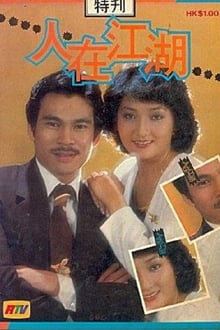
Blowing in the Wind
Brothers Bo and Wei are forced to join the triad in Hong Kong after arriving from China. They become successful drug dealers but sacrifice their family happiness for money and power. Once the ICAC is established, they become its targets and struggle to escape its grip.
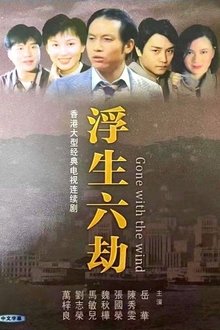
Gone with the wind
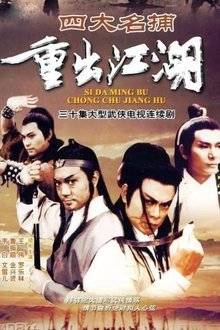
Return of The Four
The four famous hunters had already been hidden, but they reappeared because their master Zhuge Shenhou was killed. Shangguan Cang Qiang assassinated Shenhou and successfully seized his throne, and then revealed his ambitions, and he controlled the emperor with drugs, trying to force him to surrender the throne. The four great immortals learned of his conspiracy, obstructed it, and vowed to fight with him to the end and crush his dream of becoming emperor.
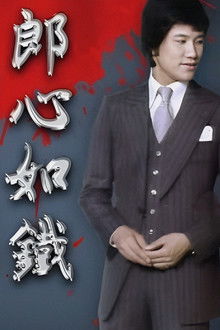
Hong Kong Tragedy
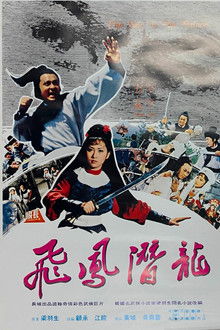
The Spy in the Palace
Adapted from the novel “Fei Feng Qian Long” (飞凤潜龙) by Liang Yu Sheng (梁羽生).
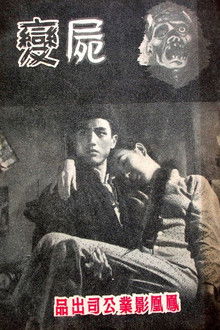
The Living Corpse
Famed director Zhu Shilin tries his hand at a horror film! The beginning of The Living Corpse immediately sets the tone with a folk duet clearly inspired by the popular 1956 musical Songs of the Peach Blossom River. The duet, in addition to Zhu's frequent use of long, empty shots and crisp editing, gives this horror film a traditional poetic charm and a strong folk flavor. Mise-en-scene and sound effects create a terrifying atmosphere, and successfully communicate the ghostliness of a world without ghosts.
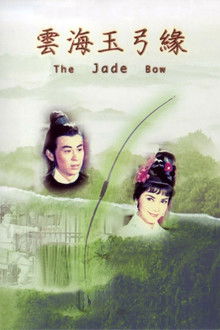
The Jade Bow
A villain steals a kung fu manual and kills the good swordsmen it belongs to. He masters the powers it offers and goes on to commit various evils. Twenty years later, a young swordsman heads off to take him to account. On the way he meets a couple of feisty young swordswomen, and his life gets more complicated.
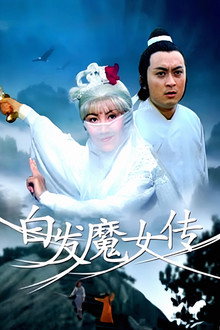
White Hair Devil Lady

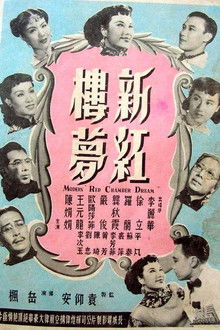
Modern ‘Red Chamber Dream’
Dream of the Red Chamber, one of the big four of classic Chinese novels, has been adapted for film and television dozens of times over the past decades. Yet this sui generis Great Wall production daringly transposes the setting to modern-day 1950s. The contemporised story revolves nonetheless around the love triangle between Jia Baoyu and his two cousins. Both girls love him but his heart belongs to only one. The ending, however, is remarkably changed to separation of the lovers as a result of war—the war that was surely still haunting the minds of the filmmakers at the time when the film was made. Not only did Great Wall pour money into building extravagant sets just so to recreate down to the smallest detail the grandeur of the legendary Jia mansion, but the film also boasted of its lavish costume designs for the diverse female cast. (From Hong Kong Film Archive)

The Inspector General
Nikolai Gogol's The Inspector General is a satire play well-known around the world. In the period between the end of World War II and the 1960s, the play was adapted in Hong Kong cinema a total of six times. Director Huang Yu alone adapted it twice, as a Republic era story and a period comedy, respectively. The 1955 Republic era-set film is more faithful to its source material, following a spoiled rich brat who is mistaken as a government inspector in a small town and ends up being wined and dined by a corrupted local official. The film pokes fun at the ugliness of bureaucracy in old society, calling back to renowned Qing Dynasty novel Officialdom Unmasked while keeping the original play's artistic style.
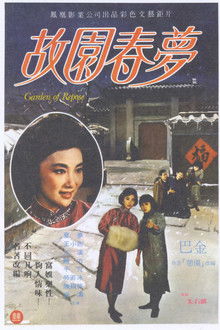
Garden of Repose
Yang Mengchi is a spoiled, rich do-nothing whose habit of smoking opium has cost him his entire fortune and the family mansion, the Garden of Repose, now due to be sold to Yao Guodong. Fearing that Yao's spoiled and unruly son Siaofu will follow in Yang's footsteps, Yao's stepwife Wan Zhaohua tries to instil discipline in the child but her efforts are undermined by the child's indulging and protective father and grandmother. Unable to reform himself despite his own son's chastisement, Yang leaves home to lead a reclusive life in a destitute temple, only helped out by his filial daughter Han'er. The poverty-stricken Yang is drafted into the army and tragedy ensues.
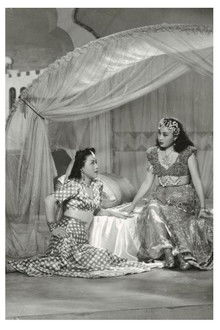
New Arabian Nights
Showing off his love of visual aesthetics as a painter, director Dan Duyu combines elegance, exoticism and oddity into a grand big-budget package with New Arabian Nights. Dan's vision is definitely not bound by the source material, but his magical and music-filled version of the orient turns out to be not so different from how Western storytellers would imagine it.